




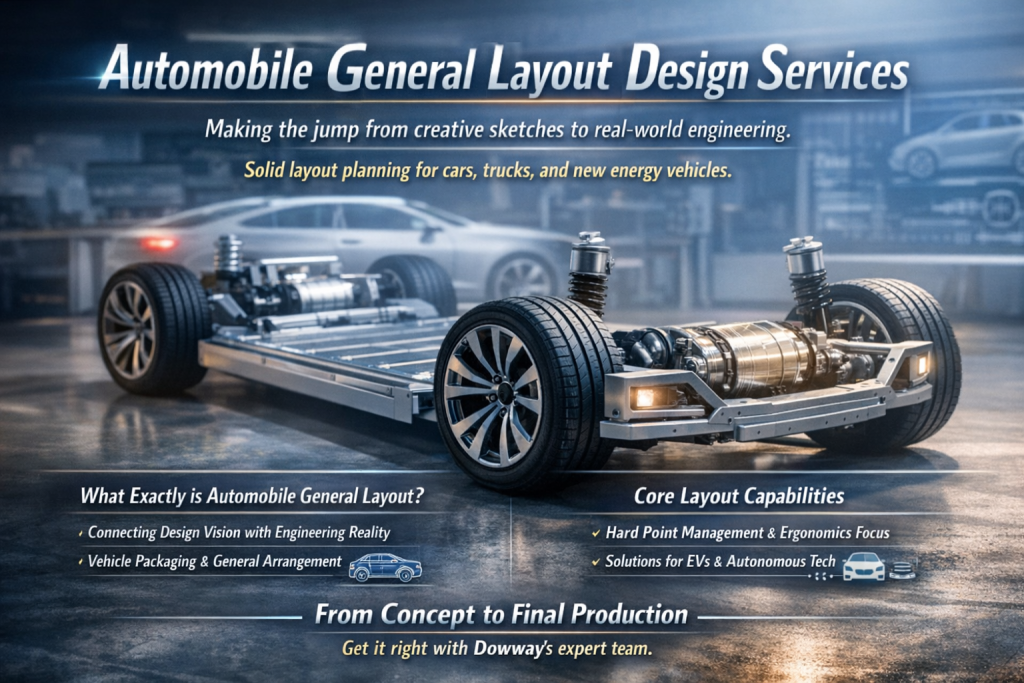
Making the jump from creative sketches to real-world engineering.
Solid layout planning for cars, trucks, and new energy vehicles.
Author: Johnny Liu, CEO at Dowway Vehicle
1. What Exactly is Automobile General Layout?
People often call it Vehicle Packaging or General Arrangement.
In simple terms, it is the master plan for the whole car. It is the vital link that connects a designer’s cool vision with the tough reality of actual engineering.
At Dowway, we don’t just “fit parts” into a frame; we look at the big picture. We coordinate how the engine, chassis, body, and electronics sit together. Our goal is to find that sweet spot where performance, cost, and a great drive all meet. Whether you are building an old-school gas car or a new EV platform, our team makes sure the design works before you ever build a prototype.
2. What We Do: Core Layout Capabilities
We follow a strict, logical path to get the layout right:
I. Hard Point Management (The Car’s DNA)
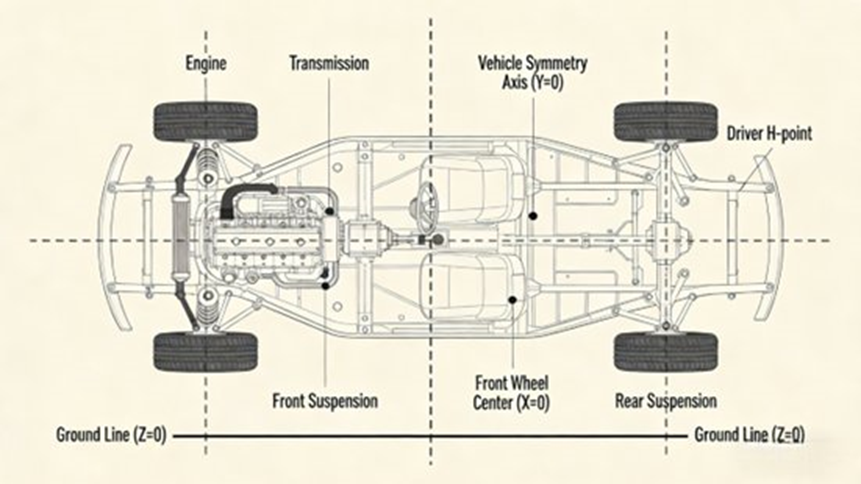
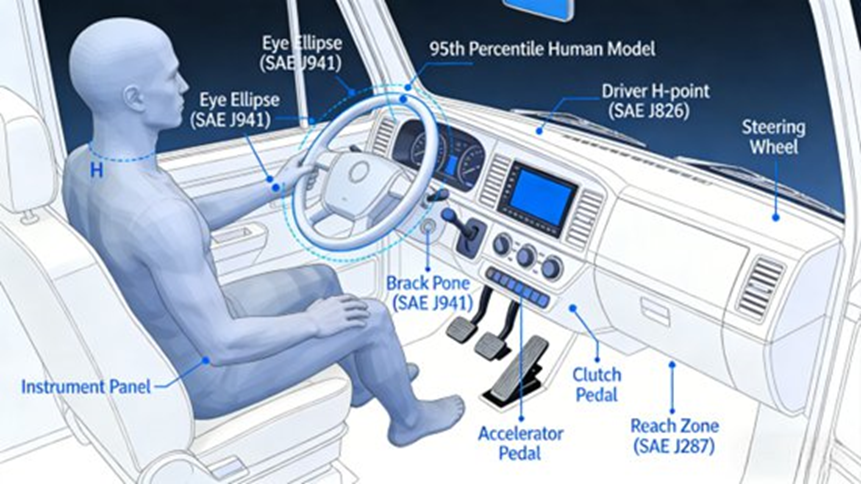
Hard points are the fixed spots in space that define your car. Think of them as the DNA of the vehicle. We set up a clear Vehicle Coordinate System so every team—from chassis to body—is working from the same map.
- What we handle: Setting the H-Point (Hip Point), axle lines, and ground lines.
- Vision & Control: Defining where the driver sits (AHP) and where they look (Eye Ellipse).
- Conflict Prevention: Keeping these points locked so different parts don’t crash into each other later.
II. People-First Engineering (Ergonomics)
A car has to be comfortable, or nobody will buy it. We use tools like RAMSIS to simulate how real people use the cabin.
- Fitting Everyone: We check space for both very tall and very short drivers to make sure the car works for everyone.
- Clear Sight: We map out blind spots and mirror views following SAE J1050 rules.
- Everything in Reach: We make sure the steering wheel, pedals, and screens are exactly where they should be.
3. Layout Solutions for Modern Cars
The car world is changing fast. We have adapted our methods for the new tech on the road:
New Energy Vehicles (EVs)
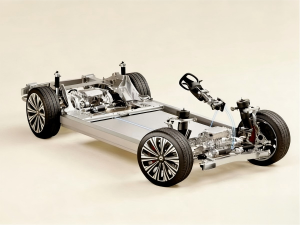
- Battery Layout: We focus on low-floor designs to keep the car stable and give passengers more legroom.
- Smart Motors: We use compact “3-in-1” motor units to give you more trunk space.
- Safe Wiring: We plan the path of high-voltage cables so they stay safe during a crash.
Smart & Self-Driving Tech
- Sensor Spots: We find the best spots for LiDAR and cameras, checking their “field of vision” to make sure the car’s “eyes” aren’t blocked.
4. How We Work: From Idea to Freeze
- The Setup: We look at your competitors and set goals for weight, cost, and speed.
- The Sketch Phase: We turn a drawing into a 3D block model to see if the proportions work.
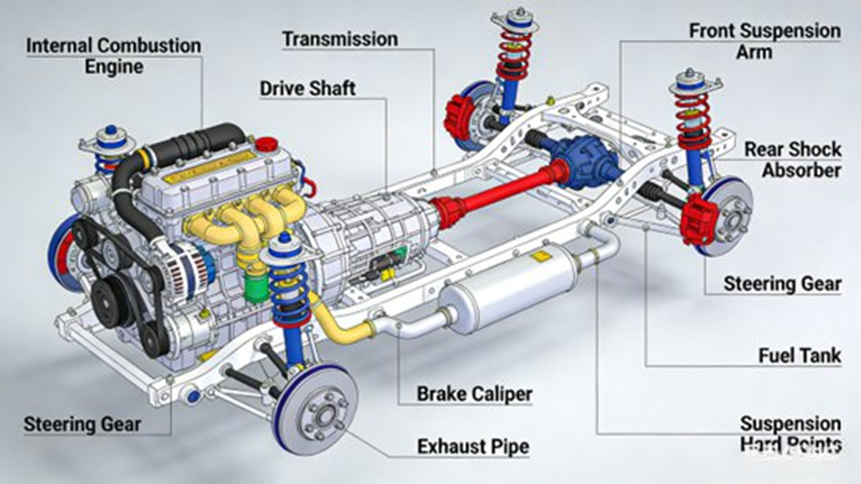
- The Details: We place the engine, suspension, and body parts exactly where they belong.
- The Big Check: We run digital tests to find any gaps or overlaps.
- The Freeze: Once everything is perfect, we release the final data for manufacturing.
5. Why Choose Dowway?
- We Work Together: Our layout team talks to the factory and the suppliers every day. This catches risks early.
- Top Tools: We use CATIA and UG (NX)—the same stuff the world’s biggest car brands use.
- Real Experience: We have worked on everything from big delivery trucks to luxury EVs.
6. Expert Guide: Frequently Asked Questions
Q1: What exactly is Automobile General Layout Design?
Think of it as the car’s blueprint or top-level architecture. It’s the stage where we plan how the main systems—like the body, chassis, and powertrain—fit together in space. It decides the car’s final size, weight, seat positions, and base specs.
Q2: What are the main steps in the Layout Design process?
- Initial Goals: Defining car type, size, and capacity.
- Platform Choice: Picking the right platform and drive type (FF, FR, AWD).
- Man-Machine Setup: Setting H-point, occupant space, and eye positions.
- The Draft & Checks: Drafting the sketch and verifying safety rules/crash zones.
- The Final Map: Releasing engineering versions to the parts teams.
Q3: Why is this phase so important for car development?
The layout is the “baseline.” It sets the foundation for weight and comfort, gives stylists their “hard limits,” and prevents parts from hitting each other during assembly. Without it, engineering teams will spend the project fighting over space.
Q4: What do engineers worry about most during layout design?
- Space & Assembly: Can we put these parts together easily?
- Human Comfort: Is the driver comfortable?
- Safety & Rules: Does it meet crash laws and vision standards?
- Performance: How do wheelbase and center of gravity affect the drive?
- Serviceability: Can a mechanic reach the parts?
- Commonality: Can we use the same parts across different models?
Q5: What are the common types of car layouts?
- FF (Front-Engine, Front-Drive): Cheap to build, maximizes cabin space.
- FR (Front-Engine, Rear-Drive): Great for handling and balance.
- RR (Rear-Engine, Rear-Drive): Good for traction in specific designs.
- MR (Mid-Engine): The go-to for high-performance sports cars.
- AWD / 4WD: Best for grip and off-road driving.
About the Author
Johnny Liu is the CEO of Dowway Vehicle. He has spent over 20 years in the car industry, helping both big OEMs and new startups get their vehicles on the road. He believes that if the layout is right, the car just feels “right” to the driver.