




< Back to Vehicle Design & Engineering Hub
Author: Johnny Liu, CEO at Dowway Vehicle Published: February 22, 2026 Reading Time: 18 minutes
- 1. Introduction: The Shift in Propulsion
- 2. Core Architectures: Types of Vehicle Powertrains
- 3. Key Component Design: The Building Blocks
- 4. Design Engineering & Methodologies
- 5. Materials Science and Manufacturing
- 6. FAQ in Professional Powertrain Engineering
- ?️ 1. What are the core elements of Vehicle Powertrain and Component Design?
- ? 2. What are the primary design objectives in Vehicle Powertrain and Component Design?
- ⚙️ 3. How is powertrain matching executed within Vehicle Powertrain and Component Design?
- ? 4. What are the main challenges in component optimization during Vehicle Powertrain and Component Design?
- ? 5. How are the results of Vehicle Powertrain and Component Design measured and validated?
- Summary of Key Engineering Concepts
- 7. The Bottom Line
1. Introduction: The Shift in Propulsion
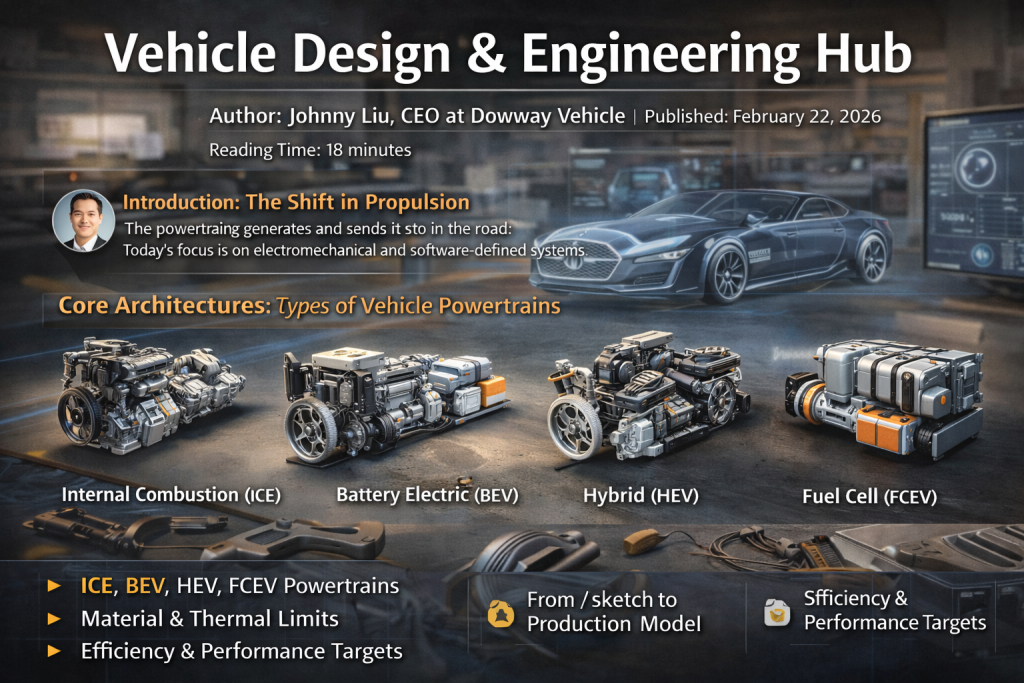
A vehicle powertrain is the system that generates power and sends it to the road. Historically, this was a purely mechanical and thermodynamic system. Today, the industry is shifting rapidly toward electromechanical and software-defined setups.
In my experience leading Dowway Vehicle, I have watched the engineering focus change completely over the last decade. This guide outlines the strict engineering realities, material limits, and functional needs across Internal Combustion (ICE), Battery Electric (BEV), Hybrid (HEV), and Fuel Cell (FCEV) architectures. It serves as an objective, grounded resource for automotive engineers and industry analysts.
2. Core Architectures: Types of Vehicle Powertrains
Powertrain architecture dictates the vehicle’s energy source, conversion method, and power delivery. Each type presents specific engineering hurdles and use-case benefits.
Internal Combustion Engine (ICE) Powertrains
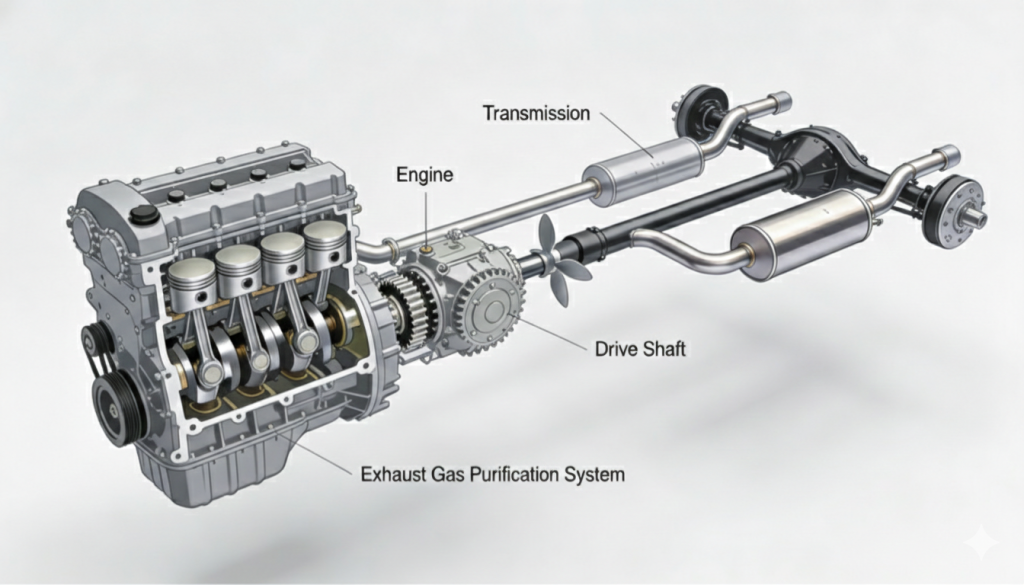
Traditional ICE systems burn fossil fuels. Engineers focus strictly on thermal efficiency—getting more kinetic energy from each drop of fuel—while cutting parasitic losses and exhaust emissions. Key focus areas are higher compression ratios, better fuel injection mapping, and lower friction within the engine block.
Battery Electric Vehicle (BEV) Powertrains
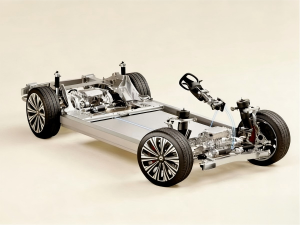
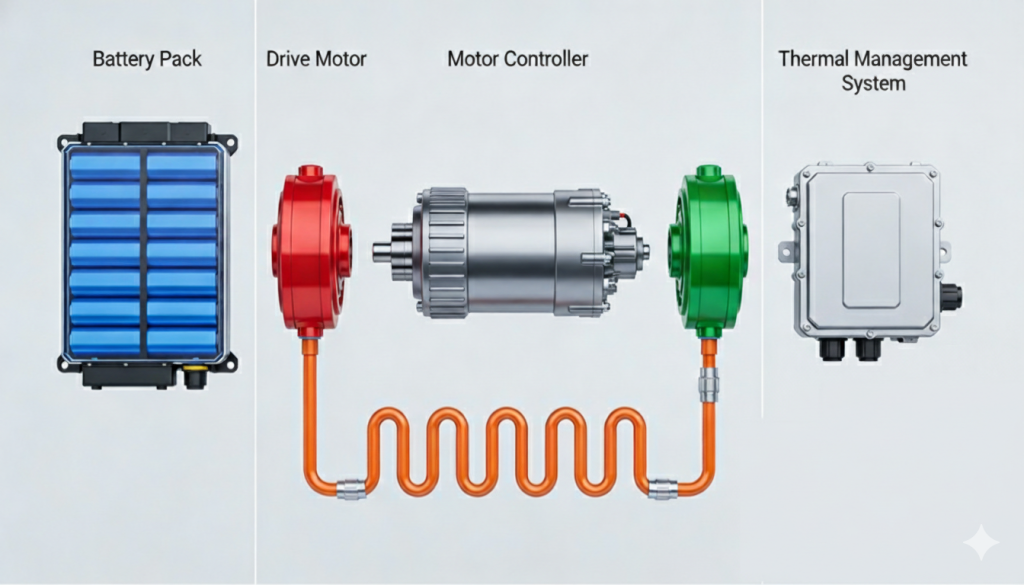
BEV setups replace the engine and fuel tank with a battery pack, an inverter, and electric motors. These parts are increasingly combined into a single e-axle. The main engineering constraints here are gravimetric energy density (weight-to-power ratio), charging acceptance rates, and electrical efficiency across the entire system.
[Read our full breakdown: EV Powertrain Architecture]
Hybrid (HEV) and Plug-in Hybrid (PHEV) Powertrains
Hybrid systems mix ICE and electric propulsion. This dual-source approach brings heavy packaging and control complexity. Engineers design power-split devices and complex software to manage the switch and parallel operation of two different torque sources. The goal is balancing emissions compliance with dynamic performance.
Fuel Cell Electric Vehicle (FCEV) Powertrains
FCEVs use compressed hydrogen gas passed through a fuel cell stack to generate electricity, emitting only water vapor. They offer fast refueling times similar to ICE cars. However, current engineering hurdles include the high cost of platinum catalysts, the structural limits of 700-bar hydrogen tanks, and fuel cell stack durability under changing thermal loads.
3. Key Component Design: The Building Blocks
The performance of a powertrain comes down to its individual parts.
Power Generation (Engines & E-Motors)
- ICE Components: Cylinder head design optimizes airflow and combustion chamber geometry. Valvetrains use variable valve timing (VVT) for broader power bands, and turbochargers force air induction to raise volumetric efficiency.
- E-Motors: Electric motor work focuses on the stator and rotor. Engineers weigh Permanent Magnet Synchronous Motors (PMSM) for high efficiency and torque density against Induction Motors or Externally Excited Synchronous Motors (EESM) to cut reliance on rare-earth materials.
Transmissions and Gearboxes
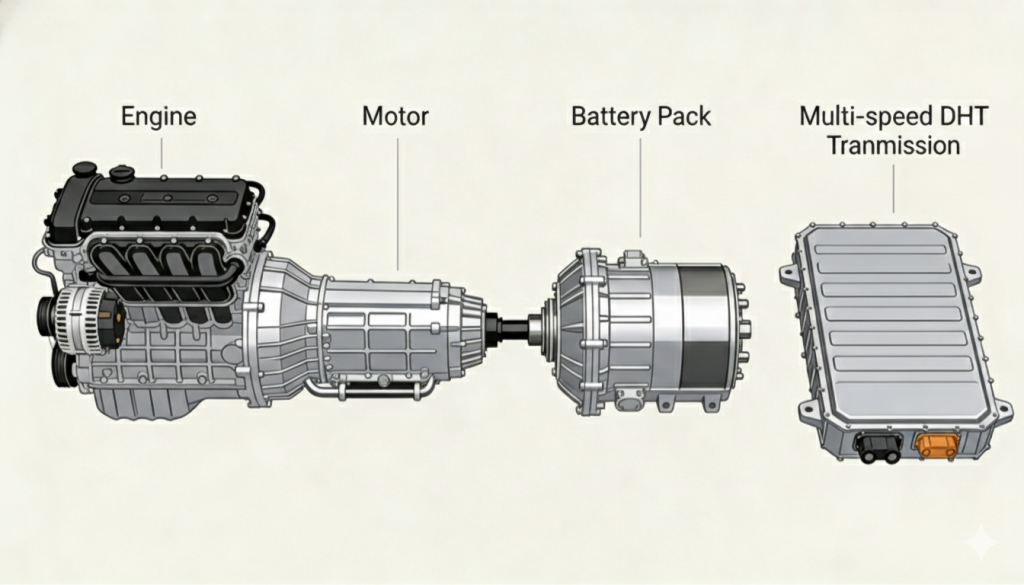
- ICE/Hybrids: These rely on multi-speed automatic, Dual-Clutch (DCT), or Continuously Variable Transmissions (CVT) to keep the engine in its optimal power band.
- EVs: Most use single-speed reduction gears because electric motors have a wide torque band. Yet, high-performance BEVs are starting to use two-speed gearboxes to balance hard low-end acceleration with high-speed cruising efficiency.
Energy Storage and Delivery
- Battery Pack Design: BEV component design centers heavily on the battery module and pack. Teams must balance cell chemistries, weighing NMC against LFP. The current structural trend is “Cell-to-Pack” (CTP) or “Cell-to-Chassis” (CTC), where battery casings act as load-bearing parts of the frame.
Power Electronics
Power electronics govern electrical flow. The inverter changes DC power from the battery to AC power for the motor. The industry is actively moving from standard Silicon Insulated-Gate Bipolar Transistors (IGBT) to Silicon Carbide (SiC) MOSFETs. SiC allows higher switching frequencies, better heat resistance, and efficiency gains.
The Drivetrain
The drivetrain moves torque from the gearbox to the wheels. Parts include propeller shafts, differentials, and half-shafts. In multi-motor EVs, software-driven torque vectoring often replaces mechanical differentials.
4. Design Engineering & Methodologies
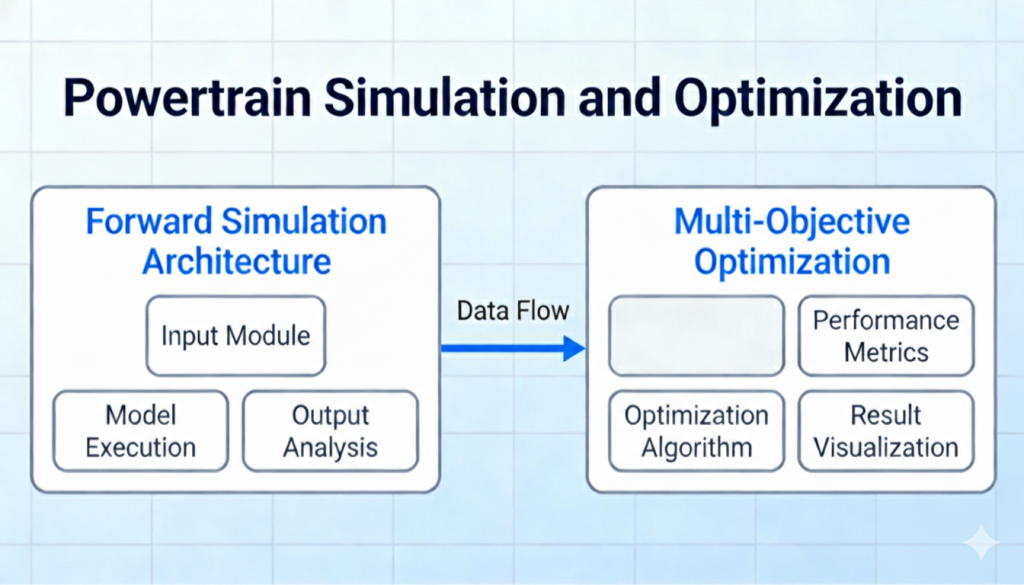
Modern powertrain design leans heavily on virtual simulation before any physical parts are built to cut costs and time.
Computer-Aided Engineering (CAE) & Simulation
Engineers use Finite Element Analysis (FEA) to test structural strength and Computational Fluid Dynamics (CFD) to map airflow and coolant flow. Using “Digital Twins” lets teams simulate wear, tear, and performance drops over a simulated vehicle lifecycle long before manufacturing.
Thermal Management Systems Design
Thermal management is a strict requirement across all architectures. Advanced designs use integrated heat pump systems with environmentally friendly refrigerants (like R290 or CO2). These systems harvest waste heat from the motors and inverters to warm the battery or cabin, raising cold-weather efficiency.
5. Materials Science and Manufacturing
Lightweighting Strategies
Cutting vehicle mass directly raises fuel economy in ICE vehicles and range in EVs. The industry is shifting toward advanced high-strength steels (AHSS), extruded aluminum alloys, and carbon fiber reinforced polymers (CFRP) to offset the heavy weight of EV batteries.
Sustainable and Circular Manufacturing
Regulatory pressure is pushing the industry toward circular economy principles. Component design must factor in “design for disassembly” to recover lithium, cobalt, nickel, and copper at the end of the vehicle’s life.
6. FAQ in Professional Powertrain Engineering
Here are five common technical questions regarding Vehicle Powertrain and Component Design among engineering professionals, answered based on current industry practices.
?️ 1. What are the core elements of Vehicle Powertrain and Component Design?
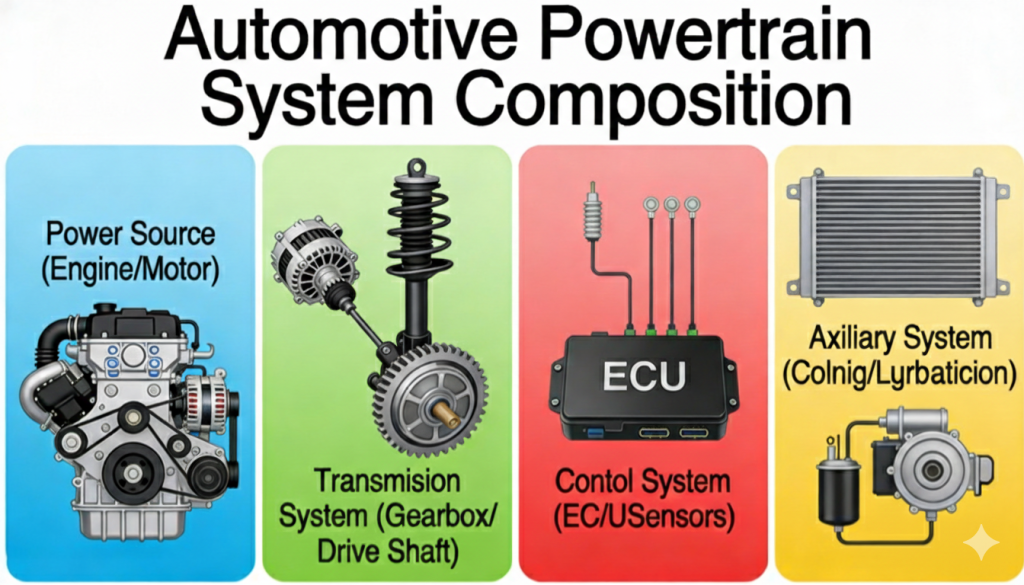
Quick Answer: The core elements of vehicle powertrain and component design include the primary power source (engine or electric motor), transmission, driveshafts, differentials, and electronic control modules that work together to move the car.
Expert Explanation: Vehicle powertrain and component design involves architecting the systems that generate power and transfer it to the wheels. A basic rule of this engineering process is treating the engine, gearbox, final drive, and ECUs as a single, interdependent system rather than isolated parts to guarantee overall vehicle reliability.
? 2. What are the primary design objectives in Vehicle Powertrain and Component Design?
Quick Answer: The primary design objectives are to maximize vehicle performance and energy efficiency while minimizing manufacturing costs, system weight, and harmful tailpipe emissions.
Expert Explanation: The main goal is meeting dynamic performance targets while keeping the system highly efficient. Engineers must minimize energy consumption, material costs, and packaging volume. Hitting these targets in vehicle powertrain and component design requires strict systemic balancing so the motor, transmission, and controls sync perfectly under all loads.
⚙️ 3. How is powertrain matching executed within Vehicle Powertrain and Component Design?
Quick Answer: Powertrain matching is executed by calculating vehicle performance targets, like top speed and acceleration, and then selecting specific motor parameters and gear ratios to meet those exact targets efficiently.
Expert Explanation: Powertrain matching is the process of picking and tuning components to fit the vehicle’s strict performance goals. Standard engineering steps include deriving the required peak power and torque for the drive motor based on target gradeability, and then running component matching through efficiency mapping. This workflow is a mandatory step for a rational configuration in vehicle powertrain and component design.
? 4. What are the main challenges in component optimization during Vehicle Powertrain and Component Design?
Quick Answer: The main challenges include managing system-level integration complexity, resolving noise and vibration (NVH) issues in electric motors, optimizing energy efficiency across all speeds, and balancing strict durability limits with material costs.
Expert Explanation: When executing vehicle powertrain and component design, engineers frequently hit technical bottlenecks. Getting high-efficiency power output across varying operational states is difficult. Furthermore, fixing new acoustic issues, like the high-frequency whining in electric drive systems, requires complex structural and software control solutions.
? 5. How are the results of Vehicle Powertrain and Component Design measured and validated?
Quick Answer: Results are measured and validated through rigorous physical and simulated testing, including control module testing (HIL/SIL), thermal durability checks, dynamic track performance, and strict emissions compliance testing.
Expert Explanation: After the design phase, the physical execution of vehicle powertrain and component design must pass strict validation. Engineers run hardware-in-the-loop (HIL) testing to check control strategies under simulated loads. They also perform dynamic track testing to measure 0-100 km/h acceleration and torque delivery, making sure fuel consumption and emissions meet regulatory standards like WLTP or Euro 7.
Summary of Key Engineering Concepts
| Discussion Topic | Core Engineering Focus |
| Definition of Powertrain & Component Design | Building a complete power generation system and integrating core electromechanical parts. |
| Primary Design Objectives | Maximizing vehicle performance and efficiency while cutting cost, weight, and emissions. |
| Powertrain Matching Methodology | Parameter selection combined with system-level simulation and optimization. |
| Component Optimization Challenges | Managing complex system coupling, resolving NVH issues, and balancing durability with cost. |
| Design Validation Methods | Strict control, dynamic performance, thermal durability, and emissions/efficiency testing. |
7. The Bottom Line
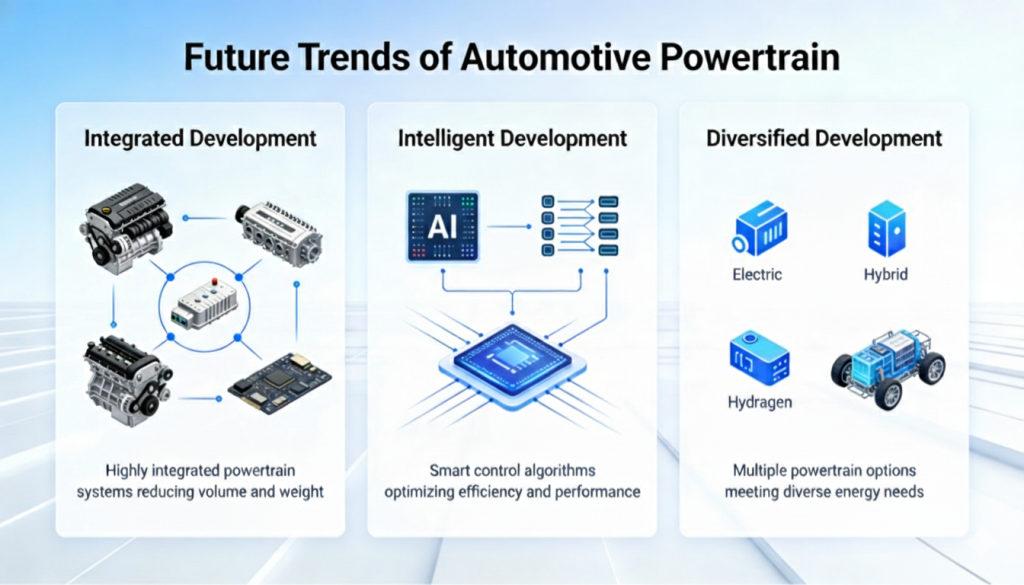
Vehicle powertrain and component design has grown from pure mechanics into a field blending materials science, electrochemistry, thermodynamics, and software. Whether you are tuning the thermal efficiency of an internal combustion engine or building high-density e-axles for electric cars, objective, data-driven engineering remains the baseline.
© 2026 Dowway Vehicle. All rights reserved. Technical data and analysis provided for informational purposes.
About the Author
JOHNNY LIU
Senior Automotive Clay Modeler
Johnny has over 15 years of experience in the car design industry, working with major brands in Shanghai and Munich. He specializes in Class-A surfacing and mixing digital tools with traditional sculpting.
Disclaimer: This guide is for education. Specific tolerances and materials might vary by brand.

·