




< Back to Vehicle Design & Engineering Hub
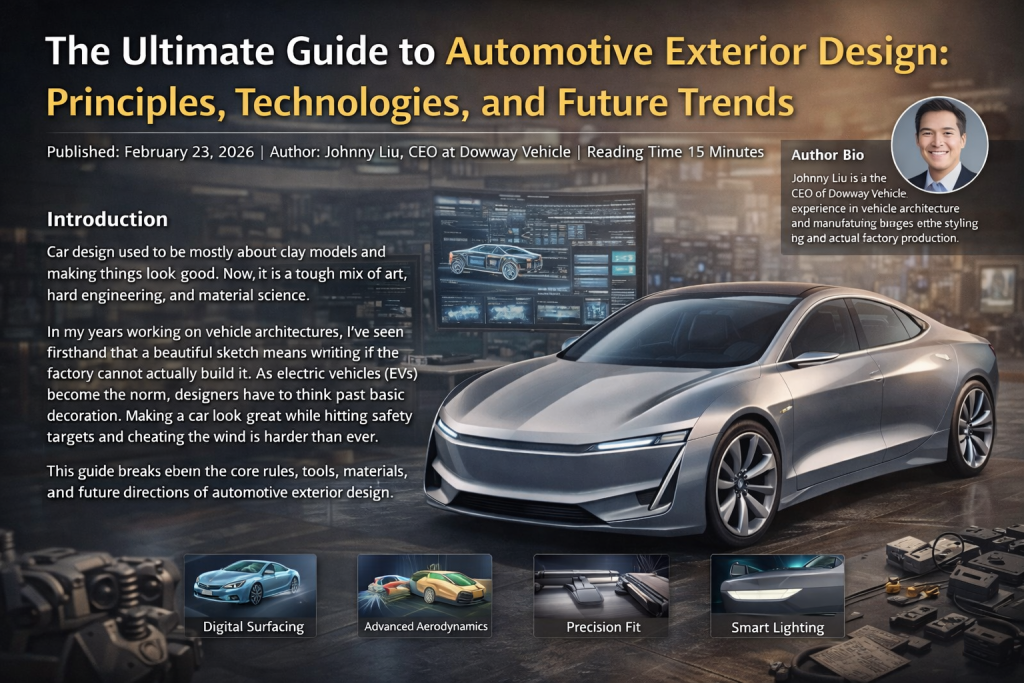
Published: February 23, 2026 Author: Johnny Liu, CEO at Dowway Vehicle Reading Time: 15 Minutes
Author Bio: Johnny Liu is the CEO of Dowway Vehicle. With years of hands-on experience in vehicle architecture and manufacturing, he bridges the gap between aesthetic styling and actual factory production.
Introduction
Car design used to be mostly about clay models and making things look good. Now, it is a tough mix of art, hard engineering, and material science.
In my years working on vehicle architectures, I’ve seen firsthand that a beautiful sketch means nothing if the factory cannot actually build it. As electric vehicles (EVs) become the norm, designers have to think past basic decoration. Making a car look great while hitting safety targets and cheating the wind is harder than ever.
This guide breaks down the core rules, tools, materials, and future directions of automotive exterior design.
1. Core Rules of Automotive Exterior Design
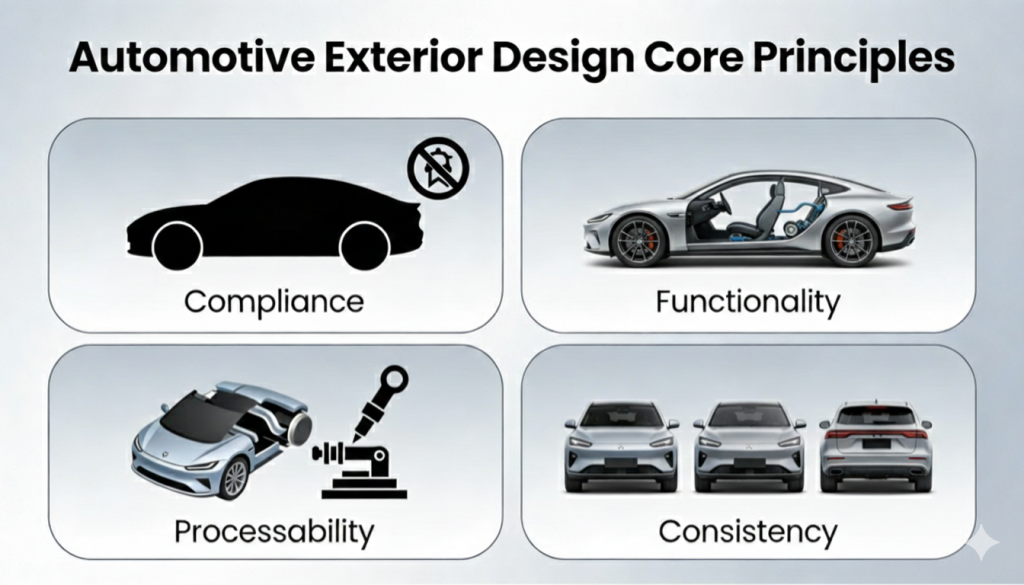
Good design is always a compromise. You have to balance four main rules: the laws of the road, what the part actually does, how it is made, and how it fits the brand.
1.1 The Rules (Compliance)
Before anything else, you have to follow the law. Cars must meet strict global safety and size limits. Front bumpers need empty space behind them to absorb pedestrian impacts. Headlights and turn signals must hit exact brightness and angle targets (like ECE and SAE standards). If a car is too wide for standard roads, it simply cannot go to market.
1.2 What the Part Does (Functionality)
Form follows function. Every exterior piece needs a real job. EVs use closed front grilles to smooth out airflow and add driving range. Flush door handles cut down on wind drag. Bumpers protect the frame, and tight rubber seals keep out rain and noise. Even the hood logo acts as a functional brand marker.
1.3 How It Is Made (Processability)
Designers have to avoid shapes that are too hard to stamp out of metal or mold from plastic. If a plastic curve is too sharp, the part might warp as it cools. We also plan exactly where the body panels meet. Keeping these cut lines simple stops tiny errors from adding up on the assembly line.
1.4 Visual Fit (Consistency)
The parts must match the whole. The lines on the front, side, and back need to talk to each other. Think of the classic BMW kidney grille; it sets the tone for the entire car. We also tightly control the gaps between panels. When panels sit flat next to each other, the whole car feels much more premium.
2. Key Technologies
Four main technical areas drive how a car looks and works today.
2.1 Digital Surfacing (Class-A)
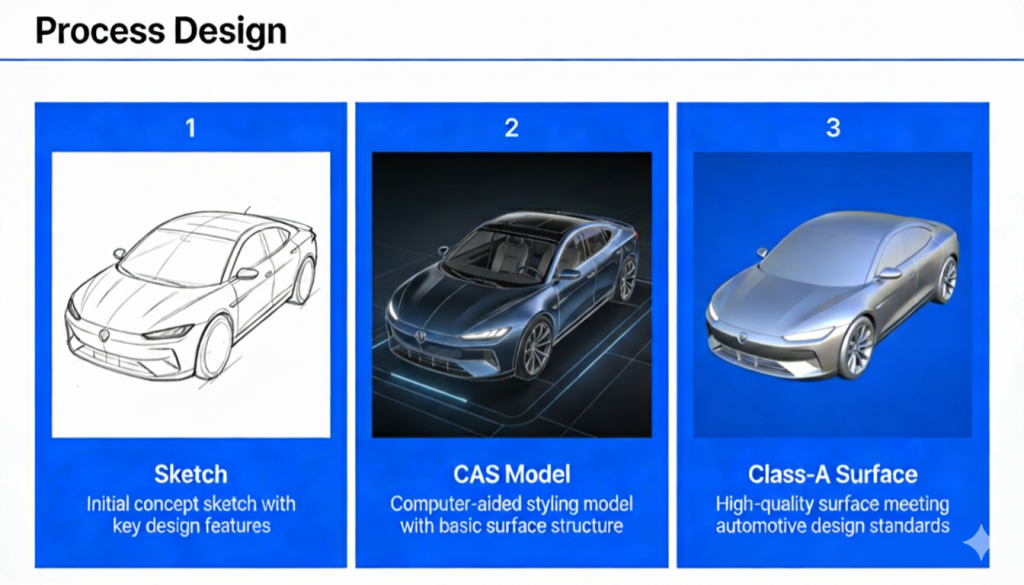
We rely heavily on digital tools like Alias and CATIA. The process goes from a basic sketch to a 3D concept, and finally to “Class-A” surfaces. Class-A means the curves are mathematically perfect. This stops weird light reflections on the final painted car. Using VR, we can walk around a virtual car and spot issues before cutting any physical clay.
2.2 Airflow Tuning (Aerodynamics)
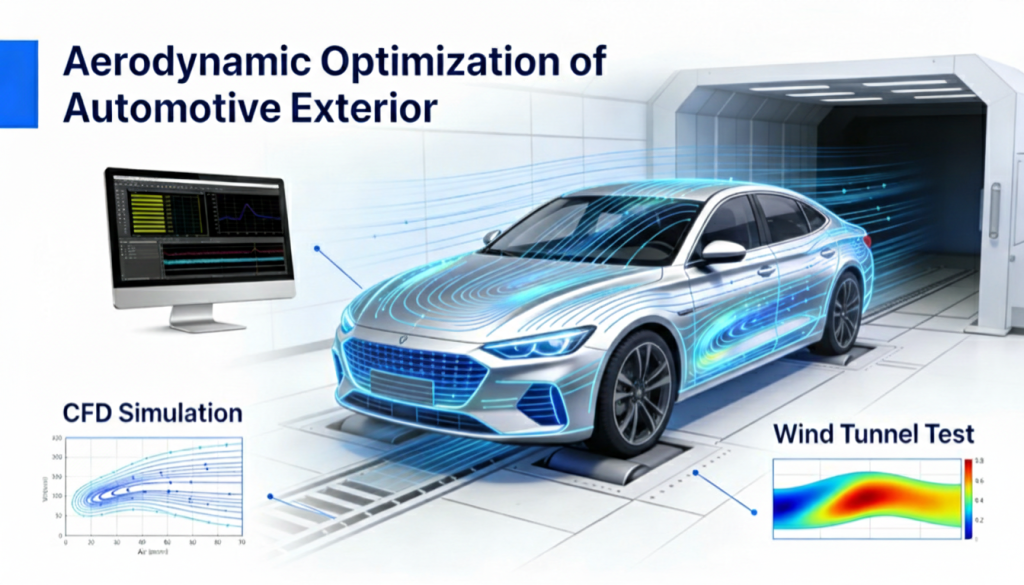
For electric cars, fighting the wind is everything. Lowering the drag coefficient (Cd) by just 0.01 can add 1% to 2% to the battery range. We shape fastback roofs to keep air attached to the car longer. We use flat underbodies and smooth wheels. Engineers run heavy computer simulations (CFD) and then verify the numbers in physical wind tunnels.
2.3 Gap and Flush Control (DTS)
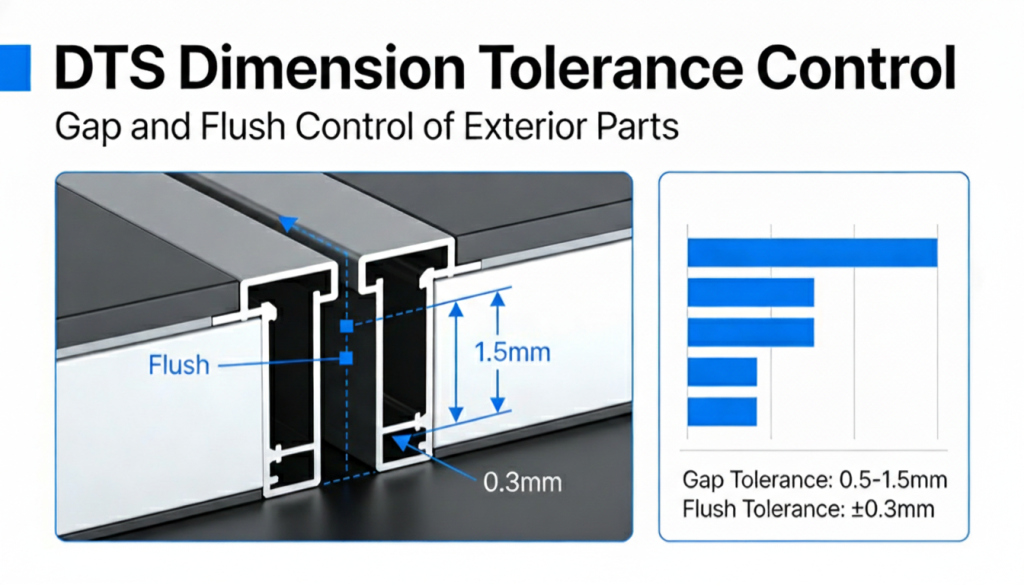
DTS (Dimension Tolerance Specification) dictates how tight the car fits together. We want the gap between the door and the fender to be exactly parallel—usually around 3 to 5 millimeters. We also look for “zero-flush” areas, where the side glass sits totally flat with the metal pillar. It looks sleek and cuts down on wind noise.
2.4 Smart Lighting
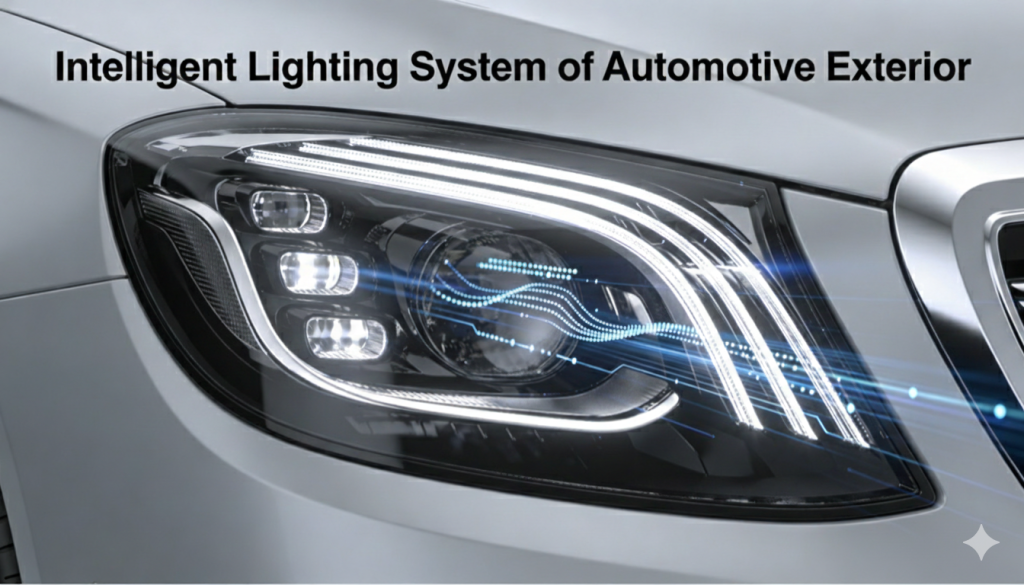
Lights do more than illuminate the road now. The industry moved from basic bulbs to LEDs, and now we use Micro LEDs and Lasers. Some laser lights can shine up to 2,000 meters. With millions of tiny pixels, new headlights can even project crosswalk lines directly onto the asphalt for pedestrians.
3. Materials and Manufacturing
Choosing the right material changes a car’s weight, strength, and cost.
3.1 Common Materials
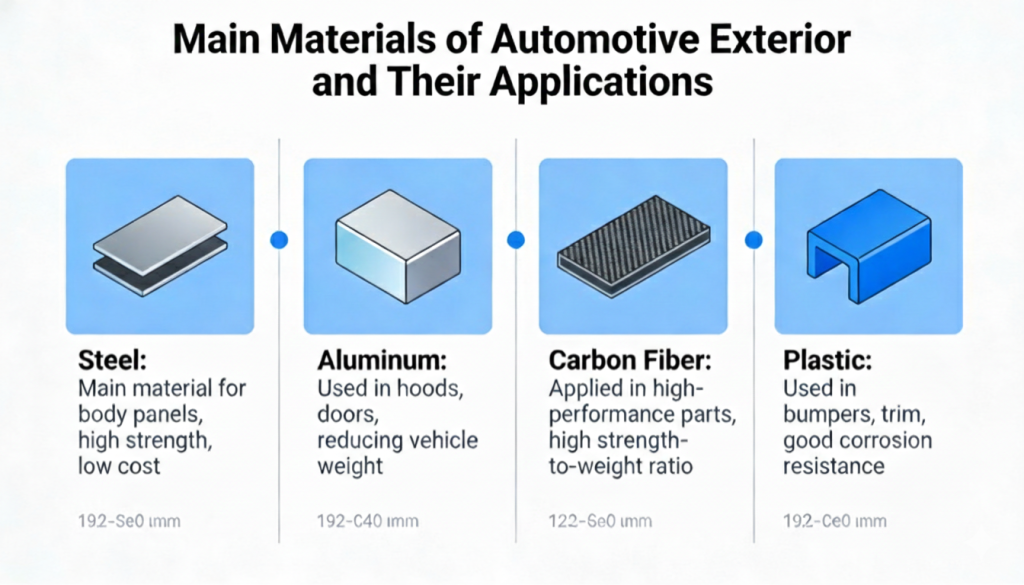
- Modified PP (Polypropylene): Cheap and tough. Great for bumpers.
- PC/ABS: Hard and looks great. Used for grilles and mirror covers.
- Carbon Fiber (CFRP): Very light but expensive. Used for hoods and spoilers on high-end cars.
- Aluminum: Light and easy to recycle. Common for doors.
- Bio-Plastics: Better for the earth. Used more often now for interior pieces and exterior trim.
3.2 Building It
Factories use massive injection molding machines to press out plastic bumpers. For carbon fiber, we use high-pressure compression molding. The industry is also moving away from dirty chrome plating. Instead, we use cleaner vacuum metalizing or simple water-based paints.
4. Real-World Case Studies
Let’s look at three recent cars to see how these engineering rules play out in real life.
4.1 AITO M9: Flat Doors
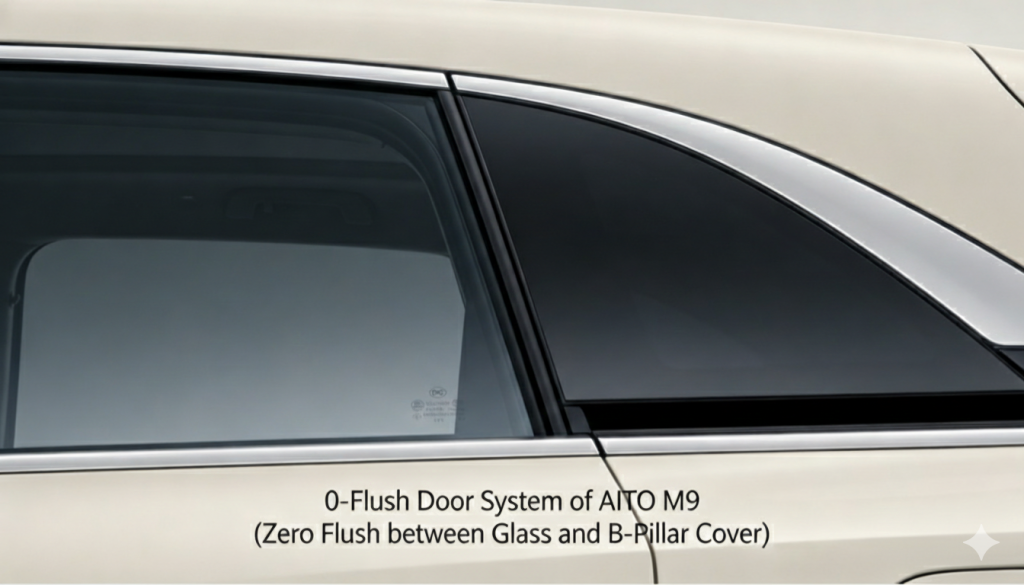
The AITO M9 SUV uses a clever sliding mechanism for its door glass. The glass slides into place so it sits perfectly flat against the B-pillar. It creates a seamless side profile, drops the wind drag down to 0.27 Cd, and makes the cabin much quieter at highway speeds.
4.2 BMW 7 Series: Hiding the Gaps
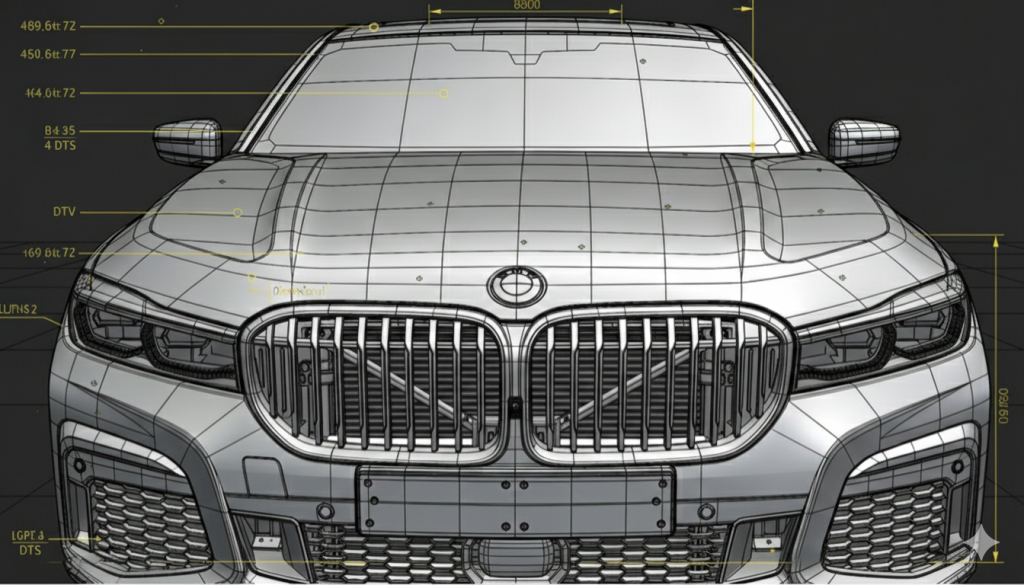
BMW played a smart visual trick on the front of the 7 Series. They moved the cut line where the hood meets the bumper forward, tucking it just above the grille. Because you cannot see the gap directly, it lowers the stress on the factory floor and makes the front end look like one solid block of metal.
4.3 Tesla Cybertruck: Driven by Material
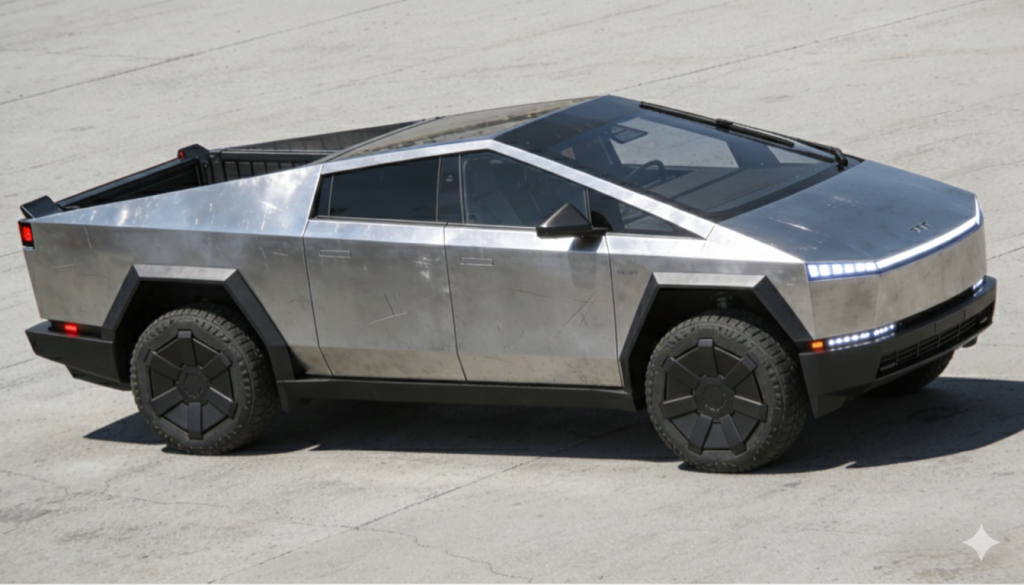
Tesla took a completely different route. By using thick, unpainted stainless steel, they had to use flat, sharp angles. It looks wild, but they ran hundreds of computer tests to manage the air, getting a drag number of 0.34 Cd. Skipping the paint shop also cuts factory costs and limits pollution.
5. Future Trends
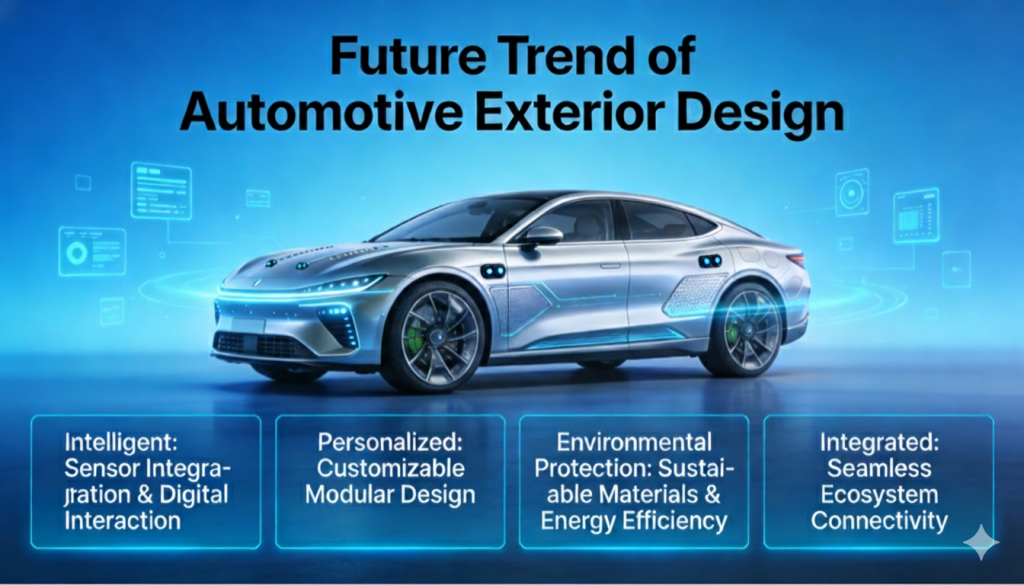
Looking ahead, car design will shift toward the user experience and a cleaner planet.
- Sensors Everywhere: Cars need radar and cameras to drive themselves. The trick is hiding these sensors so they do not look like bulky add-ons.
- Custom Parts: Buyers want their cars to look unique. Expect more modular grilles and 3D-printed trim pieces that owners can swap out easily.
- Greener Builds: Builders face heavy pressure to use recycled ocean plastics and aluminum. We will see far less chrome and fewer toxic paints.
- Simple Front Ends: Everything is blending together. Headlights, sensors, and cooling vents are turning into single, clean smart modules.
Frequently Asked Questions (FAQ)
1) What is automotive exterior design and what does it include? It is the process of creating the outer shape of a vehicle. It mixes art and engineering to make a car look good, cut through the air, and stay safe. Designers work on wheels, door handles, window frames, headlights, bumpers, and the overall body structure.
2) Why does this matter so much for electric vehicles (EVs)? Styling directly changes how far an EV can drive. EVs usually feature closed front ends and smooth shapes to cheat the wind. Good styling also helps a car get noticed in a busy market while keeping the battery cool.
3) How does airflow change the design? Managing wind is a major technical driver. Designers shape the body to let air slip past easily, which saves battery power and keeps the car stable. Smooth curves, active spoilers, and hidden door handles are direct results of wind tunnel testing.
4) What are the main trends right now? Key trends include using lighter materials like aluminum to save weight, putting high-tech LED screens in the headlights, and using greener plastics. Buyers also want more options to customize the look of their cars.
5) What are the hardest parts of the job? Designers have to balance how a car looks with strict safety rules, weight limits, and factory costs. The biggest hurdle is taking a beautiful sketch and making it actually work in a wind tunnel and on an assembly line.
Wrapping Up
Automotive exterior design is where art meets hard engineering. Getting a car to look right requires deep knowledge of digital surfacing, airflow, panel gaps, and materials. For car companies to stay ahead, they need to rely heavily on the tools that turn good ideas into buildable, high-quality machines on the road.
About the Author: Johnny Liu is the CEO at Dowway Vehicle, an organization dedicated to automotive engineering and manufacturing solutions. With a focus on design feasibility, Johnny provides direct insights into how vehicles go from concept to the street.

·