




| Parameter | Specification |
|---|---|
| Sensor Type | Pedal Position Sensor |
| Sensing Technology | Hall Effect |
| Output Signal | Differential Analog / PWM / SENT |
| Interface | Standard automotive connector |
| Operating Voltage | 8–16 VDC |
| Operating Temperature | -40°C to +150°C |
| Storage Temperature | -40°C to +130°C |
| Supply Current | <25 mA |
| Measurement Range | Configurable based on pedal stroke |
| Accuracy | ±1% full scale |
| Hysteresis | <0.5% full scale |
| Redundancy | Dual-output design |
| Safety Rating | ASIL-D compliant (ISO 26262) |
| Calibration | EOL online calibration supported |
| Diagnostic Support | Fault code reporting via signal analysis |
| Mounting Method | Direct mount on pedal assembly |
| Material | High-temperature polymer housing |
| Compliance | RoHS, REACH, ISO 7637-2, AEC-Q100 Grade 1 |
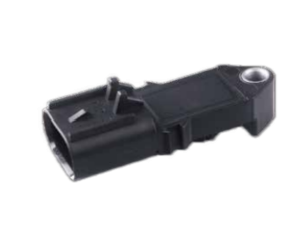
The Pedal Position Sensor is a critical component in modern automotive powertrain and braking systems, designed to accurately measure the displacement of accelerator or brake pedals. It converts mechanical movement into an electrical signal that is sent to the Engine Control Unit (ECU) or Brake Control Module (BCM), enabling precise control of engine torque, throttle response, and regenerative braking in electric vehicles. This sensor plays a vital role in ensuring driver intent is correctly interpreted by the vehicle’s electronic systems—especially in advanced applications such as electronic throttle control (ETC), brake-by-wire (BBW), and adaptive cruise control.
This sensor employs advanced Hall-effect sensing technology, which provides high linearity, low hysteresis, and excellent long-term stability. Its non-contact design eliminates wear and tear associated with traditional potentiometers, resulting in longer lifespan and higher reliability under continuous use. The sensor features a redundant dual-output architecture with two independent signal paths, ensuring fault detection and system integrity in safety-critical applications. This redundancy allows the ECU to compare both signals in real time, identifying faults such as open circuits, short circuits, or signal drift before they lead to system failure.
It meets ISO 26262 functional safety standards at ASIL-D level—the highest safety rating for automotive electronics—making it ideal for use in brake-by-wire systems where failure could result in loss of vehicle control. The sensor supports EOL (End-of-Line) calibration, allowing precise factory tuning to match specific pedal travel characteristics and application requirements. Signal diagnostics are supported, enabling early detection of issues such as connector corrosion, wiring damage, or internal component degradation.
Multiple output options are available—including differential analog, PWM (Pulse Width Modulation), and SENT (Single Edge Nibble Transmission) protocols—to accommodate different controller architectures across various vehicle platforms. The compact, robust housing is engineered to withstand harsh under-hood environments, including vibration, moisture, and temperature extremes—from -40°C to +150°C. The design also includes built-in protection against reverse polarity, overvoltage, and short circuits, enhancing system durability and reducing maintenance costs.


Reviews
There are no reviews yet.