




< Back to Automotive Simulation Toolchain
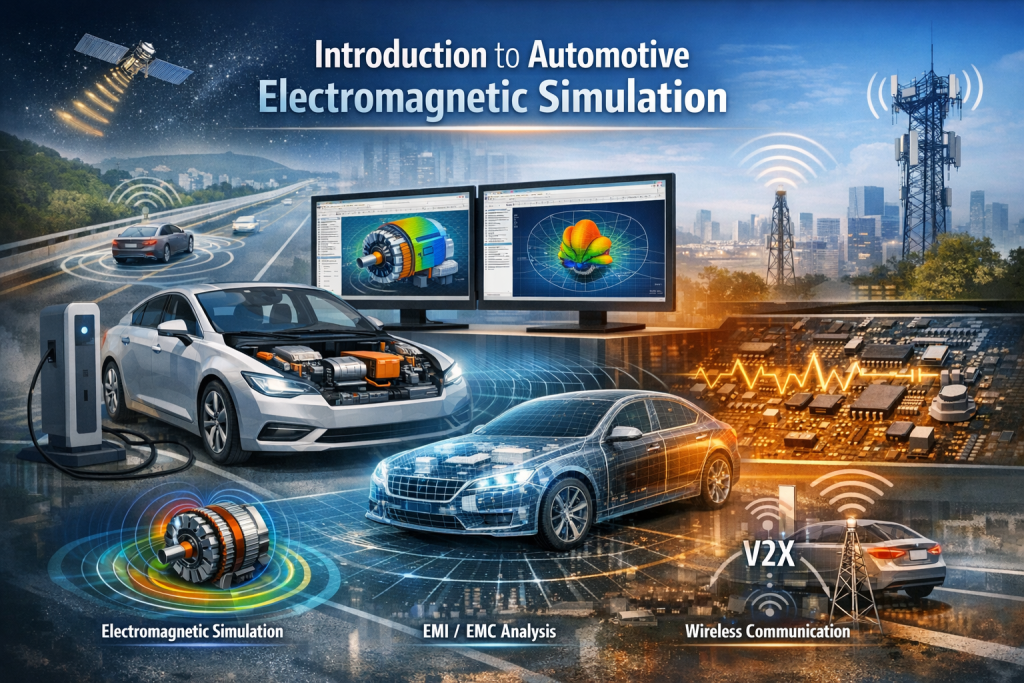
The automotive industry is undergoing a significant shift, driven by the rise of electric vehicles (EVs) and autonomous systems. As vehicles become more connected and electrified, electromagnetic performance plays a key role in ensuring safety, reliability, and comfort.
Simcenter 3D Electromagnetics, developed by Siemens, is an advanced simulation tool that supports engineers in optimizing the electromagnetic performance of vehicle systems. It addresses crucial challenges such as electromagnetic interference (EMI), electromagnetic compatibility (EMC), and wireless communication.
In this article, we’ll explore Simcenter 3D Electromagnetics, its core features, and its impact on automotive engineering. We’ll show how it helps develop safer, more efficient vehicles while saving time and reducing costs.
- Technological Framework of Simcenter 3D Electromagnetics
- Core Applications in Automotive Engineering
- Practical Use Cases and Engineering Benefits
- The Engineering Value and Cost-Efficiency of Simcenter 3D Electromagnetics
- Key Benefits of Using Simcenter 3D Electromagnetics for Automotive Development
- Conclusion: The Future of Automotive Electromagnetic Simulation
- ? Top 5 English FAQ People Are Actively Discussing (Recent Month)
- 1️⃣ What’s the difference between low‑frequency and high‑frequency electromagnetics simulation in Simcenter 3D?
- 2️⃣ How do I import CAD and material properties for electromagnetics simulation in Simcenter 3D?
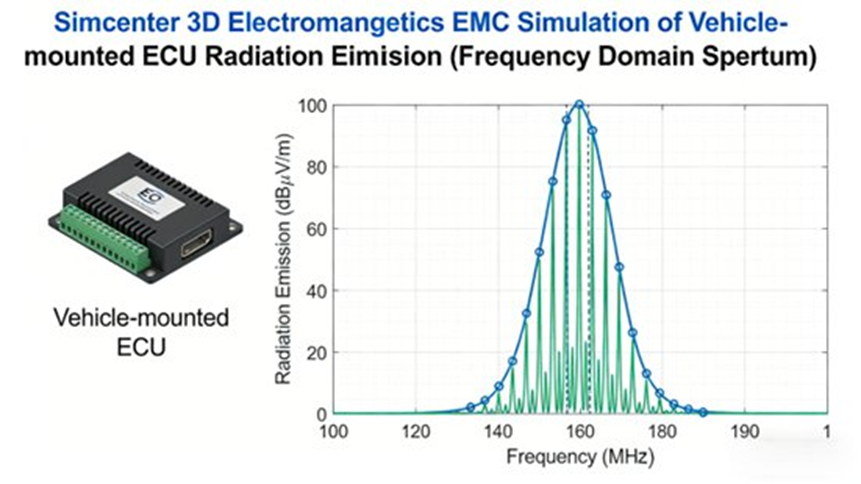
- 3️⃣ How does Simcenter 3D handle EMC and EMI problems for automotive electronics?
- 4️⃣ What are the best practices for meshing and solver selection in electromagnetic simulations?
- 5️⃣ Can I integrate multiphysics (thermal/structural) with electromagnetic simulation workflows in Simcenter 3D?
Technological Framework of Simcenter 3D Electromagnetics
Integration with Automotive Design Systems
Simcenter 3D Electromagnetics integrates with popular CAD tools like NX CAD, CATIA, and SolidWorks, allowing engineers to seamlessly import geometry and work directly with their models. This integration simplifies the process, ensuring that simulations stay closely tied to the design phase.
Core Features of Simcenter 3D Electromagnetics
The tool provides full-spectrum electromagnetic simulation, supporting both low-frequency (e.g., electric motors, powertrains) and high-frequency (e.g., antennas, EMC/EMI) simulations. By integrating multi-physics simulations, it helps engineers account for various factors like thermal effects and structural interactions alongside electromagnetic behavior.
Key Technology Drivers
Simcenter 3D Electromagnetics uses digital twin technology, which creates accurate virtual models of real-world systems. This enables predictive simulations, helping engineers identify potential electromagnetic problems early, saving time and resources in the development process.
Core Applications in Automotive Engineering
Electric Drive Systems and Motor Design
Simcenter 3D Electromagnetics plays a crucial role in electric drive systems, which include components like electric motors, inverters, and batteries. By simulating the electromagnetic field distribution and thermal effects, engineers can optimize motor efficiency and reduce electromagnetic noise, improving both vehicle performance and driver comfort.
Vehicle Electronics and EMC (Electromagnetic Compatibility)
As vehicles rely more on electronic systems, ensuring EMC compliance becomes essential. Simcenter 3D Electromagnetics helps engineers simulate and mitigate electromagnetic interference (EMI) between systems like ADAS, wireless charging, and infotainment. It ensures these systems meet regulatory standards such as CISPR 25 and ISO EMC.
Onboard Wireless Communication Systems
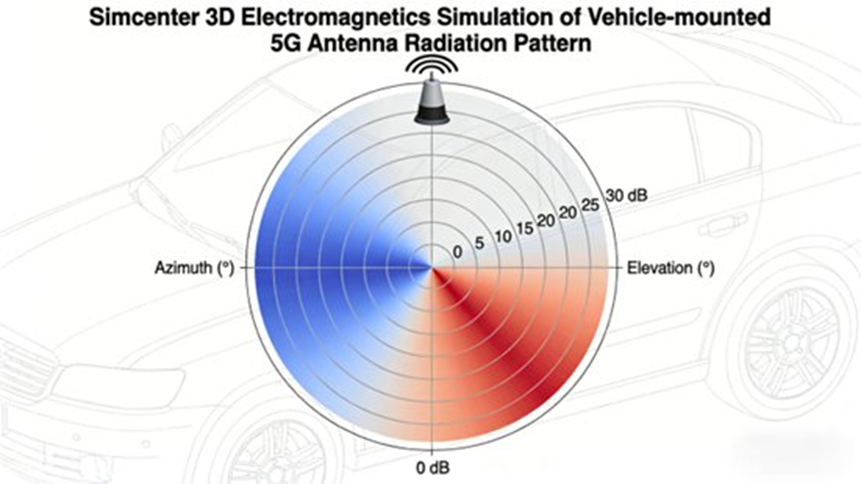
With the growth of Vehicle-to-Everything (V2X) communication, antenna performance is key to maintaining stable wireless communication. Simcenter 3D Electromagnetics optimizes antenna placement, reducing interference from other onboard systems and ensuring strong, reliable connections for navigation, safety, and system updates.
Practical Use Cases and Engineering Benefits
Simcenter 3D Electromagnetics in Action
- Optimizing Electric Drive Systems: A major electric vehicle manufacturer used Simcenter 3D Electromagnetics to improve the efficiency of a permanent magnet synchronous motor (PMSM). By simulating magnetic field distribution and coil winding configuration, they increased motor efficiency by 4% and reduced noise by 35%, making the vehicle quieter and more efficient.
- Enhancing Onboard EMC: A supplier of automotive electronics faced EMI issues with their wireless charging system. Using Simcenter 3D Electromagnetics, they identified the source of interference and optimized the shielding and grounding, ensuring the system met CISPR 25 standards, reducing development time and costs.
Optimizing Electromagnetic Performance for Safety and Comfort
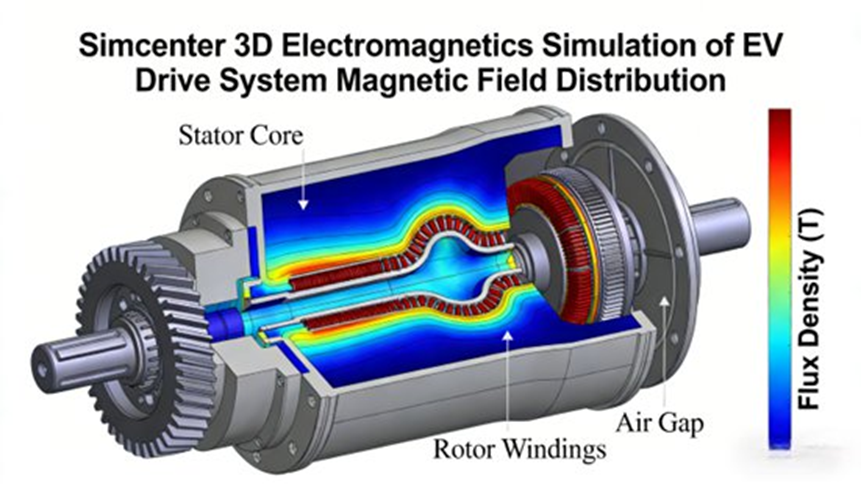
Reducing electromagnetic noise is crucial for improving comfort in electric vehicles. By simulating the NVH (Noise, Vibration, and Harshness) characteristics of electric motors and other components, Simcenter 3D Electromagnetics helps create quieter, more comfortable vehicles that align with consumer expectations.
The Engineering Value and Cost-Efficiency of Simcenter 3D Electromagnetics
Time and Cost Savings in R&D
Simcenter 3D Electromagnetics allows automotive manufacturers to identify electromagnetic issues early in the design process. By integrating this simulation tool into the development phase, companies can avoid costly prototyping and physical testing, reducing the overall time-to-market for new models.
Quality Enhancement in Vehicle Design
With high-precision simulations, Simcenter 3D Electromagnetics ensures automotive systems meet the highest standards of safety, reliability, and performance. This helps engineers prevent electromagnetic issues before they arise, ultimately improving product quality.
Key Benefits of Using Simcenter 3D Electromagnetics for Automotive Development
Increased Development Efficiency
By offering integrated simulation tools, Simcenter 3D Electromagnetics streamlines the design process. This reduces the need for repeated testing and redesigns, making the development cycle more efficient.
Enhanced Product Reliability
With accurate electromagnetic simulations, Simcenter 3D Electromagnetics helps ensure that components and systems operate reliably, reducing the likelihood of defects and improving vehicle durability.
Supporting Digital Transformation in Automotive Engineering
As the automotive industry moves toward digital twins and simulation-driven design, Simcenter 3D Electromagnetics plays a key role in supporting automotive manufacturers in this transition, enabling more efficient, reliable, and innovative vehicle development.
Conclusion: The Future of Automotive Electromagnetic Simulation
As electric vehicles and autonomous driving systems become more prevalent, Simcenter 3D Electromagnetics will continue to be a vital tool in overcoming the complex electromagnetic challenges faced by the automotive industry. The future of automotive design will rely heavily on AI-driven simulations and multi-physics models, and Simcenter 3D Electromagnetics will be at the heart of this innovation.
With the ability to simulate electromagnetic environments, thermal effects, and structural interactions, this tool is crucial for creating safe, efficient, and cutting-edge vehicles in the ever-evolving automotive landscape.
Author Bio:
Johnny Liu is the CEO of Dowway Vehicle, a leader in electric vehicle development. With over 15 years of experience in automotive engineering, Johnny specializes in electromagnetic systems for modern vehicles, helping to drive the future of sustainable transportation.
? Top 5 English FAQ People Are Actively Discussing (Recent Month)
1️⃣ What’s the difference between low‑frequency and high‑frequency electromagnetics simulation in Simcenter 3D?
Answer:
Simcenter 3D offers both low-frequency simulations for components like electric motors and high-frequency simulations for applications such as antennas and EMC/EMI analysis. The choice between these solvers depends on the nature of the components being tested.
Why It’s Discussed:
Engineers often need clarity on when to use each solver, especially for systems like EV motors versus wireless communication systems.
2️⃣ How do I import CAD and material properties for electromagnetics simulation in Simcenter 3D?
Answer:
You can import geometry from native CAD systems (like NX CAD) and define material properties such as magnetic and conductive materials directly within the tool.
Why It’s Discussed:
Setting up the correct geometry and materials is critical for achieving accurate simulation results in automotive electromagnetic design.
3️⃣ How does Simcenter 3D handle EMC and EMI problems for automotive electronics?
Answer:
Simcenter 3D uses high-frequency solvers to simulate EMC/EMI problems, ensuring automotive electronics meet regulatory standards like CISPR 25.
Why It’s Discussed:
Achieving EMC compliance is essential for modern vehicles, especially electric vehicles and connected systems.
4️⃣ What are the best practices for meshing and solver selection in electromagnetic simulations?
Answer:
Mesh density and solver selection (such as FEM, BEM, or FDTD) should be chosen based on the frequency range and physical scale of the problem.
Why It’s Discussed:
Proper meshing and solver selection ensure accurate results, especially when transitioning between different simulation needs (e.g., low-frequency motors versus high-frequency antennas).
5️⃣ Can I integrate multiphysics (thermal/structural) with electromagnetic simulation workflows in Simcenter 3D?
Answer:
Yes, Simcenter 3D supports electromagnetic-thermal and electromagnetic-structural workflows using co-solver coupling, which is crucial for systems like EV drive units.
Why It’s Discussed:
Automotive applications like electric motors often require multiphysics workflows to simulate thermal effects and vibration impacts.
