



< Back to Automotive Design Toolchain
By Johnny Liu, CEO at Dowway Vehicle
Last Updated: March 2026
- Introduction to CAD CAM Integration in Automotive Design
- The Role of SINOVATION CAM in Automotive Manufacturing
- Core Technologies and Features of SINOVATION CAM
- Benefits of Full-Process Integration in Automotive Design
- Advanced Functionalities and Application in Automotive Engineering
- Real-World Applications and Case Studies in the Automotive Industry
- The Future of CAD CAM in Automotive Manufacturing
- Conclusion
- Frequently Asked Questions (FAQs)
Introduction to CAD CAM Integration in Automotive Design
In automotive manufacturing, integrating CAD (Computer-Aided Design) with CAM (Computer-Aided Manufacturing) plays a pivotal role in enhancing efficiency and quality. SINOVATION CAM, developed by Huatian Software, offers a seamless connection between design and production, streamlining workflows and improving precision. This integrated tool supports automotive manufacturers by transforming designs into production-ready processes without compromising quality or increasing costs.
The Role of SINOVATION CAM in Automotive Manufacturing
SINOVATION CAM stands as a leader in CAD/CAM integration, combining the best of both design and manufacturing worlds. At its core is the CRUX IV Geometry Modeling Core, which provides the precision required for manufacturing automotive components like engine blocks, body parts, and chassis components. SINOVATION CAM not only eliminates data transfer issues but also ensures that the production process is quick, accurate, and cost-effective.
Core Technologies and Features of SINOVATION CAM
1. Geometric Accuracy and Precision
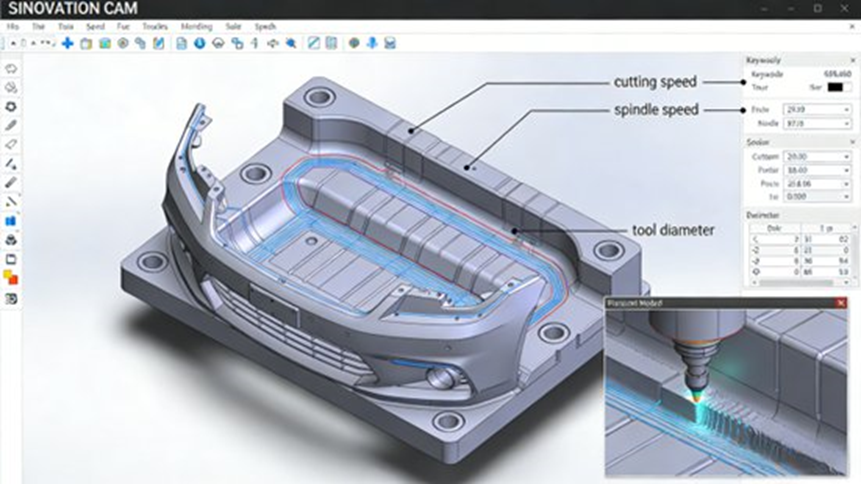
SINOVATION CAM’s CRUX IV Geometry Modeling Core ensures 0.001mm precision, which is vital when manufacturing automotive components. The high accuracy helps in producing parts with the required exactness, whether they are engine parts or body structures.
For example, SINOVATION CAM ensures that the engine blocks and automotive body panels fit together perfectly, as even slight errors in design can lead to major issues in assembly.
2. Seamless CAD/CAM Integration
One of the standout features of SINOVATION CAM is its seamless integration with CAD tools. Traditional workflows often struggle with data compatibility and the conversion process. SINOVATION CAM addresses these issues, enabling smooth transitions from design models to manufacturing processes.
This system reduces the time spent on reworking designs and helps keep all departments (design, engineering, and manufacturing) aligned.
3. Automotive-Specific Features
SINOVATION CAM includes specialized tools for automotive manufacturing, such as:
- Rebound Compensation: Important for stamping molds, ensuring that materials’ rebound is accounted for during the forming process.
- Corner Avoidance: Automatically avoiding sharp corners during machining to preserve tool life.
- Gap Design: Optimizing gaps in parts like automotive body panels, helping to ensure the parts fit together with the highest precision.
Benefits of Full-Process Integration in Automotive Design
1. End-to-End Workflow from Design to NC Programming
The full-process integration between SINOVATION CAD and SINOVATION CAM allows for the seamless transition from design to NC programming. Once a design is finalized, the CAM system generates the necessary toolpaths without the need for manual data conversions or separate software tools.
This end-to-end workflow reduces the chances of error and eliminates unnecessary delays in production.
2. Efficiency Improvements
SINOVATION CAM boosts production efficiency by reducing the time required for toolpath creation, machining, and assembly. Processing time can be reduced by more than 30%, making it possible to meet tight production deadlines and cut costs, a crucial factor in today’s competitive automotive industry.
3. Collaborative Design and Manufacturing
SINOVATION CAM integrates design and manufacturing, promoting collaboration between the two teams. This collaboration ensures better communication and fewer misunderstandings during the design and manufacturing phases, enhancing the overall quality of the automotive product.
Advanced Functionalities and Application in Automotive Engineering
1. 2D/3D Integrated Processing
SINOVATION CAM handles both 2D and 3D processing with ease:
- 2D Processing: Ideal for simpler parts like chassis supports and brackets.
- 3D Processing: Perfect for complex components such as engine parts or car body panels.
The system provides automatic toolpath generation, reducing the amount of manual input required while ensuring high precision.
2. Path Optimization and Editing
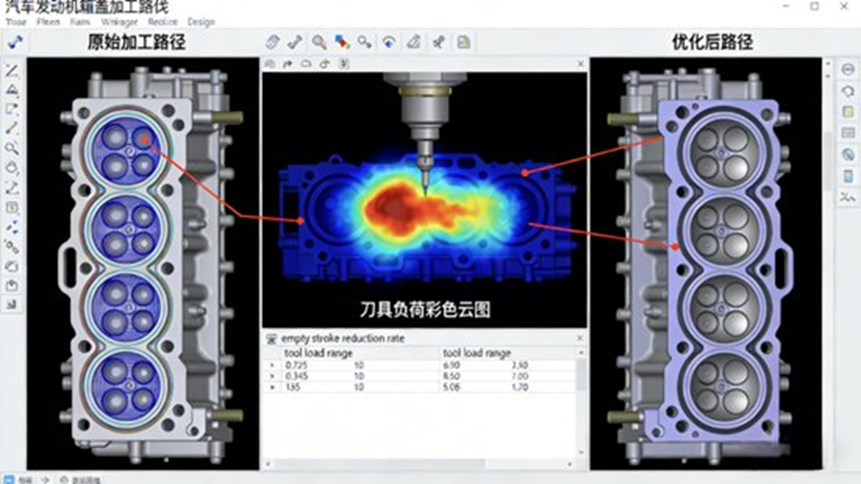
SINOVATION CAM includes advanced path optimization tools that reduce idle time and improve machining efficiency. For multi-axis components, such as engine parts, the system optimizes the toolpaths to minimize tool load and unnecessary travel time, which ultimately reduces wear on equipment and extends tool life.
3. Cutting Simulation and Safety Features
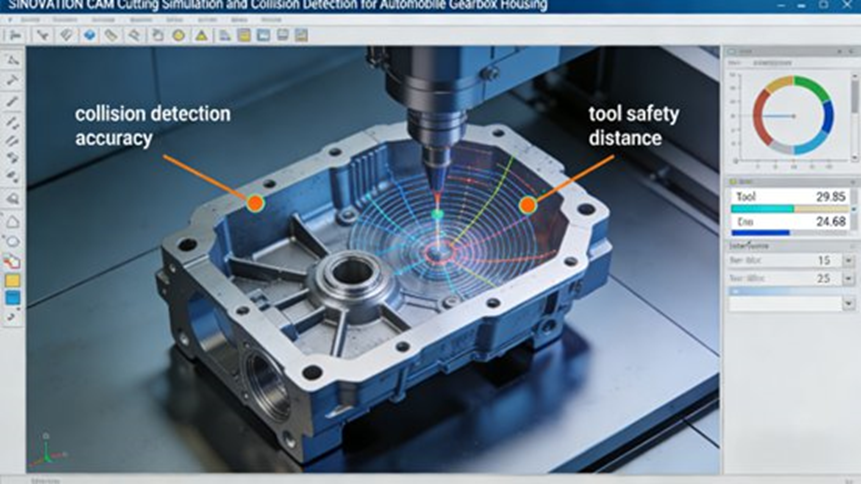
To further ensure precision, cutting simulation tools visualize the machining process. This helps identify potential issues like tool collisions before they occur. This feature is particularly useful when working with automotive molds and engine components, where precision is critical.
Real-World Applications and Case Studies in the Automotive Industry
1. Case Study: Dongfeng Moulds
Dongfeng Moulds, a prominent player in the automotive sector, struggled with precision and timeliness when designing and manufacturing car body panels and engine molds. After adopting SINOVATION CAM, Dongfeng achieved a 30% reduction in processing time and an improvement in mold accuracy, thanks to features like rebound compensation and corner avoidance.
2. Case Study: Foton Motor
Foton Motor, a major commercial vehicle manufacturer, integrated SINOVATION CAM into its engine component production line. By optimizing toolpaths and reducing machine downtime, Foton improved batch production accuracy to 99.8%, significantly enhancing overall production efficiency.
The Future of CAD CAM in Automotive Manufacturing
AI and Automation Integration
As the AI-driven era continues to evolve, SINOVATION CAM plans to incorporate AI-based path planning and real-time process optimizations, pushing the boundaries of efficiency and precision.
Digital Twin and Industry 4.0 Integration
The future of automotive manufacturing lies in the integration of Industry 4.0 technologies. SINOVATION CAM is working towards Digital Twin capabilities, which simulate manufacturing processes in real-time, optimizing workflows and enabling predictive maintenance.
Conclusion
The integration of CAD and CAM tools, especially SINOVATION CAM, is transforming the automotive manufacturing industry. Its precision, workflow optimization, and customizable features streamline production, allowing automotive manufacturers to meet the growing demand for faster, more efficient, and higher-quality components. With continued innovations in AI and Industry 4.0, SINOVATION CAM will continue to shape the future of automotive design and manufacturing.
Frequently Asked Questions (FAQs)
1. How do I recover my work if SINOVATION crashes or exits unexpectedly?
SINOVATION CAM includes a data recovery mechanism that prompts you to restore your previous session’s data after a crash, helping recover unsaved work.
2. What are the supported CAM machining modes (2‑axis, 3‑axis, 5‑axis)?
SINOVATION CAM supports 2-axis, 3-axis, and fixed 5-axis drill-milling operations, including 2D/3D machining, complex surface toolpath generation, and NC data output.
3. How to output NC code correctly for different machine tools?
SINOVATION CAM’s NC output module allows for customized G-code generation and includes a post-processor editor for different machine models, also generating Excel-format process sheets.
4. Why might deleting objects not reduce file size in SINOVATION?
Deleting objects in parameterized CAD modes doesn’t always reduce file size because their history and parameters remain. To reduce file size, objects need to be converted to non-parameterized data.
5. How can I optimize CAM paths and reduce machining idle moves?
SINOVATION CAM offers path optimization tools such as path smoothing, idle move removal, and load visualization, which balance forces and reduce non-cutting time, improving efficiency.
About the AuthorJohnny Liu is the CEO of Dowway Vehicle, a leading automotive manufacturer specializing in advanced vehicle technology and manufacturing solutions. With over 15 years of experience in the automotive sector, Johnny has a deep understanding of CAD CAM technologies and their application in automotive manufacturing.
