


< Back to Vehicle Design & Engineering Hub
Author: Johnny Liu | CEO at Dowway Vehicle
Last Updated: February 21, 2026
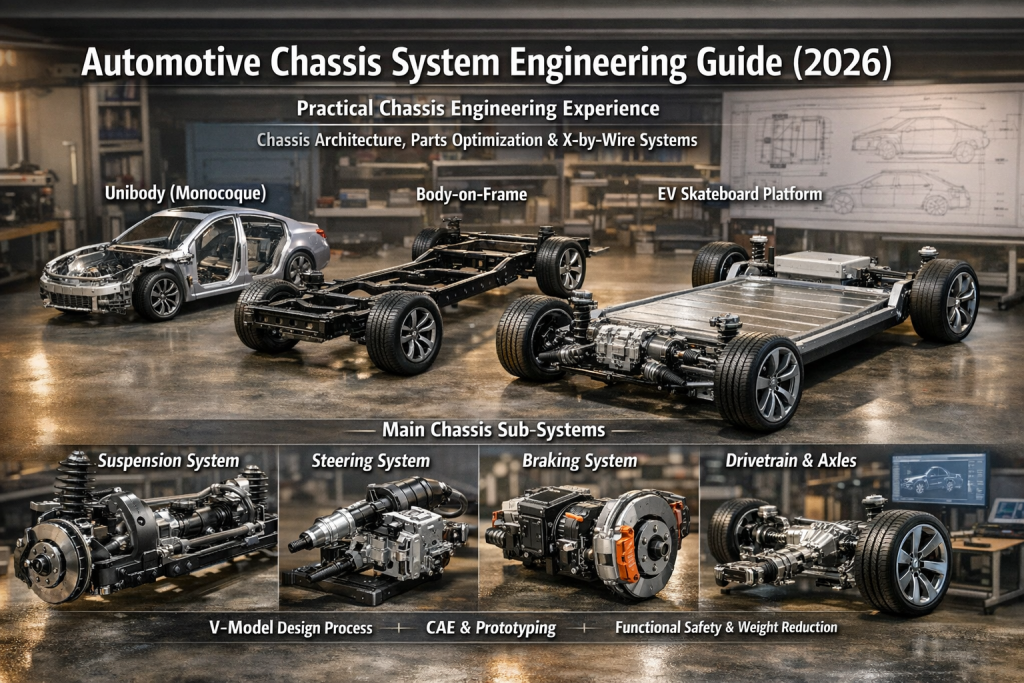
Introduction: Practical Chassis Engineering Experience
As the head of Dowway Vehicle, my team and I engineer passenger and commercial vehicle chassis platforms. This guide outlines practical experience in chassis architecture, parts optimization, and x-by-wire systems for automotive engineers and designers.
Understanding the Chassis System
The chassis is the physical foundation of a vehicle. It carries loads, defines handling, and ensures safety. EVs and automated driving are shifting chassis design toward skateboard platforms and by-wire systems.
Major Chassis Architectures
- Unibody (Monocoque)
Reinforced body shell carries structural loads. Common in passenger cars. - Body-on-Frame (Ladder Frame)
Separate rigid frame for heavy-duty trucks and off-road vehicles. - EV Dedicated Platforms (Skateboard / CTC)
Battery pack acts as structural component (Cell-to-Chassis), lowering center of gravity.
The Four Main Chassis Sub-Systems
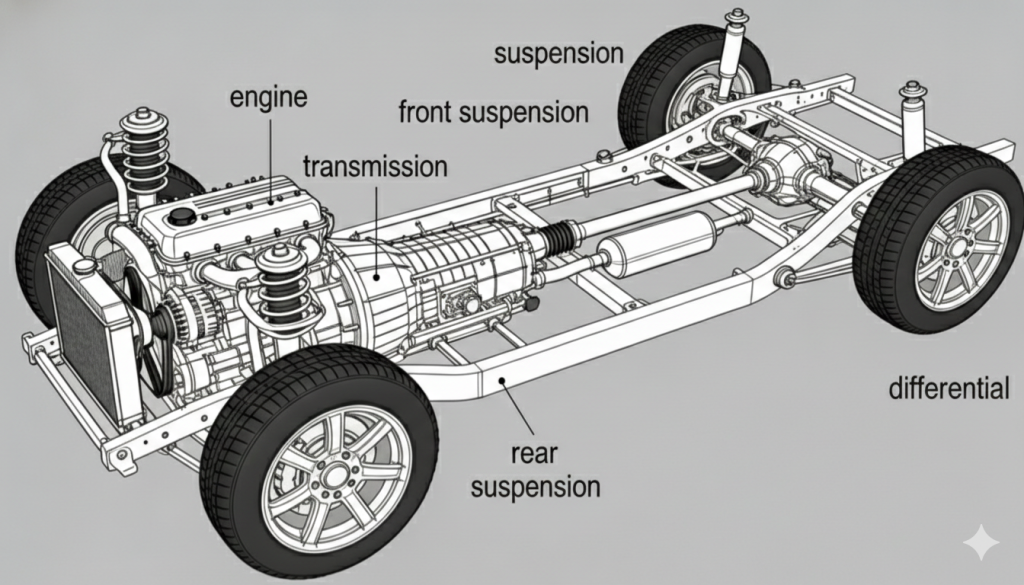
Chassis engineering balances ride, handling, safety, and cost.
Suspension System & Kinematics
- Springs, dampers, control arms, anti-roll bars
- MacPherson vs. Multi-link suspension
- Ride comfort vs. handling precision
Steering System Engineering
- Electric Power Steering (EPS) dominance
- Steering column, rack, tie rods
- Foundation for ADAS and lane keeping
Braking System Integration
- Brake-by-wire transition (IPB/EHB)
- Regenerative braking in EVs
- Pressure build-up <150 ms
Drivetrain & Axle Systems
- Driveshafts, half shafts, CV joints
- Differentials and subframes
- Vibration isolation and torque transfer
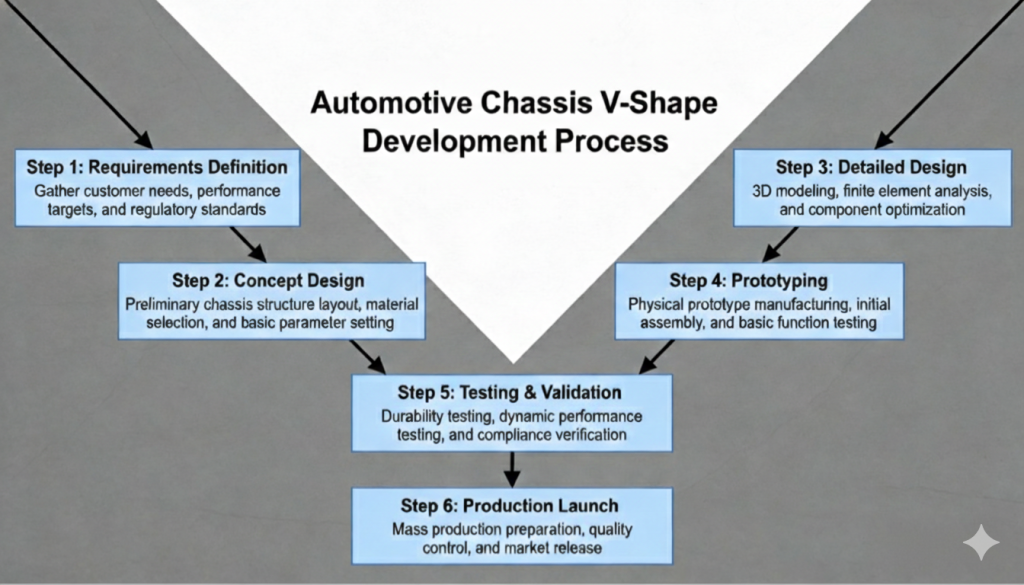
The Standard Parts Design Process (V-Model Workflow)
Packaging & Kinematics Design
- Hardpoint definition
- Interference checks
- Multi-body dynamics load cases
CAD Modeling & Visualization Review
- 3D structural modeling
- Unreal Engine / V-Ray visualization
- Assembly gap and corrosion review
CAE Simulation & Optimization
- Finite Element Analysis (FEA)
- Stiffness and fatigue validation
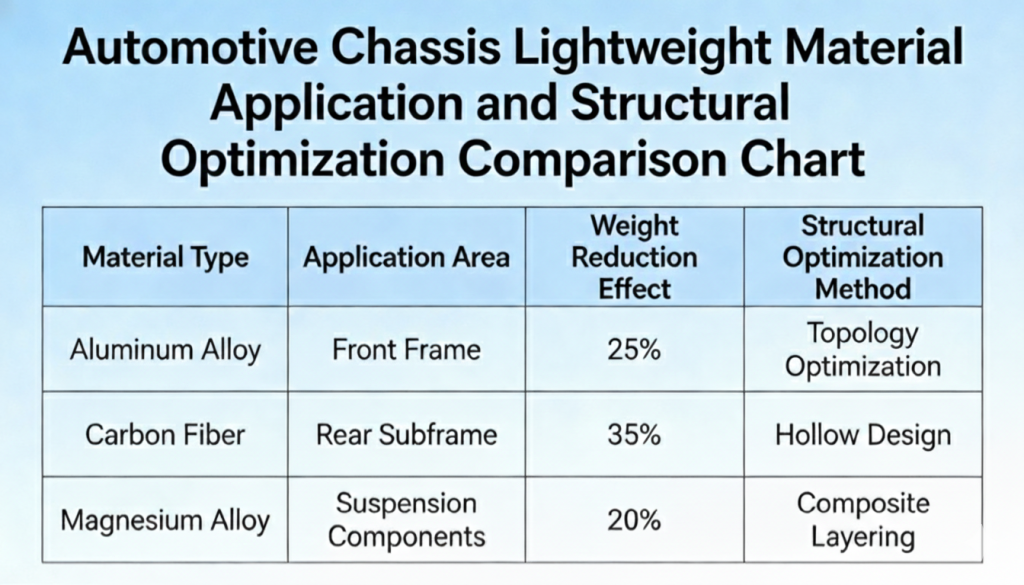
- Topology optimization for weight reduction
Prototyping & Bench Testing
- Physical validation samples
- Fatigue durability testing
Vehicle-Level Tuning & Validation
- Proving ground testing
- Hot/cold/high-altitude validation
- NVH and handling calibration
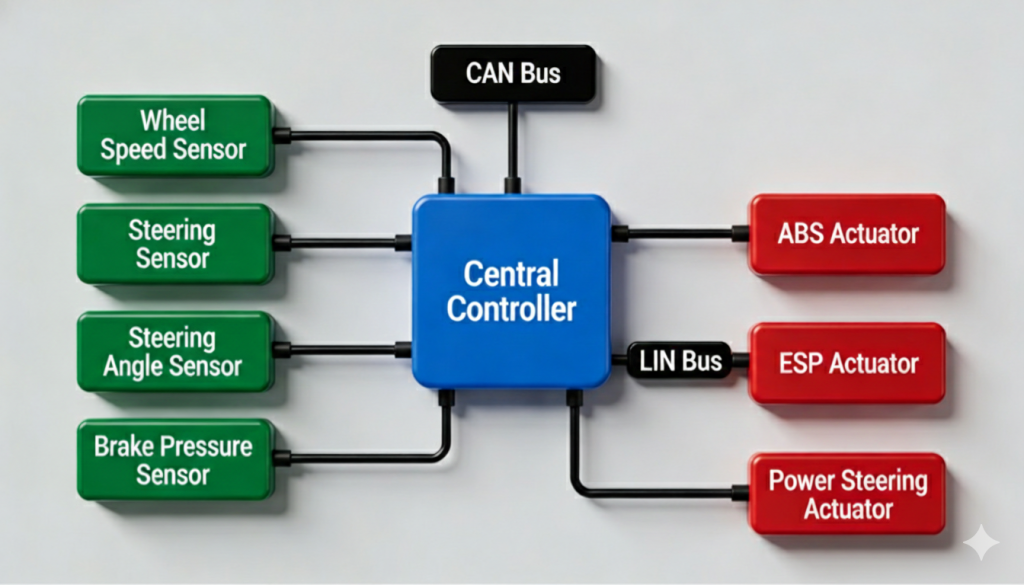
Key Engineering Performance Targets
Weight & Unsprung Mass Optimization
- Forged aluminum
- Hollow structural components
- Grip and ride improvement
NVH (Noise, Vibration, Harshness) Control
- Rubber bush tuning
- Subframe isolation
- Structural noise blocking
Functional Safety & Redundancy
- ISO 26262 compliance
- Redundant braking and steering systems
- Software + hardware fail-safe design
Frequently Asked Questions (FAQs)
What is an automotive chassis system?
Framework that integrates suspension, steering, braking, and drivetrain components.
What are the main chassis design goals?
Strength, stiffness, lightweighting, safety, handling, comfort.
What is the standard chassis design process?
Target setting → Architecture selection → System parameter design → Detailed CAD → Simulation & testing.
How are materials selected?
High-strength steel, aluminum alloys, carbon fiber — chosen based on cost, weight, and strength.
What are the pros and cons of chassis types?
- Ladder frame: strong payload, lower torsional stiffness
- Unibody: stiff, safe, space-efficient
Conclusion: Balancing Performance, Cost, and Safety
Chassis engineering requires systematic validation across handling, comfort, weight, and cost constraints. Every component undergoes strict simulation and physical testing before production.
If you need engineering support for chassis optimization or weight reduction, Dowway Vehicle offers objective, production-level expertise.

·