

< Back to Electrical & Electronic Toolchain
Author: Johnny Liu, CEO at Dowway Vehicle
Published: March 2026
- 1. Introduction to Automotive Functional Safety and Its Importance
- 2. ISO 26262: The Standard for Automotive Functional Safety
- 3. Challenges in Traditional Automotive Safety Testing
- 4. SmartRocket TestGrid: A Comprehensive Solution for Automotive Safety Testing
- 5. Benefits of Using SmartRocket TestGrid in Functional Safety Testing
- 6. Real-World Applications of SmartRocket TestGrid
- 7. Comparison with Traditional Testing Methods
- 8. Conclusion
- 9. Future of Functional Safety Testing
- 1) What is ISO 26262 and why is it critical for automotive functional safety?
- 2) What code coverage is required under ISO 26262 for software testing?
- 3) How does SmartRocket TestGrid help meet ISO 26262 requirements?
- 4) What challenges exist in implementing ISO 26262 testing processes?
- 5) Is certification or training necessary for ISO 26262 compliance?
- (Bonus) What is MC/DC and why is it important?
1. Introduction to Automotive Functional Safety and Its Importance
The automotive industry is changing fast with new technologies like electrification, automation, and connectivity. As the role of software in vehicles grows, the complexity of automotive electronics increases. Vehicles now contain millions of lines of software code, which makes the risk of software defects higher. This is why functional safety has become so important.
Functional safety ensures that automotive systems work properly, even when failures occur. With the rise of Advanced Driver Assistance Systems (ADAS) and autonomous driving (AD) technologies, ensuring the safety of these systems is critical. Functional safety aims to prevent accidents or reduce their severity by making sure that faulty systems don’t cause unacceptable risks.
2. ISO 26262: The Standard for Automotive Functional Safety
ISO 26262 is the international standard that sets the safety requirements for electrical and electronic systems in vehicles. It defines a risk-based lifecycle, covering the entire vehicle development process—from design to decommissioning. It ensures that safety-critical systems meet strict safety standards.
A key element of ISO 26262 is the Automotive Safety Integrity Level (ASIL), which determines how rigorous safety measures should be. ASIL levels range from A (lowest) to D (highest). For ASIL-D systems, the safety standards are particularly strict, requiring thorough testing to ensure safety and reliability.
3. Challenges in Traditional Automotive Safety Testing
Traditional testing methods face several challenges that impact efficiency, coverage, and cost:
- Low Efficiency: Manual testing is slow and labor-intensive, often taking months to complete, especially for large software codebases.
- Coverage Gaps: Manual testing struggles to cover all necessary paths, especially complex coverage requirements like Modified Condition/Decision Coverage (MC/DC).
- High Costs: Testing costs are high because of the labor-intensive process, as well as the cost of tools and long service times.
- Limited Tool Availability: Many tools used in automotive testing are imported, which can limit their ability to meet the needs of the local automotive industry.
These challenges make it difficult to meet the stringent requirements of ISO 26262.
4. SmartRocket TestGrid: A Comprehensive Solution for Automotive Safety Testing
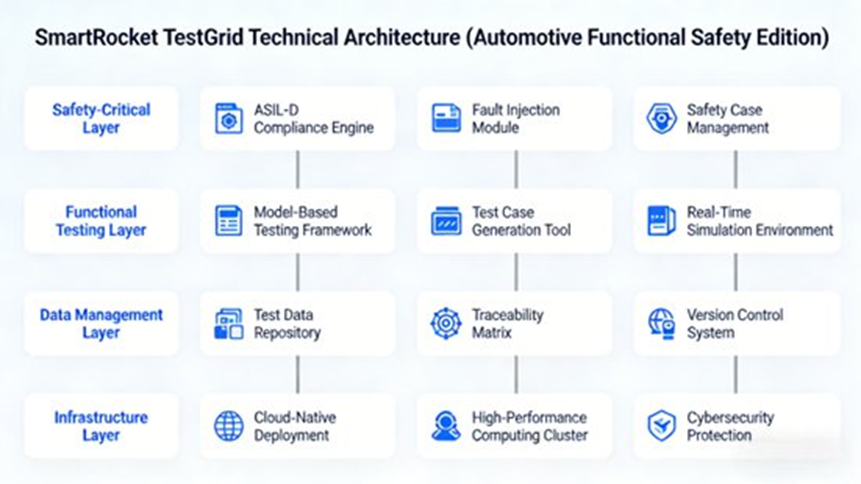
SmartRocket TestGrid is an advanced, TÜV South-certified testing platform designed to meet the needs of automotive systems. It combines static analysis, unit testing, and integration testing, which tackles many of the issues seen in traditional testing.
Key Features of SmartRocket TestGrid:
- Static Analysis: Detects issues like uninitialized variables, array overflows, and null pointer references, ensuring compliance with standards like MISRA C and GJB8114.
- High-Coverage Unit Testing: Utilizes dynamic symbolic execution and AI to generate test cases that meet high coverage requirements, including 100% statement coverage and 90% MC/DC coverage, in line with ISO 26262 standards.
- Integration Testing: Supports both partial and full integration testing, validating how different software modules interact within systems like ECUs (Electronic Control Units) and ADAS.
- Cross-Platform Adaptability: Supports various hardware platforms, including STM32, TI C2000, and integrates with Jenkins for DevOps automation, ensuring seamless integration into CI/CD pipelines.
SmartRocket TestGrid offers a complete solution that reduces manual effort while increasing the reliability and accuracy of safety testing.
5. Benefits of Using SmartRocket TestGrid in Functional Safety Testing
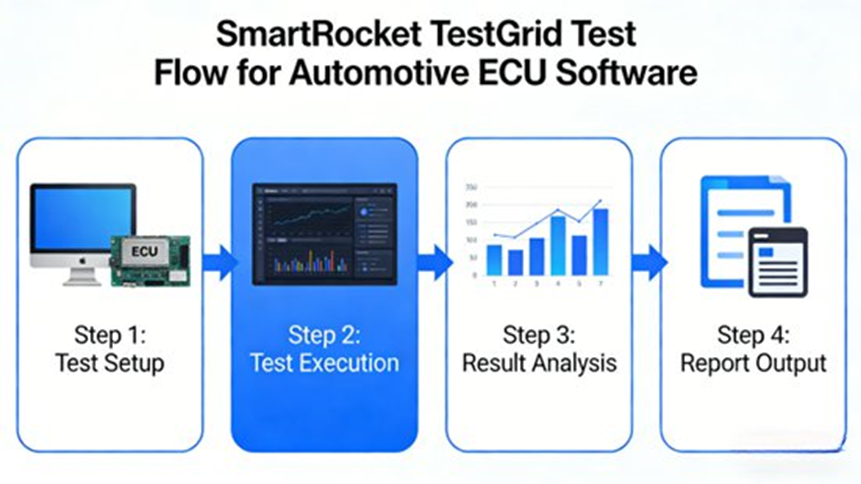
SmartRocket TestGrid provides many advantages over traditional testing methods:
- Increased Testing Efficiency: Automation significantly shortens test cycles. For example, testing 100,000 lines of code, which could take months using manual methods, can now be completed in just 15-20 days.
- Higher Coverage: The tool ensures all critical paths are tested, achieving high coverage that meets ISO 26262 requirements.
- Cost Reduction: Automating the process reduces labor costs, speeding up testing while maintaining accuracy.
- Certification Support: As a TÜV South certified tool, SmartRocket TestGrid’s results are recognized as evidence for ISO 26262 compliance, simplifying the certification process.
6. Real-World Applications of SmartRocket TestGrid
SmartRocket TestGrid has been applied in various automotive systems to improve functional safety testing:
- ECU Low-Level Driver Code Testing: This code controls vital vehicle systems like the engine and brakes, and ensuring its safety is essential. SmartRocket TestGrid automates the generation of test cases to ensure compliance with ASIL-C and ASIL-D.
- ADAS System Control Algorithm Testing: ADAS systems, such as adaptive cruise control and lane-keeping assist, require extensive testing due to their complexity. SmartRocket TestGrid automatically generates test cases that cover a wide range of real-world scenarios.
- Regression Testing: As vehicles undergo frequent software updates, regression testing is necessary to ensure new features do not interfere with existing functionality. SmartRocket TestGrid automates regression testing, making it faster and more reliable.
7. Comparison with Traditional Testing Methods
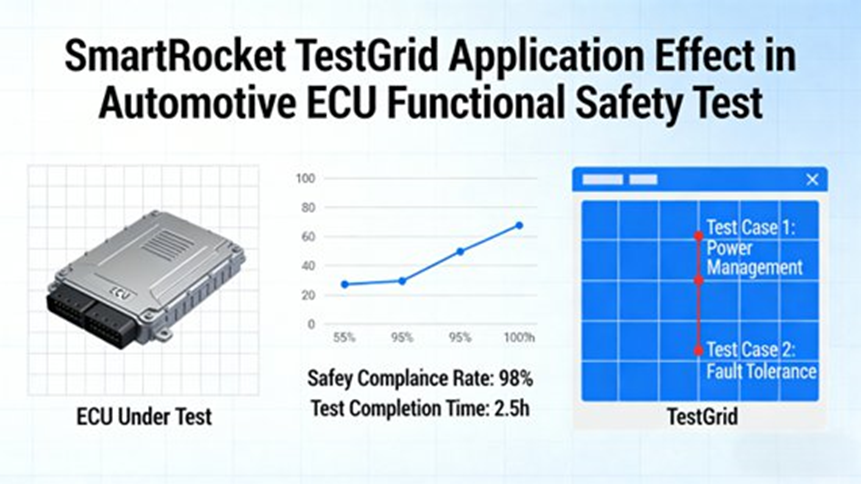
SmartRocket TestGrid outperforms traditional testing methods in many key areas:
- Efficiency: Automated testing reduces the time required for testing by over 80%, from months to just a few weeks.
- Coverage: Achieves 100% statement coverage and 90% MC/DC coverage, far exceeding manual testing capabilities.
- Cost: Reduces the need for extensive manual labor, cutting testing costs significantly.
- Integration: Full integration with tools like Jenkins for CI/CD automation, enabling streamlined testing in modern software development environments.
8. Conclusion
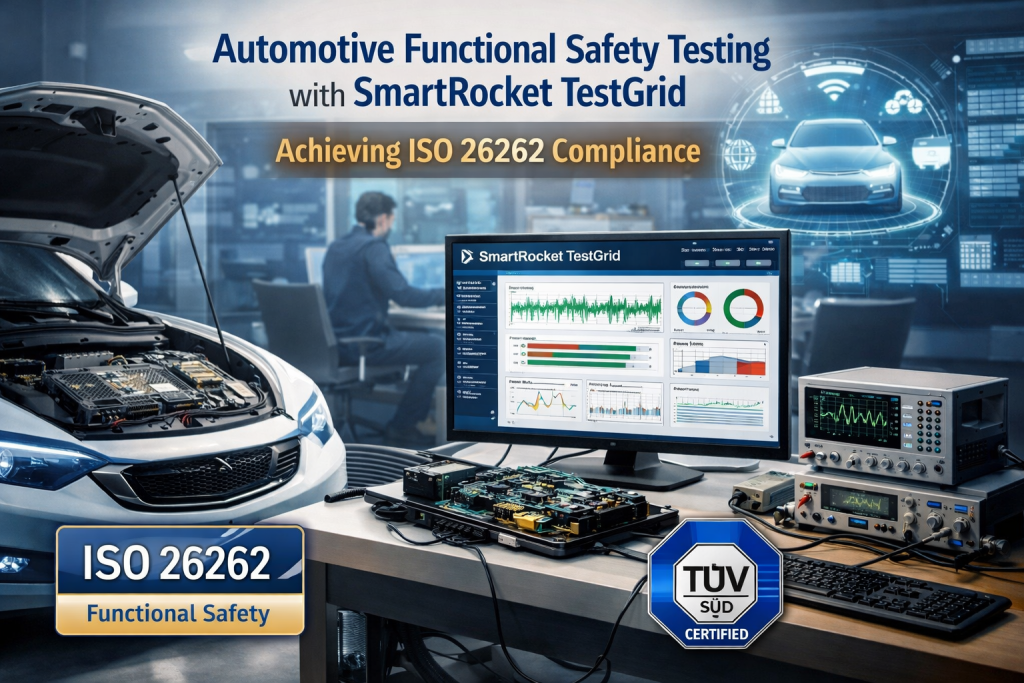
SmartRocket TestGrid is a powerful tool for automotive functional safety testing, addressing the challenges faced by traditional methods. By automating test case generation and execution, it increases test coverage and efficiency while reducing costs. It is TÜV South certified, ensuring it meets the highest industry standards for ISO 26262 compliance. SmartRocket TestGrid is an essential tool for manufacturers looking to enhance the safety and reliability of their automotive systems.
9. Future of Functional Safety Testing
As the automotive industry continues to move toward autonomous vehicles and more complex ADAS systems, the need for more rigorous functional safety testing will grow. SmartRocket TestGrid is well-positioned to meet these challenges by continuously improving its capabilities. Future developments will include better support for SOTIF (Safety of the Intended Functionality) testing and deeper integration with information security features, ensuring that functional safety testing remains ahead of the curve.
Frequently Asked Questions (FAQs)
1) What is ISO 26262 and why is it critical for automotive functional safety?
Answer:
ISO 26262 is the global standard for functional safety in automotive systems. It ensures that electrical/electronic systems remain safe under fault conditions, covering everything from design to decommissioning. This standard is particularly crucial for systems like ADAS and autonomous vehicles that have high safety requirements.
2) What code coverage is required under ISO 26262 for software testing?
Answer:
ISO 26262 requires meeting coverage criteria such as:
- Statement Coverage: Each line of code is executed.
- Branch Coverage: Both directions of decision branches are covered.
- MC/DC (Modified Condition/Decision Coverage): Ensures each condition independently influences decision outcomes.
For high ASIL levels (like ASIL-D), branch and MC/DC coverage are essential.
3) How does SmartRocket TestGrid help meet ISO 26262 requirements?
Answer:
SmartRocket TestGrid automates test case generation and execution, ensuring high coverage, including MC/DC, without manual input. The tool integrates static analysis, unit tests, and integration testing, all aligned with ISO 26262 standards.
4) What challenges exist in implementing ISO 26262 testing processes?
Answer:
Some common challenges include:
- Ensuring traceable coverage for audits.
- Integrating testing tools into CI/CD workflows.
- Managing traceability from requirements to tests to results.
- Addressing MC/DC coverage manually without automation tools.
5) Is certification or training necessary for ISO 26262 compliance?
Answer:
Yes, training and certification are valuable due to the complexity of ISO 26262, which covers risk analysis, hazard assessment, and lifecycle management. Proper training ensures compliance and helps meet regulatory requirements.
(Bonus) What is MC/DC and why is it important?
Answer:
MC/DC (Modified Condition/Decision Coverage) ensures that each condition in a decision independently affects the outcome. This coverage is critical for testing safety-critical systems, especially those at higher ASIL levels, where undetected logic failures could pose significant risks.
Final Thoughts
SmartRocket TestGrid provides a comprehensive and efficient solution for automotive functional safety testing, making it easier to meet ISO 26262 compliance and improve safety in modern vehicles. With automated testing, high coverage, and cost reduction, it is a valuable tool for manufacturers and developers in the automotive industry.
