

< Back to Vehicle Design & Engineering Hub
By Johnny Liu, CEO at Dowway Vehicle
Last Updated: February 2026 | Reading Time: 14 Minutes
Quick Summary for Busy Executives
(What you need to know)
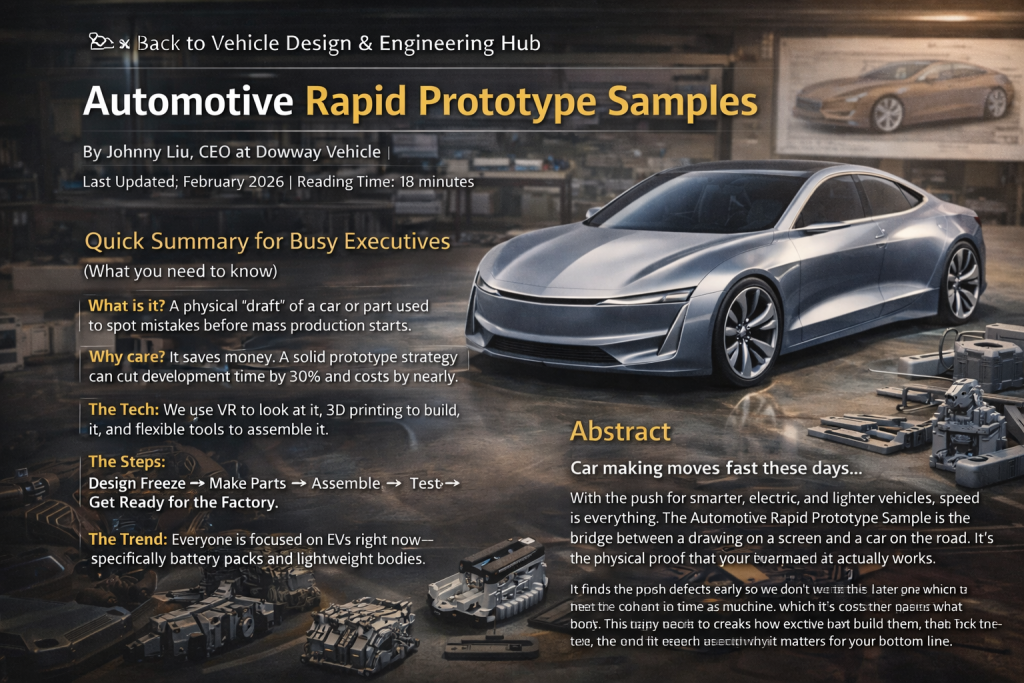
- What is it? A physical “draft” of a car or part used to spot mistakes before mass production starts.
- Why care? It saves money. A solid prototype strategy can cut development time by 30% and costs by nearly 40%.
- The Tech: We use VR to look at it, 3D printing to build it, and flexible tools to assemble it.
- The Steps: Design Freeze → Make Parts → Assemble → Test → Get Ready for the Factory.
- The Trend: Everyone is focused on EVs right now—specifically battery packs and lightweight bodies.
Abstract
Car making moves fast these days. With the push for smarter, electric, and lighter vehicles, speed is everything. The Automotive Rapid Prototype Sample is the bridge between a drawing on a screen and a car on the road. It’s the physical proof that your idea actually works.
Unlike the cars that roll off a mass production line, these samples are custom, precise, and built for testing. Sitting in the CEO chair at Dowway Vehicle, I’ve seen firsthand how a good prototype saves us from disaster. It finds the defects early so we don’t have to fix them later when it costs ten times as much. This guide breaks down exactly how we build them, the tech we use, and why it matters for your bottom line.
1. What Is It and Why Do We Need It?
What is a Rapid Prototype Sample?
Think of it as a “beta version” of a car. It is a custom-built physical model based on the 3D computer data. We build these to check the design, test the performance, and figure out how to manufacture the final product without spending millions on heavy tooling just yet.
Depending on where we are in the project, we build different types:
- Styling Models: To see how it looks and feels (curves, emotions, lines).
- Engineering Models: To check if the frame holds up and if parts fit together.
- Process Models: To verify our assembly logic.
- Validation Models: The final exam before we start the real factory line.
Three Big Reasons We Do It
Prototypes act as a reality check. They provide value in three specific ways:
- Design Check: We turn virtual models into real objects. This helps us see if the interior feels cramped or if the lines look weird in natural light. It prevents the “looks good on paper, fails in reality” problem.
- Performance Check: Does the car drive well? We test engines, suspensions, and battery packs to tune the handling and safety.
- Process Check: We find assembly bottlenecks now so they don’t stop the factory line later.
2. The 5-Step Way We Build Them
At Dowway Vehicle, we stick to a strict loop to make sure we get it right.
Step 1: Stop Changing the Design (Freeze)
We start with Design Freeze. You can’t build something if the blueprints keep changing. We lock in the specs and the Bill of Materials (BOM).
- Simulation: Before we cut any metal, we run computer simulations to check crash safety and aerodynamics.
- The Result: A final set of 3D models and 2D drawings.
Step 2: Make the Parts
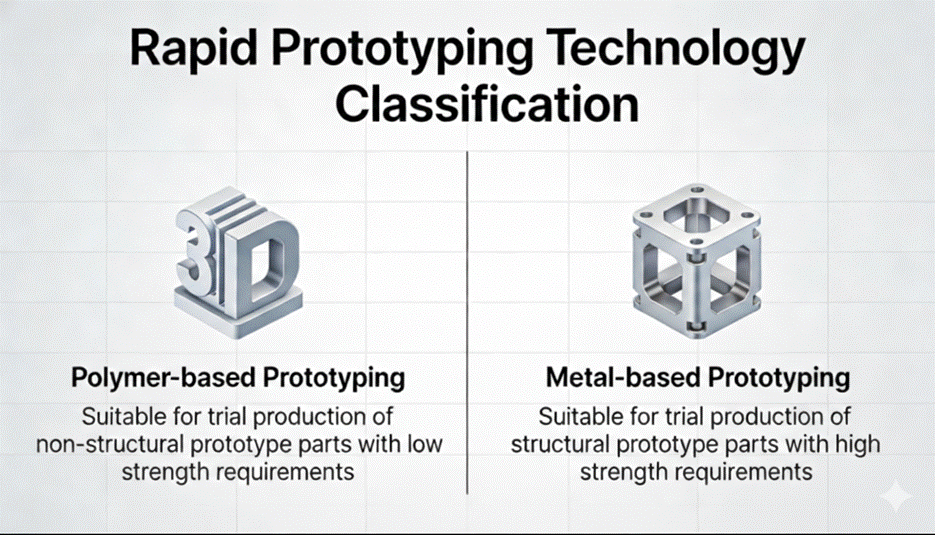
Not every part needs the same treatment. We categorize them to save time:
- Class A (Vital): Engines, batteries, steering. These affect safety, so we test them strictly.
- Class B (Structure): Body panels and frames. We often use soft molds or laser cutting here.
- Class C (Generic): Bolts, clips, wiring. We usually buy these off the shelf or 3D print them quickly.
Step 3: Put It Together
We follow a sequence: Body → Chassis → Engine/Motor → Interior → Electronics.
- Precision: We use adjustable tools and laser measuring devices to make sure the wheels and frame are perfectly aligned.
- First Start: Once built, we turn it on. We check the electronics and listen for any squeaks or rattles.
Step 4: Break It on Purpose (Testing)
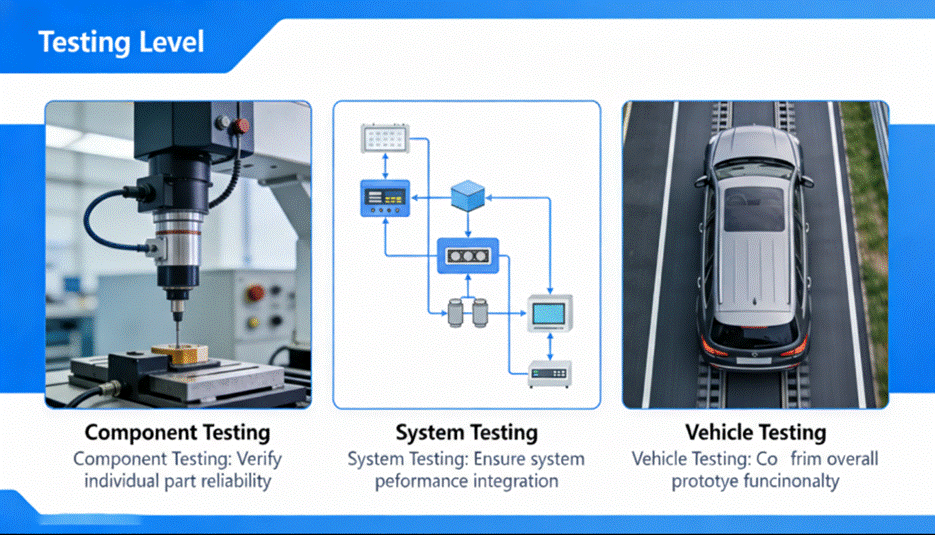
This is the main reason we built the sample. We test it at three levels:
- Parts: We stress-test individual components until they fail.
- Systems: We check if the electronics interfere with each other or if the battery gets too hot.
- Whole Car: We drive it in the heat, the cold, and up mountains. We also crash it to ensure it’s safe.
Step 5: Get Ready for the Factory
Once the prototype passes the tests, we send the data to the main factory. This includes the final parts list and the instructions on how to build it at scale.
3. The Tech That Makes It Possible
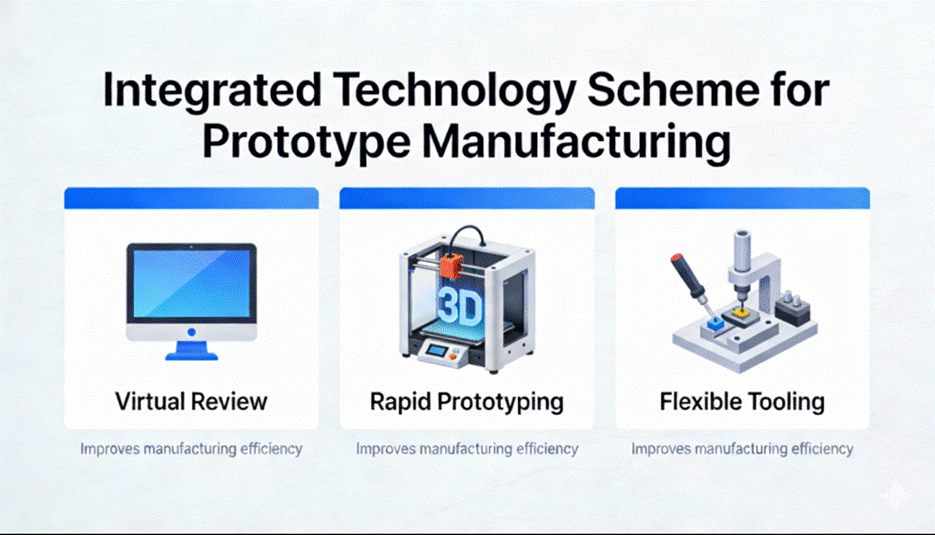
Modern prototyping moves fast because of three specific technologies.
Virtual Reality (VR)
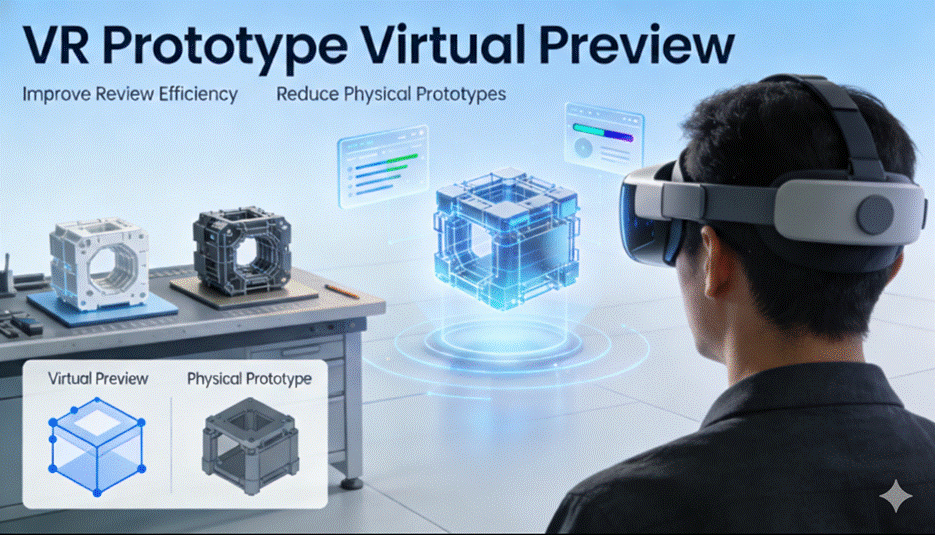
Engineers put on headsets to walk around and sit inside a car that doesn’t exist yet.
- Use case: Checking if a driver can reach the buttons or if the blind spots are too big.
- Result: We catch design errors early, which means we build fewer physical duds.
3D Printing (Additive Manufacturing)
This is the engine of rapid prototyping.
- Plastic (SLA/SLS): We use this for dashboards, grilles, and air ducts. It’s fast and accurate.
- Metal (SLM): We can print dense, strong metal parts like suspension arms without needing to cast a mold.
Flexible Tooling
Old-school car making requires heavy, expensive steel tools. For prototypes, we use “smart” tools that can change shape.
- Benefit: If we change the car model, we just adjust the tool modules. It takes hours, not days.
4. Real-World Success Stories
Theory is fine, but here is what happens when you apply these methods to real projects.
Case 1: The Electric SUV Speed-Run
A leading New Energy Vehicle (NEV) maker needed a prototype for their new electric SUV. Time was tight.
- The Approach: We combined VR reviews with 3D metal printing (SLM) for the suspension and used flexible tooling for assembly.
- The Win:
- VR caught 3 major interference issues before we built anything.
- Assembly tooling switch-over took only 6 hours.
- Result: The R&D cycle dropped from 12 months to 8 months, costs went down by 45%, and the first test pass rate hit 98%.
Case 2: The Perfect Sedan Curve
A traditional car company struggled with “what you see isn’t what you get” on their sedan designs.
- The Approach: We used a hybrid method. We started with digital models, then milled a full-size 1:1 clay model. We finished it by hand to perfect the surface reflections.
- The Win: This bridged the gap between the screen and the eye. The team spotted surface flaws immediately.
- Result: Design rework dropped by 60%, giving them a frozen design that was actually ready for production.
5. Picking the Right Materials
You have to balance cost, speed, and reality.
- Metals: We use aluminum and steel for the frame and suspension because they need to be strong.
- Plastics: We use ABS and nylon for dashboards and door panels because they are easy to shape.
- Carbon Fiber: We use this for high-end EVs to keep the weight down.
The Rule: Match the verification target. If you are crash-testing the car, the metal needs to be the real deal. If you are just checking how the radio knob feels, plastic is fine.
6. Hard Truths and What’s Next
The Challenges
- Precision: Hand-building parts creates small errors that stack up. Keeping everything tight is hard work.
- EVs are Tricky: Testing prototype battery packs is dangerous. We have to be very careful with thermal runaway (fires) and sealing.
- Communication: Getting designers, engineers, and factory bosses to agree is always a hurdle.
Where It’s Going
- More Digital: We will mix real cars with digital overlays (AR) even more.
- Greener: We are moving toward recyclable materials for prototypes to reduce waste.
- EV Focus: The market demands specialized prototyping for batteries and motors. That is where the growth is.
7. Frequently Asked Questions (FAQ)
Here are the answers to the most common questions I hear about this process.
1. What is an automotive rapid prototype sample?
It is a physical model of a car part or assembly that we produce quickly from a digital design before mass manufacturing starts. It lets engineers and designers check the look, fit, and function early on.
In short: It connects the digital design to the real world.
2. Why is rapid prototyping important in the automotive industry?
It cuts down development cycles, lowers costs, and boosts quality. By letting engineers iterate quickly, manufacturers can test ideas and fix design flaws early. This gets the car to market faster than older methods.
Key benefits: Faster innovation, finding errors early, and better design choices.
3. What are the most common technologies used?
- 3D Printing (SLA, SLS, FDM): Best for complex shapes.
- CNC Machining: High precision for functional metal parts.
- Vacuum Casting: Good for making small batches of plastic parts.
We choose the tech based on the trade-off between finish, strength, and cost.
4. What stages of development use these samples?
We use them through the whole process:
- Early design: To check the form and ergonomics.
- Engineering: To test fit and strength.
- Manufacturing: To make sure we can actually assemble it.
5. What are the main limitations?
- Material differences: Prototype materials might not match the final steel or plastic perfectly.
- Strength: Some rapid parts can’t handle full stress loads.
- Cost: High-precision prototypes for large parts are still expensive.
Final Thoughts
The Automotive Rapid Prototype Sample is not just a model; it is engineering proof. By mastering the workflow of Design Freeze, Rapid Manufacturing, and Testing, car makers can handle the shift to electric and smart vehicles with confidence.
At Dowway Vehicle, we turn complex designs into high-precision reality.
Ready to speed up your validation process?

·