


< Back to Electrical & Electronic Toolchain
Author: Johnny Liu, CEO at Dowway Vehicle
Last Updated: March 2026
- 1. Introduction
- 2. Key Features of Automotive Systems Simulation Software
- 3. Applications of Automotive Systems Simulation Software
- 4. Key Benefits of Using Automotive Systems Simulation Software
- 5. The Future of Automotive Systems Simulation Software
- 6. Comparing Automotive Systems Simulation Software: GCKontrol vs. MATLAB/Simulink
- 7. Industry Trends and Market Insights
- 8. Conclusion
- 9. Top 5 Most Discussed FAQs about GCKontrol Automotive Toolchain (in English)
- 10. Call-to-Action (CTA)
1. Introduction
What is Automotive Systems Simulation Software?
Automotive systems simulation software allows engineers to design, test, and optimize vehicle systems virtually before building prototypes. These tools are crucial as automotive systems become more complex due to advancements in electric vehicles, autonomous driving, and advanced safety features.
For instance, GCKontrol, a domestically developed simulation tool, provides an integrated platform for modeling, simulating, and testing vehicle components such as braking systems, powertrains, and suspension systems. It enables manufacturers to test vehicle behavior under various real-world conditions, ensuring high-quality and cost-effective development.
Why Choose Automotive Systems Simulation Software?
As the automotive industry evolves, traditional development methods fall short. Automotive systems simulation software addresses these challenges by enabling virtual testing, reducing the reliance on physical prototypes, and accelerating product development. By simulating real-world performance, manufacturers can improve safety, reduce development costs, and accelerate the time-to-market of new vehicles.
2. Key Features of Automotive Systems Simulation Software
Modeling and Simulation
With tools like GCKontrol, engineers can create high-fidelity vehicle models. These models allow for the simulation of different vehicle systems, such as braking, powertrain dynamics, and suspension. The software supports various modeling techniques such as signal-flow modeling and statechart modeling, making it versatile for a wide range of automotive applications.
For example, in braking system design, GCKontrol can simulate how the ABS (Anti-lock Braking System) reacts under various driving conditions—on wet, dry, or icy roads. These simulations help optimize system performance before any physical testing occurs, ensuring safety and performance are validated early.
Real-time Testing and Simulation
Real-time testing capabilities are essential for ensuring vehicle systems perform as expected in dynamic conditions. GCKontrol supports Hardware-in-the-Loop (HIL) and Software-in-the-Loop (SIL) testing, allowing engineers to validate system behaviors and control algorithms in real-time, reducing risks associated with physical testing.
For example, when testing an ABS system, GCKontrol enables engineers to simulate how the system reacts to a sudden braking event under various conditions, providing immediate feedback to refine control algorithms.
Code Generation and Integration
GCKontrol allows engineers to automatically generate C code for vehicle control systems that meet ISO 26262 ASIL-D safety standards. This automated code generation reduces manual coding errors and accelerates the development cycle. The tool also integrates seamlessly with AUTOSAR, ensuring compatibility with AUTOSAR-compliant platforms. This allows the generated code to be directly used in production environments.
3. Applications of Automotive Systems Simulation Software
ABS (Anti-lock Braking System) Development
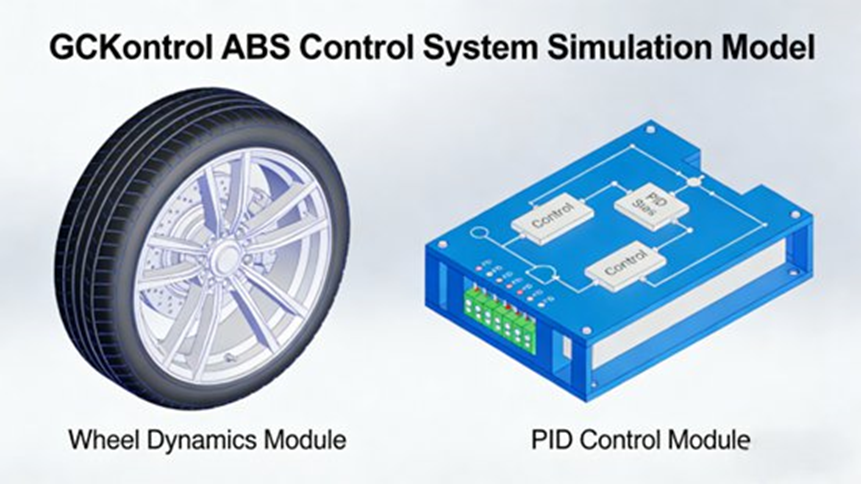
Automotive simulation software is crucial for developing ABS systems, which are essential for vehicle safety. In one case, GCKontrol was used to simulate the behavior of an ABS system, testing its response under various road conditions, such as wet or icy roads. This allowed engineers to optimize the system for real-world performance, enhancing vehicle safety without relying on physical prototypes.
Transmission Control Unit (TCU) Modeling
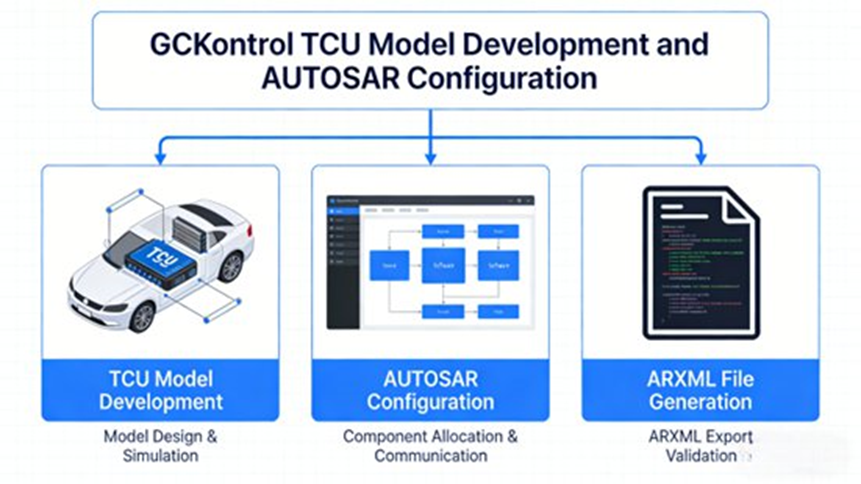
Transmission Control Units (TCUs) are vital for managing vehicle gear shifts. GCKontrol helps engineers simulate and test complex shift algorithms to ensure smooth transitions between gears. These models can be integrated with AUTOSAR, making them compatible with industry standards, which is essential for mass production.
Suspension System for Special Vehicles
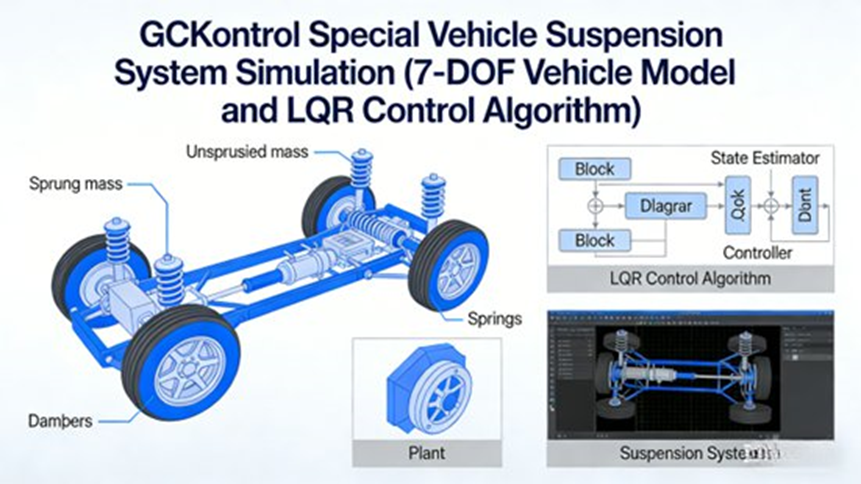
For special vehicles, such as military vehicles or off-road trucks, suspension system design is critical. GCKontrol was used to model a seven-degree-of-freedom suspension system for an off-road vehicle. The tool simulated how the vehicle would behave when traversing vertical obstacles, optimizing the suspension system for stability and comfort before any physical testing.
Electric Vehicle (EV) and Smart Vehicle Simulation
As the automotive industry shifts toward electric vehicles and autonomous driving, simulation software must support energy management, battery performance, and sensor integration. GCKontrol enables engineers to model electric powertrains and optimize battery systems for performance and efficiency.
4. Key Benefits of Using Automotive Systems Simulation Software
Improved Efficiency and Reduced Development Costs
By using GCKontrol, automotive manufacturers can drastically reduce the cost and time associated with physical prototypes. Instead of testing different configurations in the real world, engineers can simulate and adjust systems in a virtual environment, reducing the need for physical trials. This can cut down development cycles by up to 30%.
Enhanced Safety and Compliance
Safety is paramount in the automotive industry, and GCKontrol ensures systems meet rigorous safety standards. The software is ISO 26262 ASIL-D certified, guaranteeing that the generated code complies with the highest automotive safety standards. Engineers can use GCKontrol to design and test control systems that reduce the risk of failures in real-world driving scenarios.
Flexibility in Design and Customization
GCKontrol offers unparalleled flexibility, allowing engineers to adjust parameters, test different algorithms, and customize models for specific vehicles. For instance, the ABS system can be customized to meet the unique requirements of a particular vehicle model, improving overall performance.
Data Security and Local Adaptation
As a domestically developed tool, GCKontrol offers greater data security and local adaptation. Automotive manufacturers can ensure that proprietary data remains secure and that the tool is tailored to the specific needs of Chinese manufacturers.
5. The Future of Automotive Systems Simulation Software
AI and Machine Learning in Automotive Simulations
AI is set to revolutionize automotive simulations, making them more accurate and real-time. Machine learning will allow simulation software to predict vehicle behavior based on past data, improving the accuracy of simulations for autonomous driving and electric vehicle systems.
Integration with Digital Twins for Enhanced Development
Digital twins, or virtual replicas of physical vehicles, will allow manufacturers to test and simulate systems in real-time, using actual performance data. This will help predict maintenance needs, improve design, and reduce the risk of system failures over the vehicle’s lifecycle.
Continued Growth of Autonomous Driving and EV Systems
As the demand for autonomous vehicles and electric vehicles increases, so will the need for advanced simulation tools. GCKontrol is already evolving to support complex systems, such as multi-sensor fusion and real-time control algorithms, which are essential for the development of these cutting-edge vehicles.
6. Comparing Automotive Systems Simulation Software: GCKontrol vs. MATLAB/Simulink
Overview of GCKontrol
GCKontrol is a domestic automotive simulation tool that supports the entire system development lifecycle. It offers modeling, simulation, and code generation, and integrates with AUTOSAR. The tool’s ISO 26262 ASIL-D certification ensures that the generated code meets the highest safety standards.
MATLAB/Simulink Comparison
While MATLAB/Simulink is an established tool in the automotive industry, GCKontrol offers a cost-effective, flexible alternative that is specifically tailored to the needs of Chinese manufacturers. It integrates seamlessly with local tools, ensuring that manufacturers can develop systems more efficiently without the high cost of international tools.
7. Industry Trends and Market Insights
Growth of Automotive Simulation Software Market
The global automotive simulation software market is expected to grow as manufacturers increasingly rely on these tools to reduce costs and improve vehicle systems. GCKontrol is well-positioned to play a key role in this market, especially as demand for local solutions rises.
Challenges in Adoption
While the benefits of automotive simulation software are clear, challenges such as cost, technical complexity, and integration remain. However, as simulation tools become more user-friendly, these barriers to adoption will likely decrease.
8. Conclusion
Automotive systems simulation software, including GCKontrol, is essential for the modern development of safe, efficient, and reliable vehicles. From ABS systems to autonomous driving technologies, these tools help manufacturers optimize vehicle performance and reduce time-to-market. As the automotive industry continues to innovate, simulation software will play an even larger role in shaping the future of vehicle development.
9. Top 5 Most Discussed FAQs about GCKontrol Automotive Toolchain (in English)
1. What is GCKontrol and what does it support?
Answer:
GCKontrol is a graphical modeling and simulation tool developed for automotive engineering. It supports system-level modeling, simulation, high-quality code generation, and integration with MBSE workflows. It is a core component of a Chinese automotive toolchain alternative to MATLAB/Simulink.([globalcrown.com.cn][1])
2. Does GCKontrol support AUTOSAR development and code generation?
Answer:
Yes. GCKontrol supports full AUTOSAR adaptation. It generates arxml, C, and H files that comply with AUTOSAR SWC standards. The tool integrates with other AUTOSAR tools for RTE/BSW generation.([CSDN 博客][2])
3. Is GCKontrol certified for automotive functional safety (e.g., ISO 26262)?
Answer:
Yes. GCKontrol has obtained ISO 26262 ASIL-D certification, meeting the highest automotive safety standards for tools, ensuring that systems developed with it are safety-compliant.([globalcrown.com.cn][3])
4. What modeling and simulation features does GCKontrol provide?
Answer:
GCKontrol offers signal-flow modeling, statechart modeling, and custom code integration. It supports FMU export and has a Python API for automation of tasks like modeling, simulation, and testing.([globalcrown.com.cn][1])
5. How can I automate workflows in GCKontrol (e.g., batch simulation or testing)?
Answer:
GCKontrol provides a Python API, enabling users to automate tasks such as batch simulation, testing, and result retrieval, enhancing productivity and reducing manual intervention.([globalcrown.com.cn][1])
10. Call-to-Action (CTA)
For more information or a demo of GCKontrol, contact us today. Explore how our simulation software can optimize your vehicle development process.
