


< Back to Vehicle Design & Engineering Hub
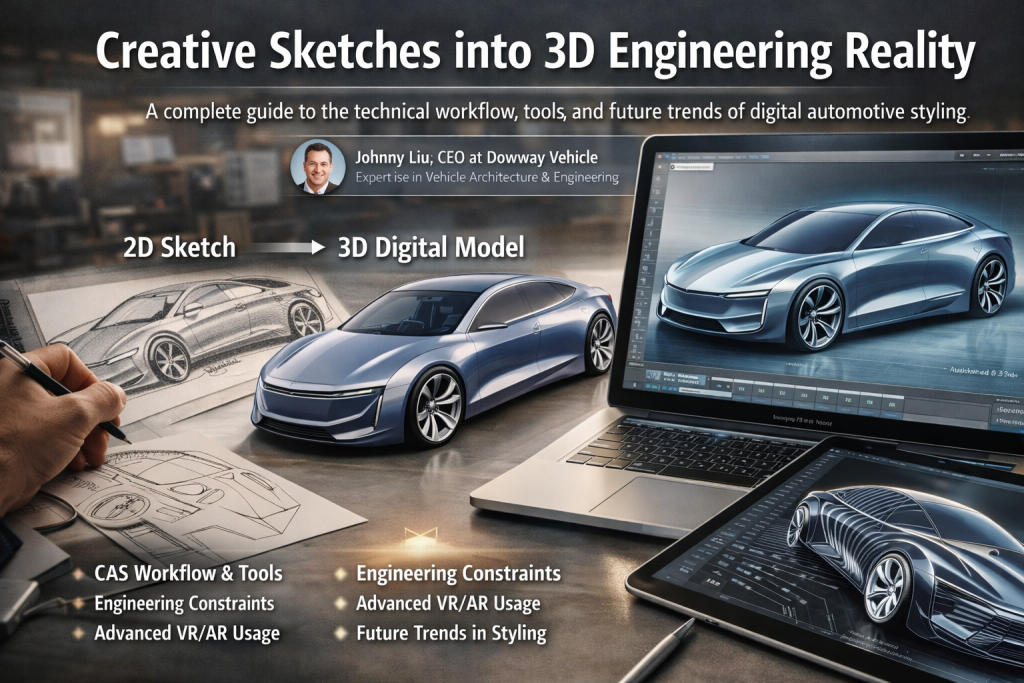
Transforming 2D creative sketches into 3D engineering reality. A complete guide to the technical workflow, tools, and future trends of digital automotive styling.
Author: Johnny Liu, CEO at Dowway Vehicle
Expertise: Expert in Vehicle Architecture & Engineering
Published: October 28, 2024
Reading Time: 15 minutes
Topic: Vehicle Design & Engineering > Digital Styling
- Introduction: What is Computer Aided Styling (CAS)?
- The Strategic Value of CAS in Vehicle Development
- The Standardized CAS Technical Workflow
- Critical Technical Skill: Balancing Beauty and Engineering
- Advanced Toolchain and Digital Technologies
- Future Trends: The Evolution of Digital Styling
- Frequently Asked Questions (FAQ)
- Final Thoughts
Introduction: What is Computer Aided Styling (CAS)?
Developing a vehicle is a complex process. Within this world, Computer Aided Styling (CAS) acts as the main link. It connects the artistic vision from the Creative Design phase with the strict logic needed for the Detailed Engineering phase.
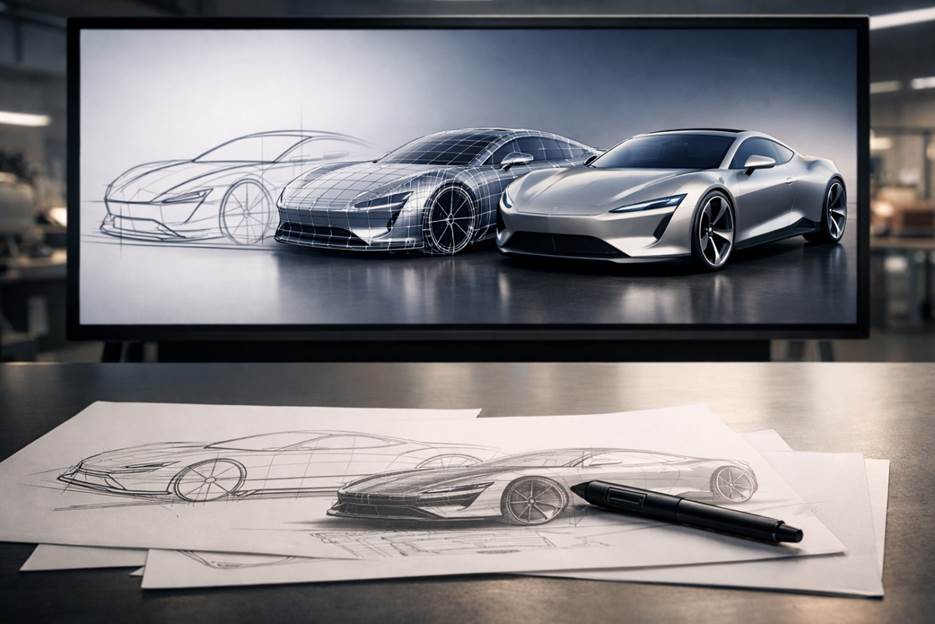
Class-A Surface generation focuses on making surfaces perfect for production (flawless and smooth). CAS Design is different. It is a specific field that focuses on showing creative ideas quickly and checking if they work. This is the stage where a designer’s 2D sketch turns into a 3D digital model. It gets defined proportions, feature lines, and surfaces.
At Dowway Vehicle, we see CAS as the “Digital Interpreter” of our engineering work. It turns abstract ideas into measurable 3D data. This makes sure we keep the vehicle’s “soul” alive while sticking to the ground rules set during the General Arrangement phase.
The Strategic Value of CAS in Vehicle Development
Why is CAS so essential in modern Vehicle Design & Engineering? Its value goes beyond just showing what the car looks like:
1. Bridging Art and Science
CAS breaks the limits of 2D sketches. It lets Design Directors and Chief Engineers see a design in a 3D space. This stops the common “disconnect” where a beautiful sketch turns out to be a car you simply cannot build.
2. Time-to-Market Efficiency
In the past, the design process depended a lot on physical clay modeling. That process is slow and costs a lot. By using high-quality CAS models, we can update designs digitally in real-time. This approach can cut the development cycle by over 30%, reducing the number of physical clay loops we need.
3. Risk Front-Loading
The CAS phase is the best time to check if things work. We can check Vehicle Packaging (like headroom for passengers), run early Aerodynamic Simulation (CFD), and assess Manufacturing Feasibility (like parting line logic) before we commit to expensive detailed engineering.
The Standardized CAS Technical Workflow
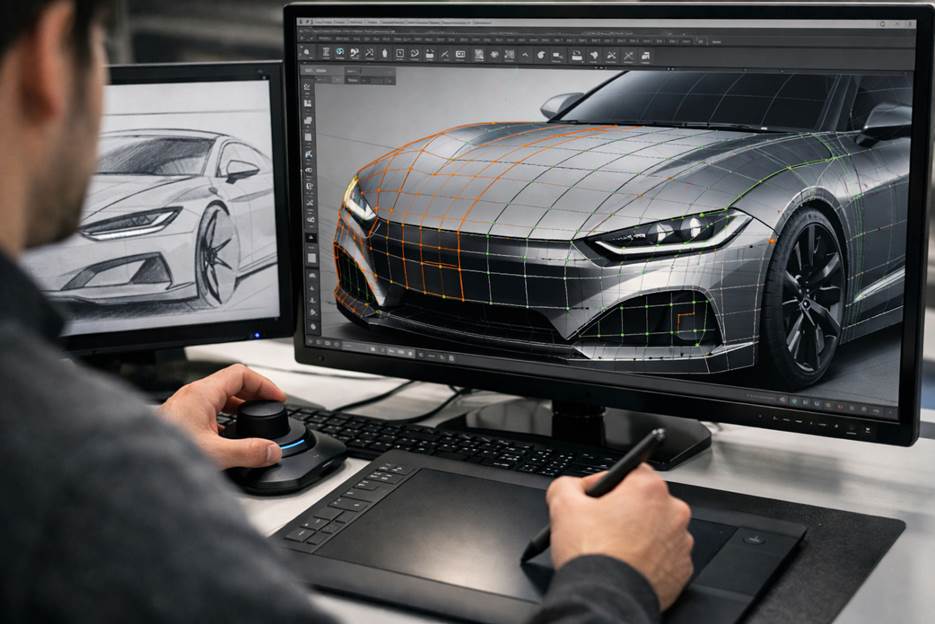
A professional CAS process is organized. We follow a clear “Positive Design” workflow to keep things precise.
Phase 1: Pre-Preparation & Input Analysis
Success starts before we draw the first line.
- Creative Input: We look at 2D renderings (front 45°, side, rear) to understand the design intent. We identify key feature lines and priority parts like grilles and lamps.
- Hard Points Integration: This is key. We import Vehicle Hard Points (wheelbase, track, overhangs, H-point) and set the global coordinate system. This makes sure we build the model on a solid engineering foundation.
- Environment Setup: Using software like Autodesk Alias or ICEM Surf, we match camera views to the original sketches. We save these “Bookmarks” so we can constantly check our alignment.
Phase 2: Core Model Construction
This is where the car takes shape.
- Bounding Box: We define the maximum vehicle volume based on engineering limits. This keeps all parts inside the allowed space.
- Feature Lines (Nurbs Modeling): We build the “character lines” using high-quality Nurbs curves. The hood line, for example, dictates where the grille and headlamps go, so we need precise control here.
- Surface Refinement: We build surfaces using sweeping and blending techniques. While these are not yet Class-A, surfaces must reach G1 (Tangent) continuity. Key areas must reach G2 (Curvature) continuity.
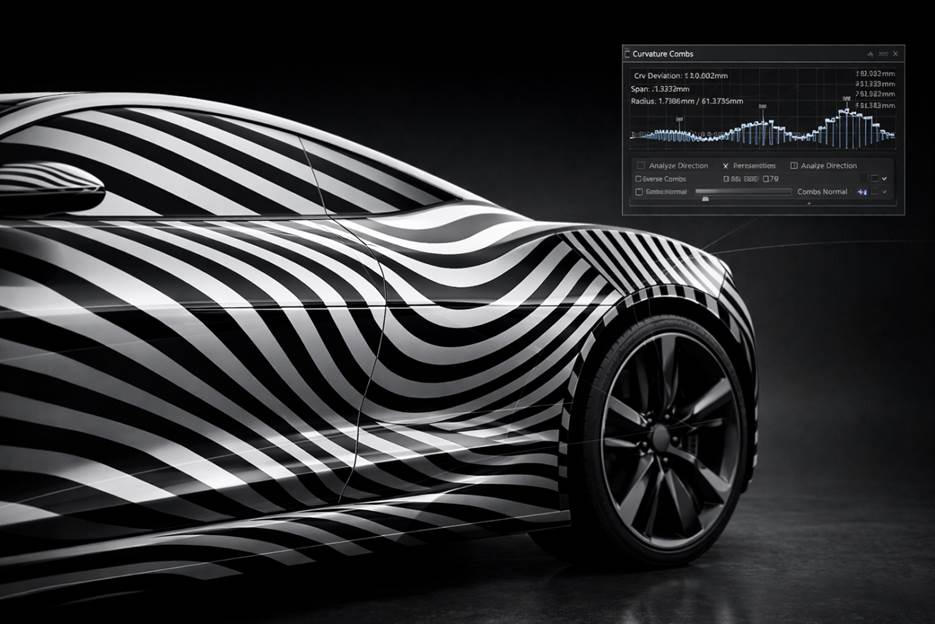
- Visual Validation: We use Zebra Stripe Analysis and Highlight Analysis in real-time. This confirms that surfaces are smooth and free of unwanted twists or bumps.
Phase 3: Review, Optimization & Delivery
- Dual Review System: The model goes through a Styling Review (visual check) and an Engineering Review (clearance checks, packaging check).
- Output: Once approved, we deliver a complete data package:
- 3D Model Files: Standard formats (IGES/STEP) with complete feature sets.
- Feasibility Report: Conclusions on packaging and whether the process will work.
- Multi-angle Renderings: Front 45°, side, front, and rear views for the final presentation.
- Feature Line Parameters: Specs for curve curvature and surface connections to guide Class-A design.
Critical Technical Skill: Balancing Beauty and Engineering
Building a CAS model is a balancing act. It takes a strong grasp of both aesthetics and engineering rules.
1. Proportion Control
Proportion is the soul of automotive design. We stick closely to General Arrangement parameters. A common mistake is “visual imbalance”—where the roof looks too low or the wheels too small for the body. We stop this by creating reference planes and constantly checking hard points against 2D sketches in multiple views.
2. Surface Continuity & Detail
- Curve Quality: We make sure curves flow without sudden breaks. For lines that expand or contract, we use rotational replication techniques to stay precise.
- Visual Correction: Sometimes, math says lines are parallel, but they look like they cross in 3D. We apply “visual corrections” (designing tiny angles or U-shaped deviations) to make sure lines look parallel and comfortable to the human eye.
3. Addressing Engineering Constraints
CAS is not just a drawing; it is a pre-engineering model.
- Packaging: We confirm that the engine bay has enough volume, passenger headroom is good, and the trunk meets capacity targets.
- Manufacturing Process: We avoid “undercuts” (features that get stuck in the mold) and make sure Parting Lines (PL) sit in logical spots for assembly. Even parallel PLs get slight angles to make up for visual perspective.
- Regulatory Compliance: We check critical legal rules, such as headlamp height, blind spots, and bumper positioning.
4. Common Pitfalls & Solutions
| Common Issue | Impact | Prevention Strategy |
| Proportion Imbalance | Fails design review; high update cost. | Stick strictly to Hard Points; check multiple views often. |
| Poor Surface Continuity | Ruins visual “flow”; makes Class-A work harder. | Real-time Highlight/Zebra analysis; prioritize large surfaces first. |
| Ignoring Constraints | Unbuildable design; costly rework. | Involve engineering early; do feasibility checks in CAS. |
| Distorted Feature Lines | Loses design intent; looks “blurry.” | Use high-quality Nurbs curves; check curvature graphs constantly. |
Advanced Toolchain and Digital Technologies

To deliver top-tier CAS models, Dowway Vehicle uses a strong set of digital tools.
Core Modeling Software
- Autodesk Alias Studio: The industry standard for creative freedom and Nurbs modeling. Great for “Positive Design” workflows.
- ICEM Surf: Used for high-end surface quality control. It is perfect for luxury and sports vehicles that need perfect reflections.
- Catia: Excellent for projects that need tight integration with engineering structures and parametric design (like working with ECUs or T-Boxes).
Cutting-Edge Fusion
- VR/AR Reviews: We import CAS models into Virtual Reality environments. This lets designers “walk around” the vehicle. They can see the scale and presence in a way 2D screens cannot match.
- AI-Assisted Design: We are looking into AI algorithms to automate routine surface optimization and create variation concepts based on user data.
- Data Security (Cryptography): A unique capability. In the era of Intelligent Connected Vehicles (ICV), CAS data is intellectual property. We add Key Management Systems using SM2/SM3/SM4 cryptographic algorithms. This makes sure model data stays encrypted during storage and transfer, meeting ISO 26262 and TISAX security standards.
Future Trends: The Evolution of Digital Styling
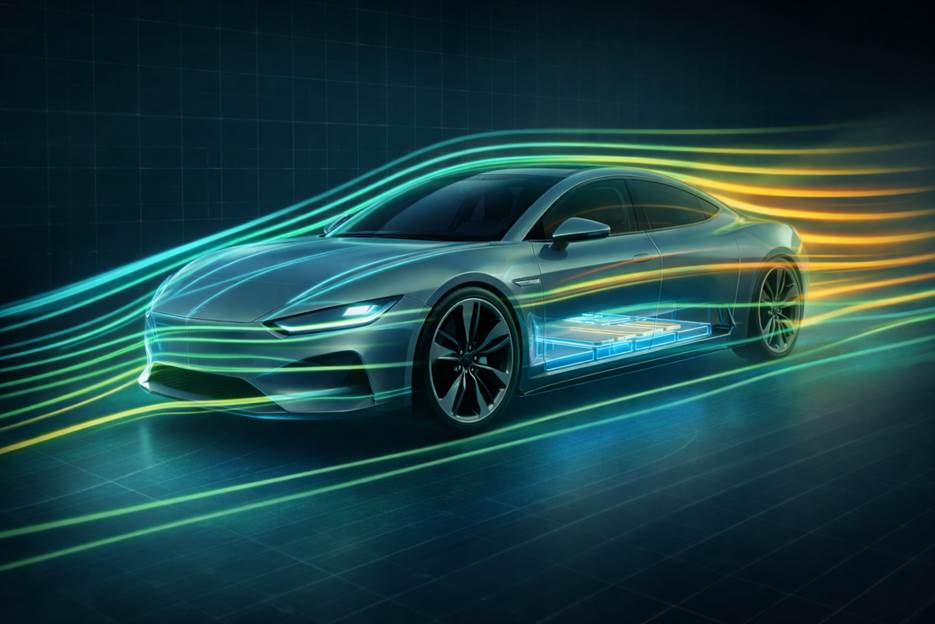
As the industry moves to EVs and smart mobility, CAS design is changing.
1. Intelligent & Collaborative Design
The wall between styling and engineering is falling. Collaborative platforms (like Teamcenter) allow real-time sharing of CAS models. This means Styling, Engineering, and Manufacturing teams can validate a design at the same time, which cuts down errors significantly.
2. CAS & Class-A Integration
The line between CAS and Class-A is fading. With advanced software, high-quality CAS models can now serve as the direct foundation for Class-A surfacing. This reduces redundant modeling work (“CAS Refinement = Preliminary Class-A”).
3. EV-Specific Innovations
New Energy Vehicles have different priorities. CAS designers now focus heavily on Aerodynamic Optimization (smoothing surfaces to extend range) and Skateboard Chassis Packaging (optimizing cabin space on a flat battery platform).
4. Security-First Design
As cars become software-defined, the security of design data is a top priority. Future CAS workflows will start to include Lifecycle Management for data security. This makes sure the digital twin of the vehicle is protected from tampering or leakage from day one using dynamic key strategies.
Frequently Asked Questions (FAQ)
Here are the top 5 most discussed questions regarding Computer Aided Styling (CAS) in the industry and academia. We have provided expert answers that reflect the current state of automotive design.
1. What is Computer Aided Styling (CAS) and how does it differ from CAD or CAID?
Expert Answer:
CAS (Computer Aided Styling) is a method that applies computer technology to product appearance design, especially in automotive exterior and industrial design. It focuses on aesthetic expression and free-form surface modeling. This is different from traditional CAD, which emphasizes engineering details and manufacturing preparation. CAS gives more intuitive, realistic design effects and speeds up the conceptual process. (Source: Tsinghua University CAD Center)
Key Distinctions:
- CAD (Computer-Aided Design): A broader term used for engineering design across all product lifecycle stages. (Source: Wikipedia)
- CAID (Computer Aided Industrial Design): Focuses specifically on industrial appearance and styling; functionally, it is very close to CAS and people often use the terms interchangeably. (Source: Springer)
2. What specific role does CAS play in the modern automotive design process?
Expert Answer:
In automotive styling development, CAS technology runs through the whole exterior design workflow. Its main roles include:
- Digital Visualization: Creating 3D styling expressions and real-time presentations.
- Rapid Iteration: Letting designers quickly change and fine-tune exterior details.
- Collaboration: Supporting cross-departmental data sharing (integrating with engineering analysis, manufacturing planning, etc.).
- Efficiency: Reducing development cycles, minimizing physical model making, and optimizing design costs. (Source: You_JOB)
Also, the 3D surface data generated by CAS is vital for later stages like rendering, design review, and Class-A modeling. It unites aesthetics with engineering requirements. (Source: CSDN Library)
3. What core problems does CAS solve?
Expert Answer:
CAS mainly fixes these critical issues in styling design:
- Shape Expression & Creative Realization: Using 3D free-form surface modeling and real-time rendering allows designers to explore and visualize design schemes intuitively. (Source: Tsinghua University CAD Center)
- Surface Quality Control: It allows for the quick creation of high-quality surfaces in the early styling stage before moving to the time-consuming Class-A design phase. (Source: Chinese Encyclopedia)
- Process Integration: CAS data can be shared directly with downstream engineering, manufacturing, and CAE analysis sectors. This greatly improves cross-departmental collaboration efficiency. (Source: CSDN Library)
- Reducing Physical Prototypes: By using virtual environments, we depend less on physical clay models, saving both time and material costs. (Source: You_JOB)
4. What challenges are encountered when implementing CAS?
Expert Answer:
Common challenges in the CAS workflow include:
- Design Evaluation Difficulties: Looking at 3D models solely on a 2D screen can sometimes lack realism. This might affect the intuitive judgment of proportions compared to physical models. (Source: Wikipedia)
- Integration Complexity: Different departments often use different software systems. This makes data consistency and communication efficiency a hurdle. (Source: CAD Conference)
- High Surface Quality Demands: As the design moves to the engineering stage (Class-A), there are strict requirements for surface accuracy and continuity. The CAS model must prepare for this. (Source: Chinese Encyclopedia)
- Talent Requirements: The role requires designers who possess both strong aesthetic styling abilities and the technical skill to master advanced modeling tools. (Source: Baidu Wenku)
5. What are the common CAS / CAID software tools?
Expert Answer:
The industry relies on high-end styling and surfacing software, including:
- Autodesk Alias: A professional CAID software widely used in automotive design for creating high-quality free-form surfaces and digital models. (Source: Wikipedia)
- Other Industry Standards: While not always explicitly listed in every general search, ICEM Surf (for Class-A quality), Rhinoceros, and the styling modules within CATIA are also widely recognized as advanced CAS/CAID tools in the automotive sector.
Final Thoughts
Computer Aided Styling (CAS) is the digital backbone of modern vehicle engineering. It is where art meets physics, and where a dream car becomes a viable product.
At Dowway Vehicle, our CAS teams are not just modelers; they are hybrid experts fluent in design aesthetics, engineering logic, and data security. By using advanced tools and a rigorous workflow, we deliver CAS models that are visually stunning, technically feasible, and ready for production.
Ready to turn your sketches into engineering reality?
Contact our design engineering team today to discuss your CAS and surfacing needs.

·