


| Parameter | Specification |
|---|---|
| Sensor Type | Brake Wear Sensor |
| Sensing Technology | Resistive + Mechanical |
| Output Signal | Switch Output (Open/Close) |
| Interface | Two-wire connector |
| Operating Voltage | 8–16 VDC |
| Operating Temperature | -40°C to +150°C |
| Storage Temperature | -40°C to +130°C |
| Supply Current | <10 mA |
| Detection Threshold | Configurable based on disc thickness |
| Signal Output | Digital trigger or voltage pulse |
| Mounting Method | Direct mount on brake disc fixed thickness point |
| Material | High-temperature polymer housing, stainless steel components |
| Compliance | RoHS, REACH, ISO 7637-2, AEC-Q100 Grade 1 |
| Diagnostic Support | Fault code reporting via signal analysis |
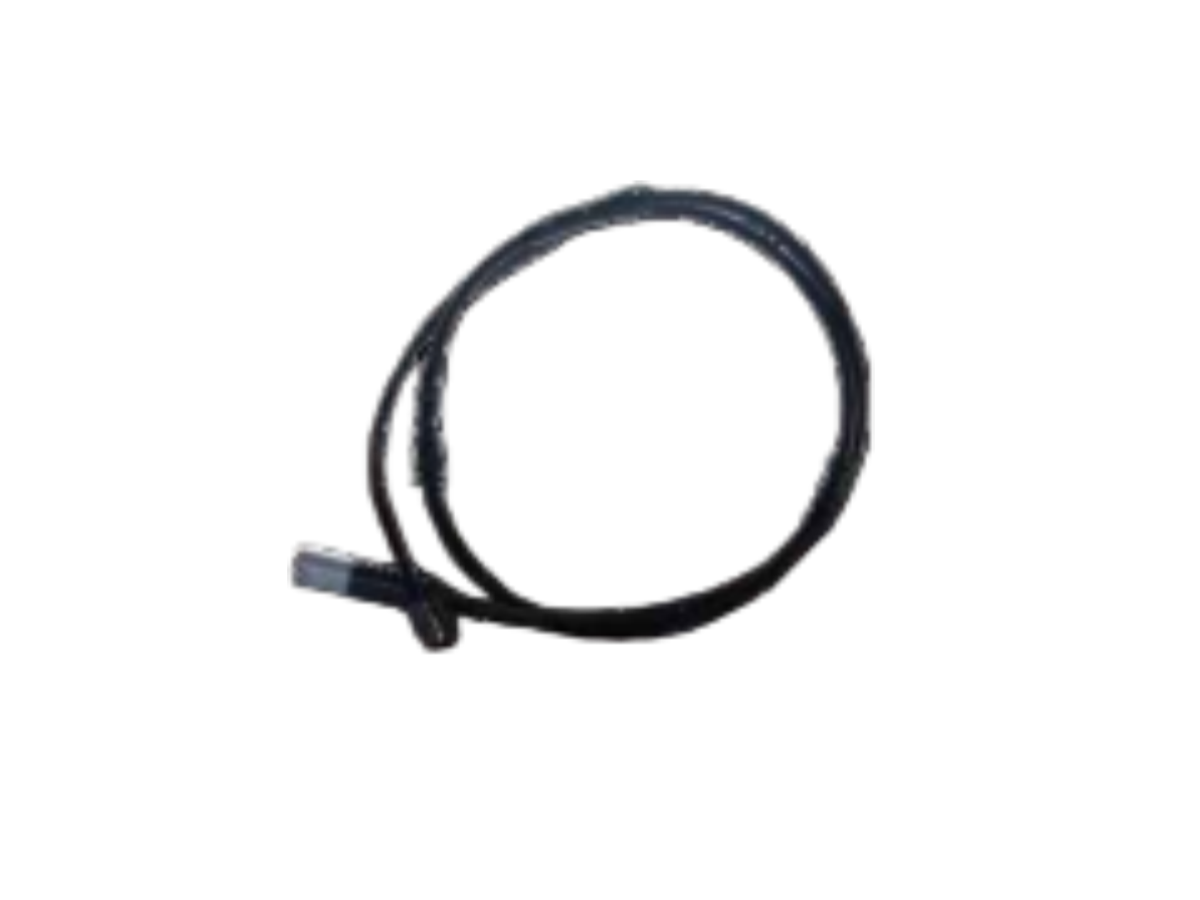
The Brake Wear Sensor is a high-reliability monitoring device designed to measure the thickness of vehicle brake discs and provide early warning when wear reaches critical levels. It plays a crucial role in enhancing vehicle safety by alerting drivers or the onboard control system before brake performance degrades significantly. The sensor is installed at the fixed thickness point of the brake disc, where it remains in contact with the rotating disc surface. As the disc wears down due to friction over time, the sensor’s internal mechanical structure triggers an electrical switch when the minimum safe thickness is reached—sending a signal to the Brake Control Module (BCM) or dashboard warning light.
This sensor employs a hybrid resistive-mechanical design that combines precision engineering with long-term durability. Unlike traditional visual inspection methods, this system provides continuous, automated monitoring without requiring manual checks. Its robust construction ensures reliable operation under extreme conditions—including high vibration, thermal cycling, and exposure to moisture and road debris. The sensor features excellent electromagnetic compatibility (EMC) and electrostatic dis
making it suitable for use in noisy electrical environments typical of modern vehicles.
It supports multiple signal output modes—such as open/closed circuit, voltage pulse, or digital trigger—allowing flexibility in integration with different vehicle platforms. The wide operating temperature range enables performance across all seasons and climates, from sub-zero winter conditions to high-temperature summer driving. The compact, lightweight design allows easy installation without interfering with existing brake components, while its modular form factor simplifies manufacturing and repair processes.
The sensor is engineered for low-cost OEM applications, offering a cost-effective solution for mass-market vehicles while maintaining high reliability and accuracy. Its small footprint and simple wiring make it ideal for retrofitting into existing brake systems or integrating into new designs. With built-in mechanical stability and resistance to fatigue, it ensures consistent performance over the vehicle’s lifetime—reducing the risk of sudden brake failure and extending the service life of brake components.



Reviews
There are no reviews yet.