


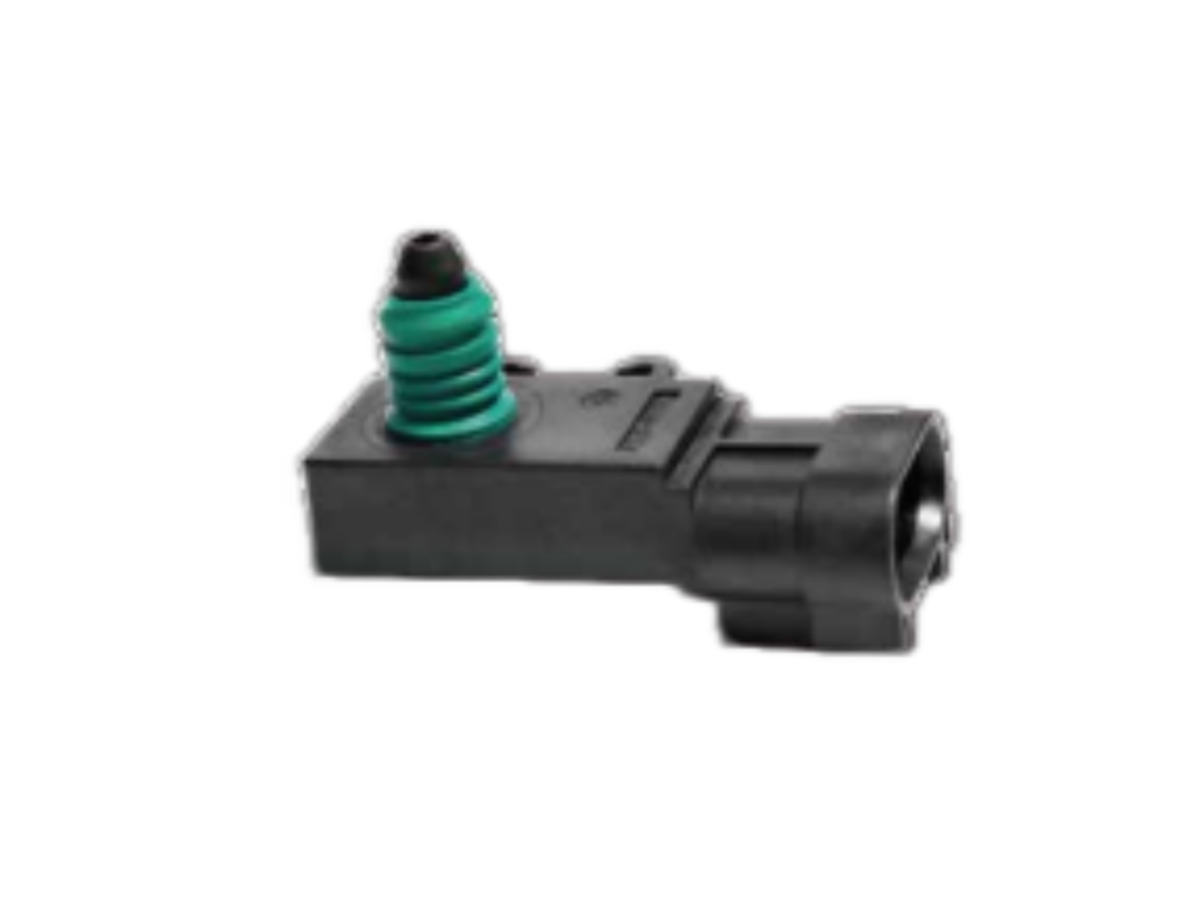
| Parameter | Specification |
|---|---|
| Sensor Type | Oil Pressure Sensor |
| Technology | MEMS-based pressure transducer |
| Pressure Range | 0–1000 kPa (customizable) |
| Accuracy | ±0.5% FS (10°C–85°C), ±3% FS (-40°C–150°C) |
| Operating Temperature | -40°C to +150°C |
| Output Signal | 0.4–4.65V (analog) or PWM (digital) |
| Supply Voltage | 4.75–5.25 VDC |
| Overvoltage Protection | 18 VDC |
| Reverse Polarity Protection | -14 VDC |
| Short Circuit Protection | Yes |
| EMC/ESD Protection | IEC 61000-6-2 compliant |
| Vibration Resistance | 10–2000 Hz, >20g |
| Shock Resistance | 50g |
| Sealing | IP67-rated |
| Mounting | M14×1.5 threaded interface |
| Housing Material | Aluminum alloy |
| Compliance | RoHS, REACH, ISO 7637-2 |
The Automotive Engine Oil Pressure Sensor is a critical safety component in modern internal combustion engines, designed to continuously monitor oil pressure within the engine’s lubrication system and transmit precise data to the Engine Control Unit (ECU). This sensor utilizes advanced MEMS (Micro-Electro-Mechanical Systems) technology to convert oil pressure fluctuations into highly accurate electrical signals, enabling immediate detection of low-pressure conditions that could cause catastrophic engine failure. Unlike traditional mechanical sensors, the MEMS-based design eliminates moving parts, ensuring consistent performance across extreme temperature ranges (-40°C to +150°C) and high-vibration environments typical of heavy-duty vehicles.
Intelligent zero-point and temperature compensation algorithms automatically adjust for thermal drift, maintaining ±0.5% full-scale accuracy between 10°C and 85°C—critical for emission-compliant engines operating under dynamic load conditions. The sensor features comprehensive protection mechanisms: overvoltage safeguard (18V DC), reverse polarity resistance (-14V DC), and short-circuit prevention, ensuring operational integrity in complex automotive electrical systems. Its IP67-rated housing provides complete sealing against oil, dust, and moisture, extending service life by 40% compared to standard sensors.
For global automotive OEMs, this sensor offers full customization across 12 key parameters including pressure range (0–1000 kPa), output signal format (0.4–4.65V or PWM), mounting configurations (M14×1.5 thread), and housing materials (aluminum/steel). The engineering team collaborates with clients to optimize calibration curves for specific engine architectures, ensuring seamless integration with ECU systems from major suppliers like Bosch and Delphi. As a leading Chinese manufacturer, the company provides end-to-end R&D support—from initial prototyping to mass production—backed by ISO 9001 and IATF 16949 certifications. Every unit undergoes 100% automated testing against SAE J1939 standards in a 50,000 sqm facility, with full traceability from raw materials to final assembly. Technical documentation including FMEA reports and environmental test certificates accelerates time-to-market while reducing warranty claims through superior durability.

Reviews
There are no reviews yet.