


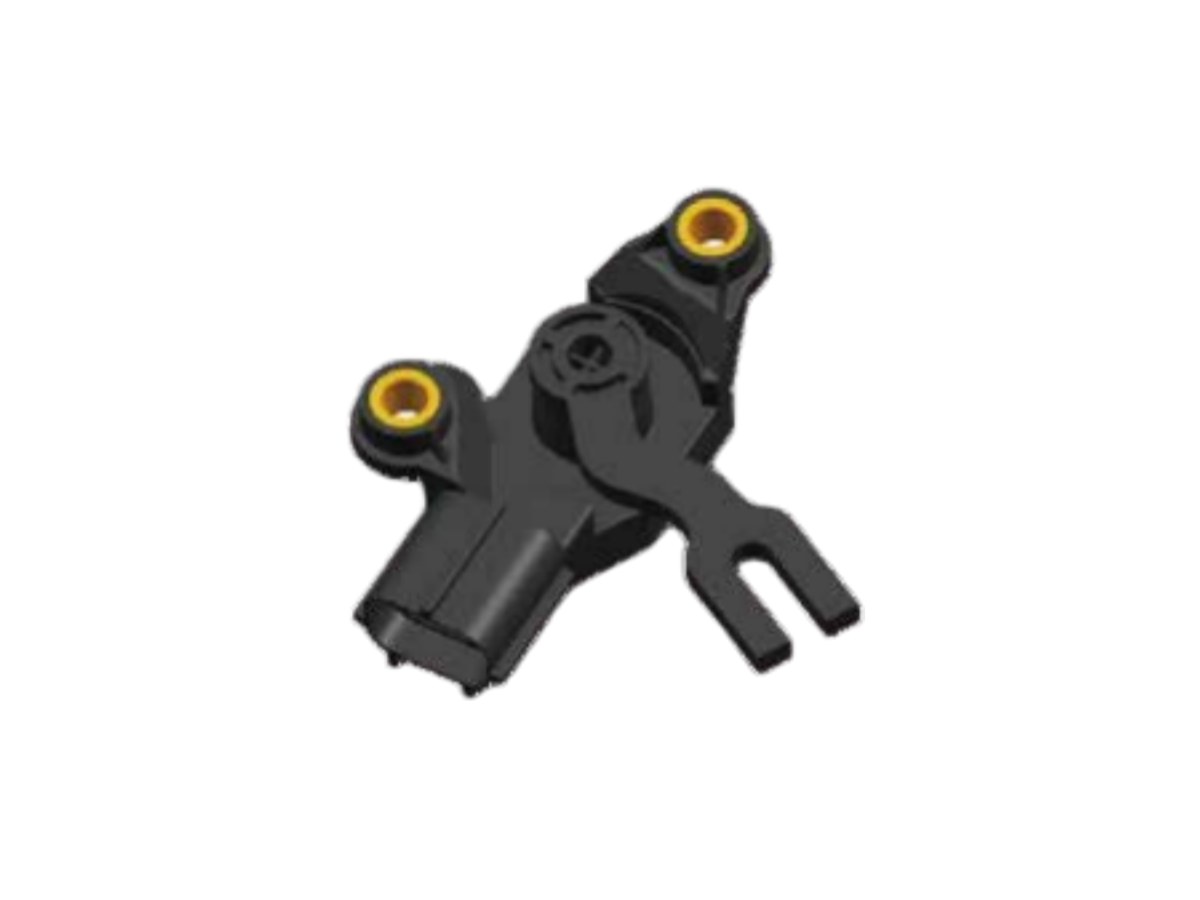
| Parameter | Specification |
|---|---|
| Sensor Type | Pedal Angle Sensor |
| Sensing Technology | 3D Hall Effect |
| Output Signal | Analog / PWM / SENT |
| Interface | Standard automotive connector |
| Operating Voltage | 8–16 VDC |
| Operating Temperature | -40°C to +150°C |
| Storage Temperature | -40°C to +130°C |
| Supply Current | <20 mA |
| Measurement Range | Configurable based on pedal travel |
| Accuracy | ±0.5° full scale |
| Hysteresis | <0.3° |
| Safety Rating | ASIL-B compliant (ISO 26262) |
| Output Configuration | Single-path or dual-path |
| Mounting Method | Direct mount on pedal arm |
| Material | High-temperature polymer housing |
| Compliance | RoHS, REACH, ISO 7637-2, AEC-Q100 Grade 1 |
| Diagnostic Support | Fault code reporting via signal analysis |
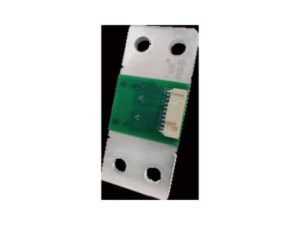
The Pedal Angle Sensor is a high-precision angular measurement device designed for use in modern automotive powertrain and braking systems. It measures the rotational angle of accelerator or brake pedals with exceptional accuracy, converting mechanical movement into an electrical signal that is sent to the Engine Control Unit (ECU) or Brake Control Module (BCM). This data enables precise control of engine torque, throttle response, and regenerative braking—especially in advanced applications such as electronic throttle control (ETC), brake-by-wire (BBW), and adaptive cruise control.
This sensor employs advanced 3D Hall-effect sensing technology, which allows it to measure magnetic fields in three dimensions—X, Y, and Z—enabling highly accurate determination of pedal rotation regardless of mechanical wear or misalignment. Unlike traditional potentiometers, this non-contact design offers superior reliability, longer lifespan, and resistance to contamination from dust, moisture, or oil. The sensor supports multiple output formats—including analog voltage, PWM (Pulse Width Modulation), and SENT (Single Edge Nibble Transmission) protocol—making it compatible with a wide range of controller architectures across different vehicle platforms.
With a maximum operating temperature of 150°C, it is specifically engineered to withstand the extreme thermal conditions found under the hood during prolonged high-load operation. Its low current consumption and wide voltage operating range make it ideal for use in modern fuel-efficient vehicles where energy management is paramount. The sensor also features strong immunity to external electromagnetic interference (EMI) and stray magnetic fields, ensuring stable performance even in noisy electrical environments.
It meets ISO 26262 functional safety standards at ASIL B level, ensuring reliable operation in safety-critical applications. The design supports both single-path and dual-path output configurations, allowing flexibility in system redundancy requirements. Additionally, its compact, robust housing is engineered to withstand harsh under-hood environments, including vibration, moisture, and temperature extremes—from -40°C to +150°C. The modular construction allows easy integration into existing pedal assemblies, with mounting options that accommodate various pedal designs.

Reviews
There are no reviews yet.