


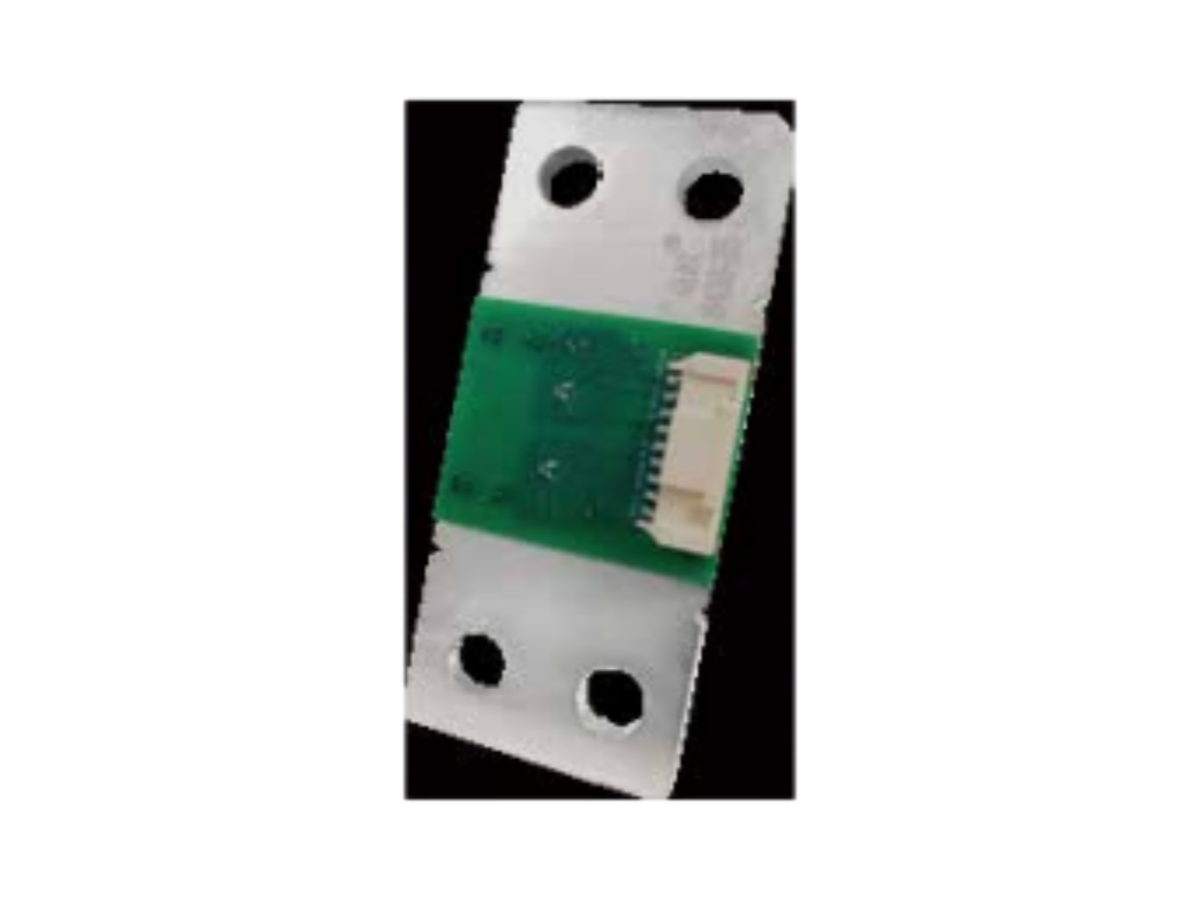
| Parameter | Specification |
|---|---|
| Sensor Type | Shunt-Based Current Sensor |
| Measurement Principle | Voltage Drop Across Precision Resistor |
| Measurement Range | Hundreds to Thousands of Amps (configurable) |
| Accuracy | High precision, low TCR (Temperature Coefficient of Resistance) |
| Linearity | Excellent linearity across full range |
| Temperature Coefficient | Very low, stable over wide temperature range |
| Operating Temperature | -40°C to +125°C |
| Storage Temperature | -40°C to +130°C |
| Supply Voltage | Compatible with standard automotive systems |
| Communication Interface | LIN 2.2 / 2.1 / 2.0 |
| Output Signal | Digital via LIN protocol |
| Thermal EMF | Extremely low |
| Built-in Features | Integrated NTC temperature sensor |
| Material | Alloy with high long-term stability |
| Mounting Method | Bolt/screw mounting, direct connection to busbar |
| Dimensions | Compact rectangular design, optimized for space-saving |
| Compliance | RoHS, REACH, ISO 7637-2, AEC-Q100 Grade 1 |
| Safety Rating | ASIL-B compliant |
The Shunt Current Sensor is a high-performance current measurement device specifically designed for use in the Battery Management System (BMS) of electric vehicles (EVs) and hybrid electric vehicles (HEVs). It employs a precision shunt resistor technology to measure large DC currents—ranging from hundreds to thousands of amperes—with exceptional accuracy and long-term stability. The sensor works by placing a low-resistance, high-precision shunt resistor in series with the main current path, where the voltage drop across the shunt is proportional to the current flowing through it. This small voltage signal is then amplified and processed by an integrated circuit before being transmitted via LIN bus to the BMS for real-time monitoring of battery charge/discharge status.
One of the key advantages of this sensor is its use of special materials with ultra-low temperature coefficient of resistance (TCR), ensuring minimal drift over wide operating temperatures—from -40°C to +125°C. This makes it highly reliable under extreme conditions such as rapid charging, regenerative braking, or high ambient temperatures. The compact, robust design allows direct installation at the battery pack’s connection point using bolts or screws, enabling seamless integration into existing power distribution architectures without additional wiring complexity. Its simple structure ensures high reliability and ease of maintenance, while the alloy material construction provides excellent long-term stability and resistance to thermal cycling and mechanical stress.



Reviews
There are no reviews yet.