


< Back to Performance Development
Author: Johnny Liu, CEO at Dowway Vehicle
Published: February 27, 2026
Reading Time: Approx. 8 minutes
- The Push for Reliable and Lightweight Vehicles
- Synergies and Contradictions in Engineering
- How Lightweight Technologies Change Auto Reliability
- Core Capabilities of Our Engineering Services
- Proven Success: Real-World Case Study
- The Future of Auto Engineering
- Frequently Asked Questions (FAQ)
- Let's Build Better Vehicles Together
Key Takeaways:
- The Core Synergy: Lighter weight and reliability go hand in hand. Smart engineering ensures weight drops make the vehicle safer and more durable.
- Multi-Material Mastery: You get the best results by mixing materials. We use High-Strength Steel, Aluminum, Magnesium, and CFRP to balance cost, mass, and strength.
- Our Core Services: Dowway Vehicle handles material selection, topology optimization, strict factory process control, and full FEA verification.
- Proven Results: In a recent EV SUV case study, our team cut 230kg (12.4%) of weight and pushed the driving range up by 9.2%, all while keeping a 5-star C-NCAP safety rating.
The auto industry is shifting fast toward electric and smart vehicles. To cut energy use and improve handling, we must make cars lighter. But we cannot compromise on reliability. Finding the right balance between cutting weight and keeping parts strong is a major hurdle.
At Dowway Vehicle, we show you how to do both. Our engineering services blend new materials, smart structural tweaks, and strict testing. We make sure your vehicles run efficiently while keeping drivers safe.
The Push for Reliable and Lightweight Vehicles
Driving Forces in Modern Auto Design
Energy shortages and strict environmental rules force automakers to change quickly. The New Energy Vehicle Industry Development Plan (2021-2035) sets hard rules for lowering the average weight of new energy vehicles (NEVs). The numbers speak for themselves. Dropping a vehicle’s weight by 10% cuts fuel use by 5% to 8% for gas cars. For EVs, that same 10% drop stretches the driving range by 6% to 10%. Plus, lighter cars brake and speed up better.
Defining Core Reliability Metrics
A reliable car works exactly as expected under specific conditions for its whole life. We look at this on three levels: the structure, the individual parts, and the complete system. We measure success by tracking fatigue life, breakdown rates, total durability, and rust resistance. Any effort to cut weight must respect these strict baselines.
The Danger of Cutting Weight Carelessly
Cutting weight does not mean cutting corners. If an engineering team just slashes mass without checking structural strength and fatigue life, things go wrong. Drivers hear weird cabin noises. Parts break early. Safety drops sharply. This ruins the user experience and puts lives at risk.
Synergies and Contradictions in Engineering
How Weight and Strength Support Each Other
When designed right, lighter weight and high reliability actually support each other. Using better materials makes the car lighter and stronger at the same time. High-strength steel drops pounds but boosts fatigue resistance. Tweaking a part’s shape reduces stress in tight corners, keeping it from wearing out too soon.
This teamwork matters most for NEVs. Heavy battery packs mean we have to cut weight everywhere else to boost range. At the same time, core parts like the battery shell and the motor need top-tier reliability to keep passengers safe.
Navigating Core Contradictions
The main struggle is dropping mass without losing performance across three key areas:
- Materials: Standard light materials, like aluminum and magnesium, weigh less. But they fall short of high-strength steel when we look at rust resistance and weldability.
- Structure: Engineers often use thin-walled or hollow shapes to hit weight targets. These shapes can lack stiffness and concentrate stress, leaving them open to cracking under constant loads.
- Process & System: Making a car lighter changes its center of gravity. If we do not adjust the chassis and suspension to match, parts vibrate and wear out faster. Also, advanced materials require near-perfect manufacturing to avoid flaws.
How Lightweight Technologies Change Auto Reliability
Material-Level Changes
- High-Strength Steel: Hot-formed steel with a yield strength over 1500MPa is a top choice. It drops weight by 10% to 15% and stops severe bending during crashes. Toyota models built on the TNGA platform use over 50% high-strength steel, beating older cars in crash safety and durability.
- Aluminum & Al-Li Alloys: Aluminum weighs a third of what steel does but needs special coatings to stop rust. Upgraded Aluminum-Lithium (Al-Li) alloys fix many of these issues. They are 15% lighter and 20% stronger than standard aluminum. The BYD Seal 07 uses Al-Li alloys to safely push its driving range up by 50km (CLTC).
- Magnesium Alloys: This is the lightest practical metal, weighing 60% less than steel. Because its strength is lower, engineers keep it for parts that do not carry heavy loads, like steering wheels and seat frames. It requires heavy anti-rust treatments like micro-arc oxidation.
- Carbon Fiber Composites (CFRP): These weigh a quarter of steel but are five to ten times stronger. They offer amazing strength-to-weight numbers. Still, their high cost, long production times, and difficult repair processes remain huge hurdles.
Structural-Level Changes
- Integrated Die-Casting: A massive shift for NEVs. It turns dozens of stamped pieces into a single casting. Tesla used this on the Model Y rear floor, merging 70 parts into just one. This dropped over 20kg and added heavy torsional stiffness. But the factory process must be flawless to stop casting defects from ruining the part.
- Topology Optimization: We use smart algorithms to cut out extra material, leaving metal only where the car actually needs it. Volkswagen models using the MQB platform drop 10% to 15% in weight through this method while pushing body rigidity up by 20%.
- Thin-Walled Structures: These shapes save mass but lose stiffness easily. Engineers fix this by adding reinforcing ribs and changing the shape of the metal to stop fatigue cracking.
System-Level Changes
Lowering a vehicle’s body mass brings the center of gravity down, helping it drive better. But if the suspension stiffness does not change to match, the car vibrates harshly, and parts fail early. Likewise, lightening an EV battery pack must never lower its crash protection or its ability to block water.
Core Capabilities of Our Engineering Services
To fix these structural headaches, Dowway Vehicle relies on a strict technical flow.
1. Material Selection Services
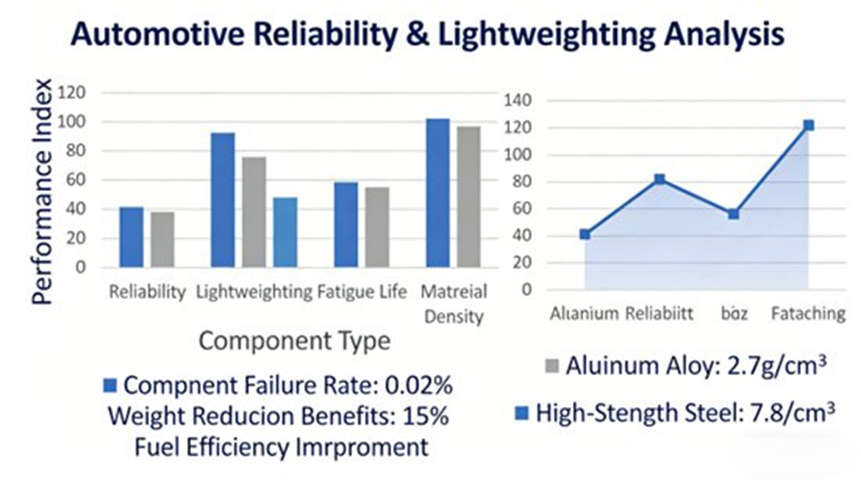
We match the right material to the exact load and environment. By putting High-Strength Steel in the chassis, Aluminum in the doors, and Magnesium in the cabin, we hit the perfect balance. For example, the 2025 Geely Xingyue L mixes 65% high-strength steel with 30% aluminum. This cuts 120kg from the car while keeping a strict 5-star C-NCAP rating.
We also tweak the materials themselves, using aging treatments for aluminum and micro-arc oxidation for magnesium to stop rust.
2. Collaborative Structural Design
Using tools like CATIA, Abaqus, and ANSYS, our team blends topology optimization with smart parametric design. We build integrated modules—like 3-in-1 electric drive axles (motor, reducer, controller)—to cut down on connectors. In one recent project, an NEV maker used an aluminum honeycomb design for the B-pillar. This dropped weight by 22% and reduced side-impact crush space by 18%.
3. Exact Manufacturing Process Control
Working with light metals requires a steady hand. We use strict joining methods like laser welding. For instance, the Tesla Model 3 uses laser welding to push joint strength up by more than 30%. We also shape parts through 3D printing and keep tight control over integrated die-casting limits to stop air pockets. Lastly, we apply tough electrocoating treatments so parts survive harsh weather.
4. Full-Lifecycle Reliability Verification
A lighter design only matters if it survives the real world. Our services include:
- Multi-Disciplinary FEA: We run digital stress and fatigue tests. In one study, we used FEA to optimize an EV drive axle shell, cutting 12% of its weight while keeping its required strength.
- Rigorous Bench Testing: We hammer parts with million-cycle load tests and simulate severe battery crashes.
- Real-World Road Trials: We drive fully built cars across extreme roads to guarantee they hold up.
Proven Success: Real-World Case Study
The Challenge: A heavy pure electric SUV weighed 1850kg. The maker needed to drop massive weight to boost driving range without losing its C-NCAP 5-star safety rating or its long fatigue life.
Our Engineering Solutions:
- Material Mix: We moved to a blend of 60% High-Strength Steel (1500MPa), 6-series Aluminum, Magnesium, and an Al-Li alloy battery casing.
- Structure & Process: Our team ran topology optimization on the frame. We then used integrated die-casting to turn 70 rear-floor pieces into a single solid part. We built an integrated e-axle and joined the body with laser welding.
- Verification: We backed it all up with FEA simulation, bench testing, and a brutal 100,000 km real-world road test.
The Results:
- Weight: Dropped to 1620kg (a 230kg or 12.4% reduction).
- Efficiency: Energy use dropped by 8.5%, and the CLTC range jumped 9.2% to hit 700km.
- Reliability: Torsional stiffness went up by 25%. Overall fatigue life increased by 10%. The SUV kept its C-NCAP 5-star rating and showed zero early part failures.
The Future of Auto Engineering
As cars get smarter and greener, the rules for building them change. We see four major shifts coming soon:
- New Materials at Scale: We expect cheaper carbon fiber (CFRP), better Al-Li alloys, and newer magnesium mixes to drop production costs soon.
- Smart Design & Digital Twins: Engineers will use artificial intelligence, big data, and digital twin models to run perfect digital tests. This speeds up R&D and cuts out mistakes.
- Upgraded Factories: 3D printing, precision casting, and smart robotic welding will become the standard for mass production.
- Predictive Maintenance: Cars will track their own parts. By looking at big data over the whole lifecycle of the car, computers will predict exactly when a part might fail, letting owners fix it before it breaks.
Frequently Asked Questions (FAQ)
Q1: What materials offer the best balance between reliability and lightweight performance in auto structures?
Answer: You get the best results by mixing materials. Advanced High-Strength Steels (AHSS) fight off metal fatigue and handle crashes well, all at a reasonable cost. Aluminum alloys drop a lot of weight and recycle easily. Magnesium is incredibly light but demands heavy anti-rust treatments. Carbon fiber composites boast the highest strength-to-weight numbers, but they cost a lot to make. The final choice always depends on your safety needs, budget, and factory setup.
Q2: How do engineers ensure reliability when designing lightweight auto parts?
Answer: We guarantee part survival through strict design checks, fatigue analysis, and computer simulation. We balance weight drops with hard fatigue life targets. Our main testing steps include Finite Element Analysis (FEA) to mimic extreme crashes, fatigue prediction to catch early cracks, and physical bench testing to prove the lighter parts still last a lifetime.
Q3: Are there trade-offs between lightweight design and service reliability?
Answer: Yes. Dropping mass can make a part more likely to crack under stress if not engineered well. Our engineering team steps in to fix this. We use topology optimization to keep the core structure solid while trimming away the fat. We also pick specific welding methods that keep the metal strong.
Q4: Which factory processes help deliver reliable lightweight parts at scale?
Answer: To build these parts fast and well, we lean on high-end factory methods. We join metals using laser welding and friction stir welding (FSW). We use 3D printing to create tricky shapes, high-precision stamping for AHSS, and automated machining to finish exactly what the design algorithms mapped out.
Q5: How much performance benefit can lightweight engineering deliver?
Answer: The perks are huge. Shedding mass cuts the energy needed to speed up, giving the driver sharper handling. For gas cars, losing 10% of the vehicle’s weight usually bumps fuel economy up by 6% to 8%. For EVs, that same weight drop pushes the driving range much further.
Let’s Build Better Vehicles Together
Real auto engineering does not cut corners. At Dowway Vehicle, we believe every ounce we remove must be backed by hard science and total safety.
If your team wants to shed weight while keeping world-class quality for your next vehicle platform, reach out to us. We are ready to help push your project forward.
