


< Back to Automotive Simulation Toolchain
Author: Johnny Liu
Title: CEO, Dowway Vehicle
Last Updated: March 2026
Reading Time: ~15 minutes
- What is Simcenter Amesim and How Does it Help in Automotive System Simulation?
- Quick Overview
- Overview of Simcenter Amesim
- The Role of 1D Simulation in Automotive Engineering
- Virtual Prototyping vs Traditional Testing
- Advantages of the Simcenter Amesim Chinese Version
- Power Bond Graph Theory
- Three-Layer Architecture of Amesim
- Multi-Domain System Modeling
- Component-Based Modeling
- Simulation Speed and Accuracy
- Parameter Optimization and Sensitivity Analysis
- Control System Analysis
- Simulation Result Analysis
- Balancing Model Fidelity and Simulation Speed
- Ensure Accurate Parameters
- Maintaining Consistency
- Top 5 Frequently Asked Questions about Simcenter Amesim (Last Month)
- 1️⃣ What is Simcenter Amesim and how is it used in system simulation?
- 2️⃣ How do you build a model in Simcenter Amesim?
- 3️⃣ How can Simcenter Amesim be coupled with MATLAB/Simulink?
- 4️⃣ Why do some components fail to connect in Amesim models?
- 5️⃣ How can simulation speed be improved in Simcenter Amesim?
What is Simcenter Amesim and How Does it Help in Automotive System Simulation?
Short Answer:
Simcenter Amesim is a 1D simulation platform used to model and optimize automotive systems, such as powertrains, batteries, suspensions, and thermal systems. It helps engineers test their designs before building physical prototypes, saving time and costs.
Quick Overview
Simcenter Amesim provides an advanced multi-domain simulation environment that allows engineers to model automotive systems. The tool integrates mechanical, electrical, hydraulic, and thermal domains in one system, making it easier to simulate complex interactions and optimize performance.
With Simcenter Amesim, automotive engineers can simulate:
- Powertrain performance
- Battery thermal management
- Suspension dynamics
- Vehicle performance analysis
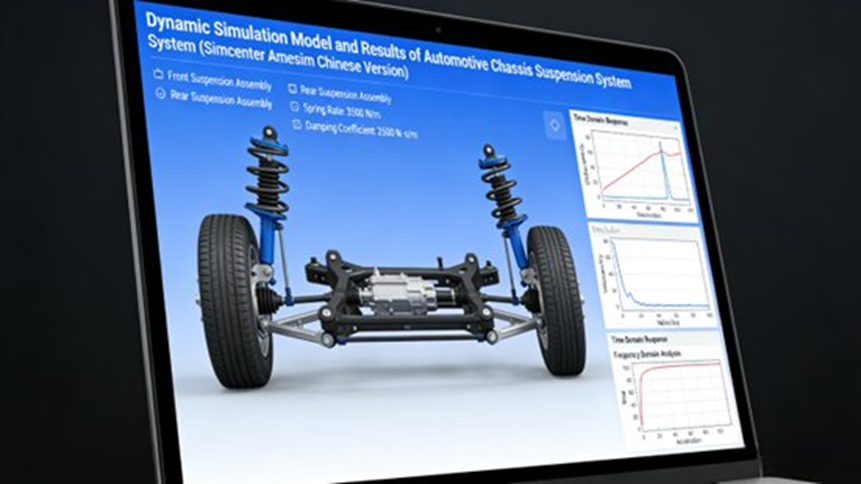
This reduces the need for physical testing, speeding up the development cycle and improving vehicle performance.
What Is Simcenter Amesim and Why It’s Crucial for Automotive Simulation?
Overview of Simcenter Amesim
Simcenter Amesim is a 1D multi-physics system simulation platform created by Siemens for modeling complex systems such as powertrains, thermal management, and suspension systems. It helps automotive engineers simulate system behaviors across multiple physical domains, including mechanical, electrical, hydraulic, and thermal systems.
How Does Amesim Work?
Amesim uses component libraries to represent different system elements (like engines, motors, and batteries) and simulates how they interact with each other. The simulation process works by connecting components with ports representing energy flows.
By utilizing Bond Graph theory, Amesim links components based on energy transfer, which enables accurate multi-domain system modeling.
The Role of 1D Simulation in Automotive Engineering
Automotive systems are inherently multi-physics—they involve interactions between mechanical, electrical, and thermal systems. Instead of building 3D models of each system and testing them separately, Simcenter Amesim allows engineers to model the entire system in 1D, saving time and resources.
Why 1D Simulation?
1D simulation simplifies complex systems into a single dimension of energy flow, allowing engineers to quickly identify issues and optimize designs. With Simcenter Amesim, entire vehicle subsystems—like the powertrain or suspension—can be modeled together, reflecting real-world system behaviors more efficiently than traditional methods.
Virtual Prototyping vs Traditional Testing
Traditionally, vehicle development required physical prototypes, which are costly and time-consuming to create. Engineers would build a physical model, test it, and then adjust based on results. This iterative process slowed down development cycles.
With virtual prototyping in Simcenter Amesim, engineers can simulate systems before building anything physical. This approach helps optimize vehicle performance early on, saving both time and money.
Advantages of the Simcenter Amesim Chinese Version
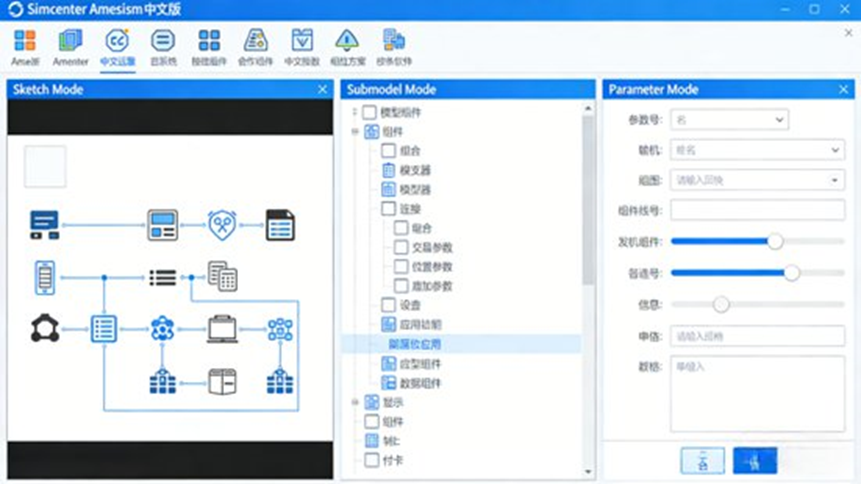
For Chinese-speaking engineers, Simcenter Amesim’s localized version provides a fully Chinese interface, including translated documentation and software menus. This reduces the learning curve for domestic teams, improving accessibility.
While the interface is in Chinese, the internal models and component libraries remain in English. Therefore, engineers should avoid using Chinese characters in model names to prevent simulation errors.
Technical Architecture of Simcenter Amesim
Simcenter Amesim’s technical architecture is based on Bond Graph theory, a method for modeling systems based on energy transfer.
Power Bond Graph Theory
Bond Graph theory allows engineers to represent different physical systems (like mechanical and electrical) using a unified energy flow model. This approach is useful for multi-domain system integration, where components across different fields (mechanical, electrical, thermal) must interact with each other seamlessly.
Three-Layer Architecture of Amesim
Simcenter Amesim is organized into three main layers:
- Core Layer: Includes the simulation engine and solvers.
- Model Library Layer: Contains extensive libraries for various automotive systems.
- Application Layer: Offers tools for parameter optimization, result analysis, and visualization.
These layers work together to deliver a powerful simulation environment.
Core Features of Simcenter Amesim
Multi-Domain System Modeling
Simcenter Amesim supports multi-domain modeling where engineers can simulate various automotive systems, such as:
- Mechanical systems (e.g., engines and transmissions)
- Electrical systems (e.g., electric motors and batteries)
- Thermal systems (e.g., cooling and heating)
- Hydraulic systems (e.g., suspension and brakes)
By simulating these systems together, engineers can gain a holistic view of vehicle performance.
Component-Based Modeling
Building models in Amesim follows a simple workflow:
- Drag and drop components from the libraries
- Connect components based on physical interactions
- Define parameters for each component
- Run the simulation and analyze results
This intuitive graphical interface makes system modeling straightforward, even for beginners.
Simulation Speed and Accuracy
Simcenter Amesim provides options for engineers to balance simulation accuracy and speed. Early in the design process, engineers can use simplified models for faster simulations, while later stages can incorporate higher fidelity models for more detailed results.
This flexibility ensures engineers can get quick feedback without sacrificing model accuracy.
Advanced Simulation and Analysis Features
Parameter Optimization and Sensitivity Analysis
Simcenter Amesim includes tools for parameter optimization, which help engineers find the best set of parameters for their system. This is useful in optimizing:
- Fuel economy
- Battery life
- System stability
By running sensitivity analysis, engineers can identify which design variables have the biggest impact on performance.
Control System Analysis
Simcenter Amesim also enables engineers to perform control system analysis, such as frequency response analysis and stability evaluations. This is essential for validating control algorithms and ensuring the system behaves as expected.
Simulation Result Analysis
Amesim’s post-processing tools allow engineers to analyze:
- Performance curves (e.g., vehicle speed, engine torque)
- Battery temperature profiles
- System efficiency
These results can be easily exported to tools like Excel or MATLAB for further analysis.
Co-Simulation with Other Tools
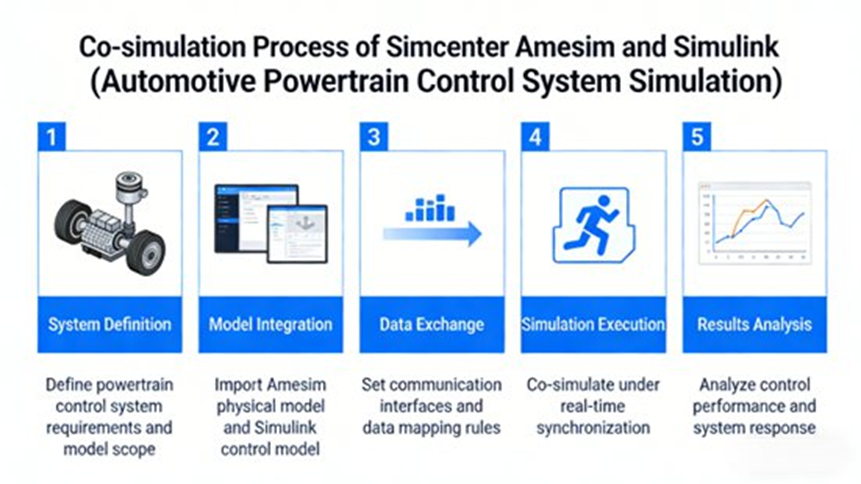
Simcenter Amesim can co-simulate with various engineering tools like:
- MATLAB/Simulink for control systems
- Simcenter 3D for 1D-3D integration
- Python for automated simulations
This flexibility allows engineers to combine system models with control algorithms and 3D models, enabling more accurate simulations.
Best Practices for Simcenter Amesim
Balancing Model Fidelity and Simulation Speed
Use simplified models in the early design stages to speed up simulations, and then switch to detailed models for accuracy in later stages.
Ensure Accurate Parameters
Input real-world data for each component to ensure your simulation results are reliable. Sensitivity analysis can also help identify the most critical parameters.
Maintaining Consistency
When simulating multi-domain systems, ensure that all interface parameters (such as energy transfer or thermal flow) are physically consistent across subsystems.
Future Trends in Automotive Simulation
The future of automotive simulation includes AI-driven optimization and digital twin technology. These technologies will enable real-time system updates based on actual vehicle performance, leading to even more accurate and efficient simulations.
Top 5 Frequently Asked Questions about Simcenter Amesim (Last Month)
1️⃣ What is Simcenter Amesim and how is it used in system simulation?
Simcenter Amesim is a 1D simulation platform that helps engineers model complex automotive systems (e.g., powertrains and thermal management systems) and test them before physical prototypes are built.
2️⃣ How do you build a model in Simcenter Amesim?
In Amesim, engineers drag components from the libraries, connect them based on physical principles, and set parameters to run simulations.
3️⃣ How can Simcenter Amesim be coupled with MATLAB/Simulink?
Amesim can be used in co-simulation with MATLAB/Simulink to integrate control systems with physical models for closed-loop simulations.
4️⃣ Why do some components fail to connect in Amesim models?
Component connection errors in Amesim are typically caused by incompatible physical ports or incorrect submodel definitions.
5️⃣ How can simulation speed be improved in Simcenter Amesim?
To improve simulation speed, engineers can simplify models, use lower-fidelity components, or adjust solver settings.
Conclusion
Simcenter Amesim is an essential tool for automotive engineers looking to simulate and optimize complex vehicle systems. By integrating multiple physical domains and offering powerful co-simulation capabilities, Amesim enables engineers to accelerate product development while improving performance. With the future integration of AI and digital twins, Amesim will continue to lead the way in automotive system simulation.
