




Product Overview
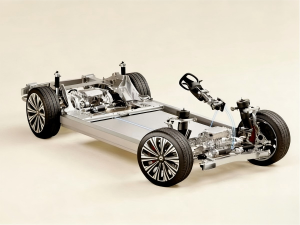
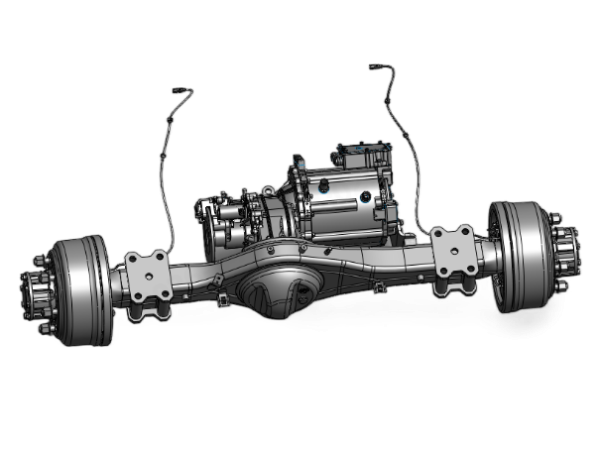
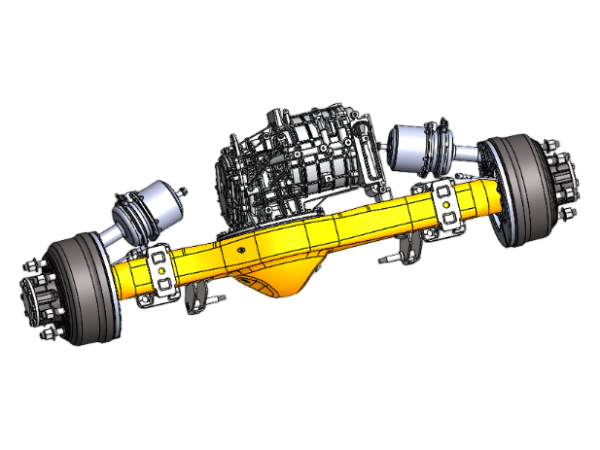
The ERD150 electric drive axle is a second-generation electric rear axle developed by Sichuan Jian’an Industrial Co., Ltd. for light trucks and suitable new-energy commercial vehicle platforms. Its parallel-shaft configuration and integrally stamped-and-welded axle housing provide a practical solution for electric vehicle chassis integration.
Designed for leaf spring suspension, the ERD150 combines a 70 kW rated motor output with 140 kW peak power and a maximum rear axle output torque of 6,800 N·m. It supports a rated axle load of 4.5–5.5 tonnes and operates on a 540 VDC platform. With IP67 protection, customizable track width, and configurable wheel-end braking, this electric drive axle can be tailored to meet specific vehicle packaging and operating requirements.
Final suitability depends on the complete vehicle design, including gross axle load, tire specifications, gear ratio, braking requirements, and target operating conditions.
Technical Specifications
| Parameter | ERD150 Specification |
|---|---|
| Drive axle configuration | Parallel-shaft structure |
| Suspension type | Leaf spring |
| Primary vehicle application | Light trucks |
| Motor rated power | 70 kW |
| Motor peak power | 140 kW |
| Motor rated speed | 3,714 rpm |
| Motor peak speed | 12,000 rpm |
| Motor rated torque | 180 N·m |
| Motor peak torque | 420 N·m |
| Rated voltage | 540 VDC |
| Protection rating | IP67 |
| Rated axle load | 4.5–5.5 tonnes |
| Axle housing structure | Integrally stamped-and-welded |
| Axle housing tube specification | 110 × 96 × 8 mm |
| Maximum rear axle output torque | 6,800 N·m |
| Gear ratio | 16.154 |
| Track width | Customizable |
| Wheel-end braking | Hydraulic or pneumatic, subject to vehicle requirements |
| Central braking | Drum or disc configuration, subject to confirmation |
Note: Specifications are based on the Drive Axle Product Catalog V3. Final product configuration and delivery specifications are subject to the official product specification and signed technical agreement.
Key Features of the ERD150 Electric Drive Axle
1. Parallel-Shaft Electric Drive Configuration
The ERD150 uses a parallel-shaft electric drive structure designed for integration into compatible light-truck chassis. Vehicle manufacturers can evaluate this configuration according to available installation space, axle geometry, and drivetrain requirements.
2. 140 kW Peak Motor Power
The drive motor provides 70 kW rated power and 140 kW peak power. Its rated torque is 180 N·m, with peak motor torque reaching 420 N·m. These figures describe the motor itself; they should not be confused with the axle’s maximum output torque of 6,800 N·m.
3. 6,800 N·m Maximum Rear Axle Output Torque
The ERD150 is specified with a maximum rear axle output torque of 6,800 N·m. This figure is relevant when evaluating vehicle launch performance, drivetrain matching, and intended operating conditions. Actual vehicle performance also depends on tire size, vehicle mass, gear ratio, road gradient, and control strategy.
4. Integrally Stamped-and-Welded Axle Housing
The integrally stamped-and-welded axle housing is designed for the ERD150 configuration. The specified axle housing tube size is 110 × 96 × 8 mm. Track width can be customized to accommodate different chassis layouts, subject to engineering review.
5. IP67 Protection
The ERD150 has an IP67 protection rating. This rating indicates defined levels of protection against dust ingress and temporary immersion under specified test conditions. The complete vehicle installation must still account for connectors, cable routing, mounting interfaces, and other system-level sealing requirements.
6. Flexible Braking Configuration
Hydraulic or pneumatic wheel-end braking can be configured according to vehicle requirements. The catalog also lists drum and disc options for central braking. The exact braking arrangement and its compatibility with the complete vehicle system should be confirmed during technical evaluation.
Applications
Electric Light Trucks
The ERD150 is primarily intended for compatible light-truck platforms requiring an electric rear axle with a rated axle load of 4.5–5.5 tonnes. Final application approval should be based on the vehicle’s actual axle loads and operating duty cycle.
New-Energy Commercial Vehicles
Vehicle manufacturers developing electric commercial vehicles can evaluate the ERD150 for integration into a 540 VDC electrical platform. Compatibility must be checked against the motor controller, battery voltage range, electrical interfaces, cooling requirements, and vehicle control system.
Customized Vehicle Platforms
The customizable track width and configurable wheel-end braking provide options for vehicle-specific chassis layouts. Changes to dimensions, mounting points, brakes, or other interfaces require confirmation by the engineering team before production.
Vehicle Compatibility and Selection Guide
Before selecting the ERD150 electric drive axle, vehicle manufacturers and integrators should evaluate the following factors:
- Axle load: Confirm that the actual design axle load and operating conditions fall within the specified 4.5–5.5 tonne rated axle-load range.
- Electrical system: Verify compatibility with the vehicle’s 540 VDC-class system, including the battery operating range, inverter or motor controller, connectors, and protection strategy.
- Suspension: Confirm compatibility with the intended leaf spring suspension and chassis mounting geometry.
- Gear ratio: The specified ratio is 16.154. Verify that it supports the required vehicle speed, gradeability, wheel torque, and operating efficiency.
- Braking system: Select hydraulic or pneumatic wheel-end braking as appropriate and confirm the central braking arrangement.
- Track width and installation dimensions: Provide the required track width, wheel and tire dimensions, mounting points, and chassis clearance for engineering review.
- Operating conditions: Evaluate payload, duty cycle, gradients, ambient temperature, and expected road conditions before finalizing the configuration.
These guidelines are for preliminary selection only. Final compatibility must be validated against the complete vehicle specifications and the manufacturer’s engineering requirements.
Frequently Asked Questions
What vehicles is the ERD150 electric drive axle designed for?
The ERD150 is primarily designed for light trucks and may be evaluated for other compatible new-energy commercial vehicle platforms. Suitability depends on axle load, chassis layout, electrical system, braking configuration, and operating conditions.
What are the rated and peak motor power ratings?
The motor has a rated power of 70 kW and a peak power of 140 kW. Its rated torque is 180 N·m, and its peak torque is 420 N·m.
What is the maximum output torque of the ERD150 rear axle?
The catalog specifies a maximum rear axle output torque of 6,800 N·m. This is an axle output specification, not the motor’s peak torque.
What is the rated axle load?
The rated axle load is 4.5–5.5 tonnes. This value refers to the axle load rating and should not be interpreted as the vehicle’s total permissible mass.
Does the ERD150 support customized track width?
Yes. Track width can be customized according to the vehicle’s design requirements, subject to technical confirmation.
What braking options are available?
The catalog lists hydraulic or pneumatic wheel-end braking, with the specification matched to the vehicle. Drum and disc options are also listed for central braking; the final configuration should be confirmed with the manufacturer.
What is the protection rating?
The ERD150 is rated IP67. System-level protection still depends on correct installation and the sealing performance of associated components and connections.
Contact Us for ERD150 Electric Drive Axle Solutions
If you are developing an electric light truck or a new-energy commercial vehicle, contact Sichuan Jian’an Industrial Co., Ltd. to discuss ERD150 configuration options, track width, braking requirements, and vehicle integration.
Provide your target axle load, wheel and tire specifications, electrical system details, suspension layout, and intended operating conditions to support a more accurate technical assessment.
Final specifications and configurations are subject to the official product specification and signed technical agreement.
Reviews
There are no reviews yet.