Uncategorized

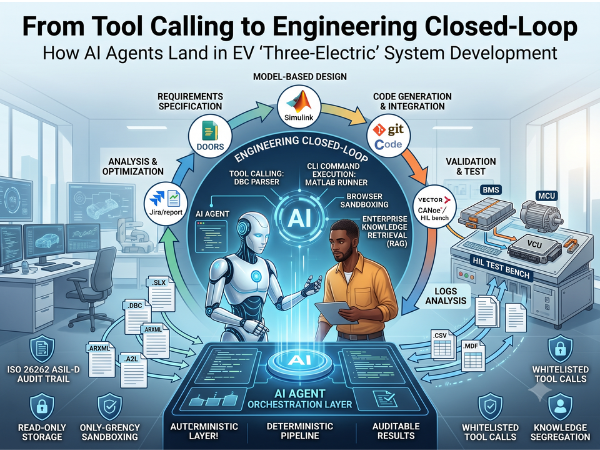
A detailed illustration titled "From Tool Calling to Engineering Closed-Loop" showcasing the role of AI agents in EV 'Three-Electric' system development. It displays a cyclic workflow of Model-Based Design with steps like Requirements Specification, Model-Based Design, Code Generation & Integration, Validation & Test, and Analysis & Optimization, connected to BMS, VCU, MCU components. At the center, an AI agent and a human engineer collaborate within an AI Agent Orchestration Layer, linking various tools and processes. Safety guardrails like ISO 26262 ASIL-D Audit Trail, Read-Only Storage, only-Grency Sandboxing, and Knowledge Segregation are highlighted at the bottom. The overall scene shows a bright, modern automotive R&D laboratory.

Da chamada de ferramentas à engenharia de circuito fechado: como os agentes de IA se integram ao desenvolvimento de sistemas elétricos “tri-elétricos”.

Autor: Johnny Liu, CEO da Dowway Vehicle Publicado em: 9 de julho de 2026 Tempo de leitura: 15 minutos Categoria: Veículos Elétricos, Engenharia de IA, Projeto Baseado em Modelos (MBD) Além da euforia em torno dos chatbots Se a sua equipe de engenharia de software automotivo estiver considerando frameworks como Agente da Hermès ou OpenClaw […]
Purpose: Describes the image for users who cannot see it (e.g., those using screen readers) and for search engines. It should be concise and accurately reflect the visual content. Template: [A concise and accurate description of the image content, focusing on the key subject and action. (e.g., 'A medium shot of a brown tabby cat sitting on a windowsill, looking out at a garden.')]

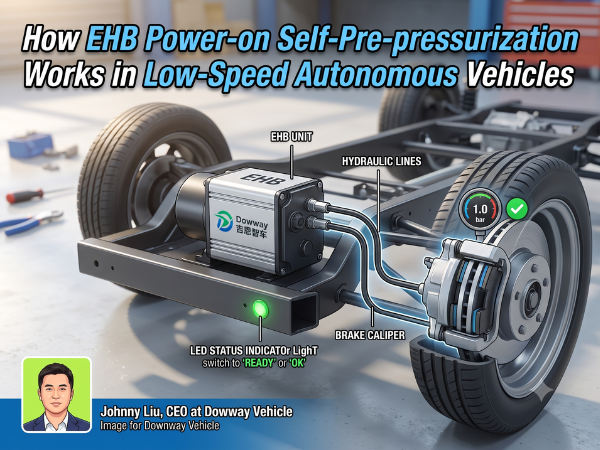
Decifrando a tecnologia Brake-by-Wire: dos freios de fricção aos freios elétricos de assistência ao freio (EHB) e eletrônicos de assistência ao freio (EMB).

Sobre o autor Johnny Liu é o Diretor Executivo da Veículo Dowway, uma empresa pioneira em tecnologia automotiva especializada em sistemas de chassis inteligentes de última geração e soluções drive-by-wire. Com mais de duas décadas de experiência em desenvolvimento de sistemas de propulsão e chassis automotivos, Johnny lidera equipes que criam sistemas de veículos elétricos

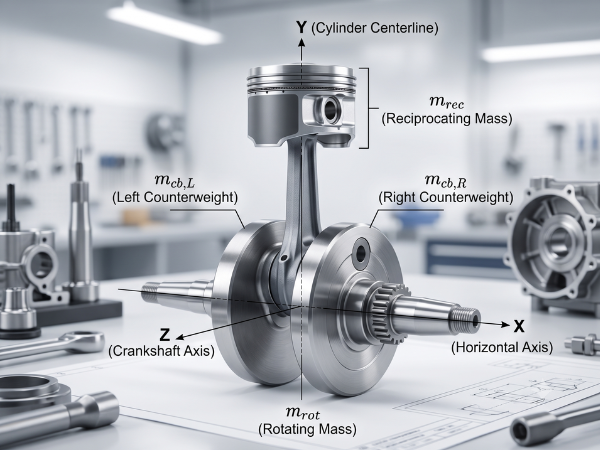
A high-precision mechanical crankshaft assembly with a piston, connecting rod, and labeled balancing masses (reciprocating $m_{rec}$ and rotating $m_{rot}$) in a bright engineering workshop, illustrating the first-order inertial forces and asymmetric crankshaft balancing on a $X-Y-Z$ axis grid.

Entendendo as vibrações do motor da motocicleta: forças inerciais de primeira ordem e balanceamento assimétrico do virabrequim (Parte 1)

Nota do autor “Ao construirmos motocicletas, não tentamos eliminar completamente as vibrações. Em vez disso, aprendemos a moldá-las. O balanceamento de um motor monocilíndrico ou bicilíndrico paralelo é sempre uma questão de compromisso. Neste artigo, vamos analisar os princípios básicos da física da vibração.” Forças inerciais de primeira ordem (primárias), veja como eles se transformam

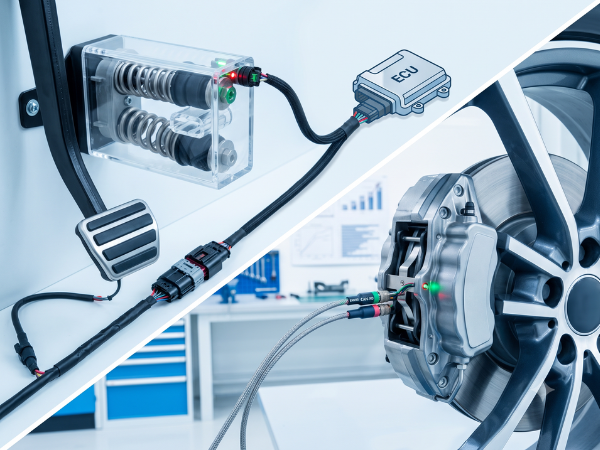
A technical split-screen view illustrating brake-by-wire technology. The left side shows a brake pedal unit with a visible internal simulator and springs, representing human input. The right side features a vehicle wheel and disk brake caliper with electronic cables, symbolizing electronic actuation and control.

A Verdade Sobre o Freio Eletrônico: Sensação Falsa no Pedal, Freio EHB vs. Freio EMB, e Por Que a F1 Não É o Que Você Imagina

Autor: Johnny Liu Título: Diretor Executivo da Dowway Vehicle Publicado: 15 de julho de 2026 Tempo de leitura: 15 minutos Categoria: Engenharia Automotiva, Tecnologia Drive-by-Wire, Dinâmica de Chassi Nota do autor Como CEO da Dowway Vehicle e engenheiro de chassis, passei décadas analisando como os carros desaceleram. Em nossa indústria, os sistemas de freio são

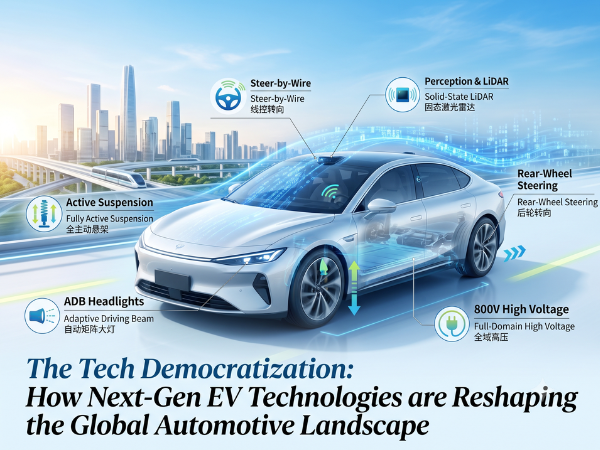
A high-tech silver electric sedan with a semi-transparent body revealing its internal components is featured against a background of a modern city with a maglev train and highway. Several circular icons with labels and lines point to different technological advancements: "Fully Active Suspension" and a shock absorber, "ADB Headlights" and a light beam, "Rear-Wheel Steering" with turning arrows, "800V High Voltage" with a power plug, "Perception & LiDAR" with sensor rays, and "Steer-by-Wire" with a steering wheel and signal bars. Digital blue lines and data points connect the car to its surroundings. Below the image, the title "The Tech Democratization: How Next-Gen EV Technologies are Reshaping the Global Automotive Landscape" is prominent.

A Democratização da Tecnologia: Como as Tecnologias de Veículos Elétricos de Próxima Geração Estão Remodelando o Cenário Automotivo Global

Por Johnny Liu CEO da Dowway Vehicle Publicado em 16 de julho de 2026 Nota do autor A indústria automobilística está passando por rápidas transformações. Recursos que antes eram exclusivos de hipercarros milionários ou de raros modelos de luxo agora estão presentes em veículos elétricos do dia a dia. Podemos encontrá-los em carros com preços

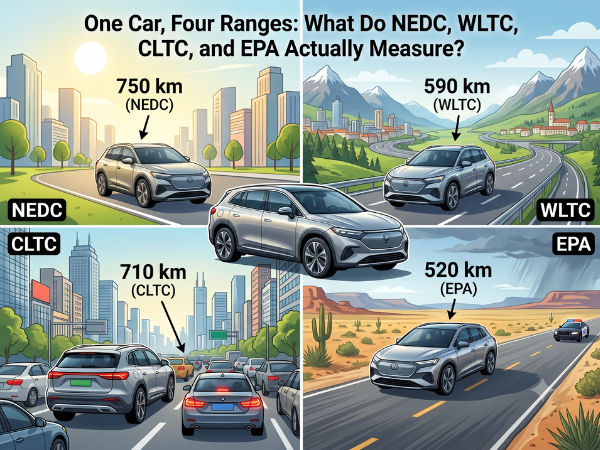
Infographic showing the range of a single EV model under different driving cycle standards: NEDC (750 km), WLTC (590 km), CLTC (710 km), and EPA (520 km). The image also breaks down the simulated distance, average speed, maximum speed, climate control, and extreme temperature testing for each standard.

Um carro, quatro autonomias: o que medem, de fato, os ciclos NEDC, WLTC, CLTC e EPA?

Autor: Johnny Liu, CEO da Dowway Vehicle Publicado: 16 de julho de 2026 Categoria: Tecnologia de veículos elétricos, gestão de frotas, análises da indústria automotiva Imagine que você está comprando um carro elétrico novo. Você olha a ficha técnica e se depara com um quebra-cabeça enorme. Debaixo do NEDC De acordo com o padrão, o

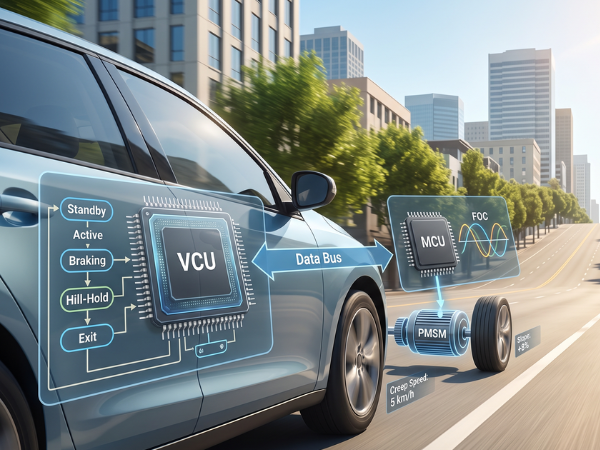
A technical diagram overlaid on a realistic image of an electric car driving uphill. On the left, the Vehicle Control Unit (VCU) chip is shown with a state machine flowchart (Standby, Active, Braking, Hill-Hold, Exit). It connects via a Data Bus to the Motor Control Unit (MCU) chip on the right, which shows Field-Oriented Control (FOC) waveforms. The MCU drives a Permanent Magnet Synchronous Motor (PMSM) connected to a wheel. Text overlays indicate a speed of 5 km/h on an 8% slope.

Dominando o controle de deslocamento lento em baixa velocidade de veículos elétricos: da lógica da máquina de estados à implementação de FOC em microcontroladores.

Biografia e autoridade do autor Johnny Liu é o Diretor Executivo da Veículo DowwayJohnny é um desenvolvedor de soluções de powertrain para veículos elétricos (VE) e arquiteturas avançadas de Unidades de Controle de Veículos (VCU). Com mais de 15 anos de experiência prática em P&D em sistemas de acionamento de motores, sistemas embarcados automotivos e

Need a Quote or Have Questions?

Please fill out the form below, our engineers will contact you within 24 hours.