




Published: August 2026
Last Updated: August 2026
Table of Contents
Written by:
Johnny Liu
CEO at Dowway Vehicle
Expertise Areas:
Intelligent Vehicle Platforms | Automotive Electronics | EV Architecture | Vehicle Computing Systems
Quick Answer: What Is Smart Cockpit Platform Integration?
Smart cockpit platform integration is the move from traditional vehicle displays and separate electronic systems toward a centralized AI computing platform. By combining automotive chips, vehicle computers, AI models, software systems, and advanced energy platforms, future vehicles will become AI-defined vehicles that can understand users, predict needs, and provide active services.
Key Takeaways
- Smart vehicles are moving from large screens to intelligent computing platforms.
- Central computing architecture will replace many separated ECU systems.
- Qualcomm Snapdragon 8295, Snapdragon 8397, and NVIDIA DRIVE Thor represent future vehicle computing platforms.
- 800V electrical systems and software-defined batteries will support high-performance AI vehicles.
- The next vehicle competition will focus on AI, software, computing power, and user experience.
Why Are Smart Vehicles Becoming AI Computers?
The automotive industry is entering a new stage.
Early smart vehicles focused on adding more screens, more apps, and more connected features. Today, the key question has changed:
Can the vehicle understand the world around it and actively help the user?
This change is driving the move from smart cockpits to AI-defined vehicles (AIDV).
A modern vehicle is no longer only a transportation tool. It is becoming a mobile computing platform that combines:
- Artificial intelligence
- High-performance chips
- Vehicle software
- Energy management
- Autonomous driving systems
The main technology shift is moving from distributed electronic control units (ECUs) toward centralized computing architecture.
How Is Smart Cockpit Architecture Changing From Gen1 to Gen3?
Smart cockpit development can be divided into three generations:
| Generation | Period | Main Direction |
|---|---|---|
| Gen1 | 2021–2023 | Functional integration |
| Gen2 | 2024–2025 | Domain integration and cockpit-parking fusion |
| Gen3 | 2026–2028 | AI Defined Vehicle and central computing |
Each generation increases computing power and software capability.
Gen1: Functional Integration Era
The first smart cockpit generation focused on digital experiences.
Main features included:
- Large displays
- Digital dashboards
- Voice interaction
- Online services
- Basic vehicle connectivity
However, the vehicle architecture was still based on many independent ECUs.
Each system had its own:
- Hardware
- Software
- Communication path
This created challenges:
- More wiring
- Higher cost
- Difficult software updates
- Limited AI capability
Gen1 vehicles could follow commands, but they had limited understanding of users and environments.
Gen2: Domain Integration and Cockpit-Parking Fusion
From 2024 to 2025, automakers started combining more functions into shared computing platforms.
The important change was:
Cockpit + parking + vehicle intelligence integration
This stage improved:
- Voice response
- AI processing
- Graphics performance
- Human-machine interaction
Important chips include:
- Qualcomm Snapdragon 8255
- Qualcomm Snapdragon 8295
Qualcomm Snapdragon 8255: AI Computing for Wider Adoption
Snapdragon 8255 targets mass-market intelligent vehicles.
Key capability:
- Around 48 TOPS AI computing power
Strengths:
- Strong AI processing
- Suitable cost structure
- Supports cockpit and parking integration
However, GPU performance is lower than Snapdragon 8295.
For vehicles requiring:
- High-resolution screens
- Advanced 3D interfaces
- More complex visual effects
hardware selection becomes important.
Qualcomm Snapdragon 8295: Premium Smart Cockpit Platform
Snapdragon 8295 represents the current premium cockpit direction.
Key features:
- 30–60 TOPS AI computing capability
- Strong GPU performance
- Better graphics processing
- Support for advanced HMI experiences
It supports:
- Multi-screen interaction
- AI assistants
- More natural voice control
- Complex digital interfaces
Vehicles such as Xiaomi SU7 show this technology direction.
Gen3: AI Defined Vehicle and Central Computing Architecture
From 2026 to 2028, vehicles are expected to move toward AI-defined architectures.
The basic change:
Traditional vehicle:
Sensor → Rules → Action
Future AI vehicle:
Sensor → AI Model → Understanding → Prediction → Action
The vehicle will not only react.
It will predict.
What Is an AI Defined Vehicle?
An AI Defined Vehicle (AIDV) uses software and AI models as the core of vehicle intelligence.
The vehicle can combine:
- Camera information
- Sensor data
- Driver behavior
- Vehicle status
- Environmental conditions
The goal is to create a vehicle that understands physical situations.
For example:
A future AI system may detect driver fatigue and automatically adjust:
- Cabin temperature
- Lighting
- Music
- Suspension settings
The smart cockpit becomes an active assistant.
Which Chips Will Power Future Intelligent Vehicles?
The automotive chip roadmap is moving toward higher AI computing capability.
| Chip Platform | Position |
|---|---|
| Qualcomm Snapdragon 8155 | First-generation smart cockpit platform |
| Qualcomm Snapdragon 8255 | Mass-market AI cockpit |
| Qualcomm Snapdragon 8295 | Premium intelligent cockpit |
| Qualcomm Snapdragon 8397 | Next-generation AI vehicle computer |
| NVIDIA DRIVE Thor | High-performance cockpit and autonomous computing |
Qualcomm Snapdragon 8397: The Next Vehicle Brain
Snapdragon 8397 represents the next step toward Gen3 vehicles.
Expected applications include:
- Large AI models
- Central computing systems
- Advanced vehicle intelligence
- Physical world simulation
The chip represents the move from a cockpit processor toward a vehicle brain.
NVIDIA DRIVE Thor: High Performance Vehicle Computing
NVIDIA DRIVE Thor represents the high-end computing direction.
Key capability:
- Around 2000 TOPS AI computing class
It supports:
- Autonomous driving
- AI simulation
- Large-scale vehicle models
- Cockpit and driving integration
The future vehicle computer will require computing capability closer to AI data center systems.
Why Do 800V Energy Systems Matter for AI Vehicles?
High-performance AI vehicles require more than computing power.
They also need an efficient energy foundation.
800V and 900V platforms provide:
- Faster charging
- Lower energy loss
- Better power management
- Support for high-performance electronics
The Xiaomi SU7 provides a practical example:
- About 844V peak voltage
- 309kW peak charging power
- 13% to 95% charging in around 31 minutes
The future EV is not only an electric vehicle.
It is a high-power intelligent platform.
How Are Electric Drive Systems Evolving?
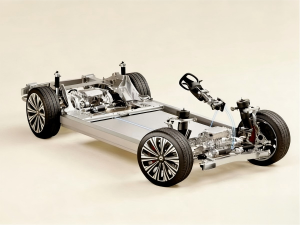
Traditional EV systems use a 3-in-1 structure:
- Motor
- Inverter
- Reducer
Future systems are moving toward:
12-in-1 integrated electric drive systems
They combine:
- Power electronics
- Charging systems
- Thermal management
- Energy control
Benefits:
- Higher efficiency
- Lower weight
- Better packaging
Why Are SiC Power Modules Important?
Silicon carbide (SiC) power modules improve:
- Energy efficiency
- Thermal performance
- High-voltage capability
This creates more energy capacity for:
- AI computing
- Autonomous driving systems
- Central vehicle computers
What Is a Software Defined Battery?
A Software Defined Battery (SDB) changes the role of the battery.
The battery becomes an intelligent system controlled by software.
Future battery management will use:
- Digital twins
- AI prediction
- Chemical state analysis
- Thermal risk monitoring
The traditional BMS function will move closer to the central vehicle computer.
The future structure becomes:
Battery → Vehicle Computer → AI Prediction
How Does Zone Architecture Change Vehicle Electronics?
Traditional vehicles use many ECUs connected through complex wiring.
Zone Architecture changes this model.
Future structure:
Central Computer
↓
Zone Controllers
↓
Sensors and Actuators
Benefits:
- Less wiring
- Easier software updates
- Better computing efficiency
- Stronger vehicle integration
Why Is TSN Important for Future Vehicles?
Future vehicles will process huge amounts of data:
- Camera feeds
- Radar information
- Autonomous driving decisions
- Cockpit interaction
TSN (Time Sensitive Networking) provides:
- Reliable data delivery
- Time control
- Communication priority
Safety-critical driving data must always receive higher priority than entertainment functions.
How Will Vehicle Operating Systems Shape the Future?
Vehicle operating systems will connect:
- Hardware
- AI models
- Applications
- Vehicle functions
Xiaomi HyperOS
Focus:
- HyperConnect ecosystem
- Smartphone connection
- AIoT integration
The vehicle becomes part of a larger digital ecosystem.
ThunderSoft Vehicle OS
Focus:
- AI-native architecture
- Microkernel design
- Safety isolation
It supports running multiple vehicle functions on one SoC while keeping different domains separated.
Volkswagen VW.OS
Focus:
- Software-defined vehicles
- Hardware and software separation
- Long-term software updates
Why Will Smart Cockpits Merge With Autonomous Driving?
Future vehicles will combine:
- Cockpit
- Parking
- Driving assistance
into one computing system.
The reason is simple:
More shared computing power creates better AI performance.
How Is End-to-End AI Changing Driving Systems?
Traditional systems rely heavily on rules.
Future systems use end-to-end AI models.
These models learn relationships between:
- Sensors
- Environment
- Vehicle movement
The Xiaomi SU7 demonstrates this direction with:
- Around 5cm parking accuracy
- Advanced automated parking capability
AITO M9 also shows progress in AI cockpit experience with:
- About 1.19-second fastest voice response
- Around 1.9-second average response
What Should Automotive Companies Build and What Should They Buy?
Automakers need to control the areas that define user experience.
Build Internally:
Autonomous Driving Algorithms
Important metrics:
- Parking accuracy
- Intervention mileage
HMI Experience
Important metrics:
- 60/90Hz rendering
- Touch response speed
Source Externally:
Automotive SoC
Key factors:
- Supply stability
- Energy efficiency
- Computing performance
Safety Software
Co-development may be needed for:
- RTOS
- Security systems
What Are the Main Risks for AI Vehicle Development?
Software and Hardware Integration Risk
The industry wants software and hardware separation, but performance optimization still creates close connections.
Solution:
- Hardware partitioning
- Safety isolation
Chip Supply Risk
Advanced chips depend on:
- 4nm
- 3nm manufacturing
Companies need multiple suppliers.
High-end:
- Qualcomm
- NVIDIA
Mid-range:
- Domestic chip suppliers
Data Security and Regulation Risk
AI vehicles collect:
- Driving data
- Location information
- User behavior data
Important technologies:
- ISO 21434
- Hardware Security Module (HSM)
- Root of Trust
More local AI processing can reduce data risks.
Future Outlook: The Vehicle Becomes an Intelligent Platform
The next decade of automotive competition will not only depend on:
- Battery size
- Motor power
- Screen size
The key advantages will come from:
- Computing architecture
- AI capability
- Software updates
- Energy intelligence
- Secure vehicle systems
The future vehicle is not just a machine that moves.
It is an intelligent platform that understands the physical world.
FAQ
What is smart cockpit platform integration?
Short answer:
Smart cockpit platform integration combines vehicle computing, AI software, chips, and electronic systems into one intelligent platform.
It allows vehicles to move from simple digital interfaces toward AI-powered systems that understand users and vehicle conditions.
Which chips will power future AI vehicles?
Short answer:
Future AI vehicles will use advanced automotive chips such as Qualcomm Snapdragon 8295, Snapdragon 8397, and NVIDIA DRIVE Thor.
These platforms provide AI computing power for smart cockpits, autonomous driving, and central vehicle computers.
What is an AI Defined Vehicle?
Short answer:
An AI Defined Vehicle is a vehicle where software and artificial intelligence control experience, learning, and intelligent functions.
It uses AI models to understand environments and provide proactive services.
Why are 800V platforms important for intelligent EVs?
Short answer:
800V platforms provide higher electrical efficiency and faster charging.
They create the energy foundation needed for powerful AI computing systems, autonomous driving hardware, and advanced vehicle electronics.
Will smart cockpits and autonomous driving merge?
Short answer:
Yes.
Future vehicles will combine cockpit, parking, and driving functions into centralized computing platforms.
This reduces hardware duplication and improves AI performance.
What is the future automotive computing direction?
Short answer:
The future direction is central computing architecture combined with AI models, zone networks, secure operating systems, and software-defined energy systems.
Author Note:
Johnny Liu, CEO at Dowway Vehicle, focuses on intelligent vehicle platform development and automotive technology strategy. This article reflects industry technology analysis and does not represent product specifications from any single supplier.