




Author: Johnny Liu
CEO at Dowway Vehicle
Published: August 2026
Reading Time: 8 minutes
Table of Contents
AI Smart Cockpit Trends Are Changing How People Experience Vehicles
The automotive industry is entering a new stage where vehicles are becoming more intelligent, connected, and personalized. At CES 2026, smart cockpit technology was no longer limited to large screens, voice commands, or entertainment systems. Artificial intelligence became the core technology connecting vehicle perception, interaction, computing, and user experience.
The main AI smart cockpit trend from CES 2026 is clear:
Future vehicles will not only respond to user commands. They will understand situations, predict needs, and create personalized experiences.
Traditional Human Machine Interface (HMI) design focused on helping users control vehicle functions. The next generation of automotive HMI focuses on helping vehicles understand people.
AI is changing the cockpit from a digital control panel into an intelligent space that can support drivers and passengers.
What Is an AI Smart Cockpit?
An AI smart cockpit is a vehicle environment that uses artificial intelligence, sensors, high-performance computing, displays, and multimodal interaction technologies to understand users and provide personalized experiences. Learn more about AI smart cockpit solutions designed for future vehicles.
A traditional cockpit mainly follows user instructions. An AI smart cockpit can also understand:
- Driver attention
- Passenger preferences
- Vehicle conditions
- Road environment
- User habits
- Personal requests expressed through natural language
This allows the vehicle to provide:
- Personalized settings
- Intelligent recommendations
- Better safety assistance
- More comfortable entertainment experiences
The future smart cockpit is moving from Human Machine Interface (HMI) toward Human Machine Intelligence, where the vehicle can work together with people.
AI Becomes the Brain of the Smart Cockpit
One of the biggest AI smart cockpit trends at CES 2026 was the change of AI’s role.
Previously, AI in vehicles mainly worked as a voice assistant. Users gave a command, and the system completed a task.
The new approach is different.
AI now works as the cognitive layer of the cockpit.
It can combine:
- Voice information
- Camera data
- Driver monitoring
- Vehicle sensors
- Environmental information
- User history
Then the system can understand what is happening and decide how to respond.
For example, when a person enters a vehicle, the AI system can recognize the user and load personal preferences. It may adjust music, lighting, temperature, and interface settings based on previous behavior and current conditions.
This change means automotive HMI is no longer only about interface design. It is becoming a problem of understanding human needs.
Multimodal AI Makes Vehicle Interaction More Natural
Future smart cockpits will not depend on one interaction method.
Instead, they will combine multiple forms of communication:
- Voice
- Eye tracking
- Gesture recognition
- Facial and behavior analysis
- Touch interaction
This is called multimodal interaction.
A vehicle can understand not only what a person says, but also what the person does.
For example:
A driver looks at a navigation suggestion while saying a short request. The system can combine eye movement, voice input, and driving conditions to understand the intention.
LG demonstrated this direction through its AI Cabin Platform at CES 2026.
The platform uses:
- Vision Language Models (VLMs)
- Large Language Models (LLMs)
- Image generation models
- Local AI computing
It was built on the Qualcomm Snapdragon Cockpit™ Elite platform.
LG presented three major technology areas:
Mobility Display Solution
This technology turns the windshield into an intelligent display area.
During autonomous driving situations, the system can create visual experiences connected with the environment, such as:
- Cherry blossom scenes
- Forest tunnel environments
The display becomes more than an information screen. It becomes part of the passenger experience.
Automotive Vision Solution
This technology uses vehicle cameras and AI to understand:
- Driver movement
- Eye direction
- Hand gestures
- Attention level
The system can provide more suitable interaction based on user behavior.
In-Vehicle Entertainment Solution
This system connects vehicle surroundings with personalized content.
Examples include:
- Content recommendations based on outside scenery
- Real-time video sharing
- Speech and gesture-based communication support
AI-Native Architecture Builds the Future Cockpit Foundation
While users see screens and interfaces, the real capability of AI smart cockpits depends on the technology behind them.
CES 2026 showed that automotive companies are building AI-native vehicle architectures.
These systems require:
- High-performance computers
- Edge AI processing
- Vehicle operating systems
- Advanced sensors
- Software integration
The goal is to support future functions such as:
- AI agents
- Multiple displays
- Personalized services
- Connected vehicle experiences
Bosch Creates a Full Vehicle AI Technology System
Bosch presented a software and hardware integrated strategy at CES 2026.
Its approach covers three levels.
Application Layer
This layer includes user-facing services:
- AI assistants
- Personalized entertainment
- Anti-motion sickness software
Intelligence Layer
This layer works as the vehicle’s digital brain.
It includes:
- High-performance computers
- AI algorithms
- Vehicle operating systems
- Vehicle motion management software
Hardware Layer
This layer provides the physical foundation:
- Steer-by-wire technology
- Next-generation radar
- MEMS sensors
- Silicon carbide power semiconductors
Bosch’s approach shows that the smart cockpit is becoming part of the complete intelligent vehicle system instead of an independent display product.
Visteon Builds Scalable AI Cockpit Platforms
Visteon presented a platform-based strategy designed for different vehicle segments.
Its technology focuses on making AI cockpit functions easier to scale from entry-level vehicles to premium models.
Key solutions include:
SmartCore™ HPC
SmartCore™ HPC is a high-performance cockpit computer designed for advanced vehicles.
It supports:
- High computing performance
- Multiple displays
- ECU integration
- AI applications
cognitoAI™ AI-ADAS Computing Module
This edge AI module supports:
- Low-latency processing
- Better privacy through local computing
- Flexible vehicle integration
Visteon also presented:
- Entry-level digital cockpit solutions
- Advanced display technologies
- Projection and HUD solutions
- 48V, 400V, and 800V electric platforms
- AI battery prediction
- 5G connected vehicle systems
This approach helps more vehicle manufacturers introduce intelligent cockpit experiences.
Future Cockpit Interaction Moves From Commands to Intentions
CES 2026 showed that interaction is changing.
The future vehicle will not only understand commands.
It will understand intentions.
Instead of saying:
“Turn on music.”
Users may say:
“I want a relaxing drive.”
The AI system can understand the goal and adjust:
- Music
- Route
- Driving mode
- Cabin atmosphere
The vehicle becomes a partner that helps complete a task.
Context-Aware and Proactive Interaction
A major AI smart cockpit trend is proactive assistance.
The vehicle can analyze:
- Road conditions
- Driver behavior
- Traffic situations
- User preferences
Then it can provide support before users ask.
LG’s AI Cabin Platform demonstrated this idea by using environmental understanding to provide situation-based assistance.
The goal is not to show more information.
The goal is to provide useful information at the right time.
Generative AI Creates Dynamic Interfaces
Traditional vehicle interfaces usually remain the same.
AI-powered interfaces can change according to:
- Weather
- Location
- User preference
- Driving conditions
LG’s In-Vehicle Personal Content (IPC) concept demonstrated this direction.
For example, during a snowy night drive, the interface could match the environment with suitable visual themes and content recommendations.
The UI becomes a part of the environment instead of a separate digital layer.
Cross-Domain AI Connects the Whole Vehicle
Future smart cockpits will connect different vehicle systems.
A single interaction can affect:
- Navigation
- Driving assistance
- Vehicle settings
- Entertainment
Geely demonstrated this direction with its Full-Domain AI 2.0 architecture.
The system uses a World Action Model (WAM) to connect:
- Voice interaction
- Driving intelligence
- Vehicle control
- User experience
Geely’s G-ASD intelligent driving system also adjusts information presentation according to driving conditions.
The cockpit becomes a coordination center for the vehicle.
Smart Cockpit Features Emerging After CES 2026
Natural Language AI Assistants
Voice interaction is becoming more human.
Modern AI assistants can:
- Understand casual language
- Keep conversation context
- Handle multiple tasks
- Convert unclear requests into actions
BMW demonstrated an upgraded BMW Intelligent Personal Assistant using generative AI capabilities from Amazon Alexa+.
Users can express goals instead of exact commands.
For example:
“I want a quiet route.”
The system can combine:
- Navigation
- Driving settings
- Entertainment
to create the experience.
AI Agents and Reasoning-Based Assistance
Great Wall Motor presented ASL 2.0 intelligent agent technology.
It combines:
- Language understanding
- Vision systems
- Vision-Language-Action (VLA) models
For example, when a driver asks:
“How can I avoid the construction area ahead?”
The system can analyze the road situation instead of only searching a map.
Multi-Screen and Multi-Role Cockpit Experience
Future vehicles will support different users inside the same space.
The cockpit experience will change based on:
- Driver needs
- Front passenger needs
- Rear passenger needs
Mercedes-Benz demonstrated this direction through MBUX Hyperscreen.
The system combines:
- Large curved displays
- Navigation
- Vehicle controls
- Entertainment
It also supports:
- Dolby Atmos audio
- Personalized comfort features
- Passenger entertainment
The cockpit becomes closer to a mobile living space.
Emotional Interaction: Cars Become Personal Spaces
Another CES 2026 trend was the movement from vehicle control toward emotional experience.
The cockpit is becoming a place for:
- Relaxation
- Entertainment
- Personal connection
Sony Honda Mobility’s AFEELA represents this idea.
AFEELA focuses on:
- AI assistant interaction
- Personalized experiences
- Digital entertainment
- Long-term user relationships
Its concept is based on the idea that when driving tasks become easier, the vehicle can become a personal space.
The role of HMI is changing from controlling a machine to creating a relationship between humans and technology.
Smart Cockpit Design Trends: From Screens to Intelligent Spaces
Technology changes are also changing vehicle design.
Future cockpit design focuses on four areas.
Context-Based Information Design
Interfaces will connect with:
- Weather
- Location
- Vehicle conditions
The interface will become more natural and connected with the outside world.
Role-Based Interface Design
Robotaxi development creates new passenger experiences.
Uber, Lucid, and Nuro demonstrated a production-intent Robotaxi concept at CES 2026.
The vehicle included:
- Exterior LED identification
- Passenger recognition support
- Trip information
- Personalized comfort controls
- Entertainment selection
The interior is designed around passengers instead of drivers.
Immersive UX Design
Large displays alone do not create immersion.
Future experiences combine:
- Visual design
- Sound
- Interaction timing
- Cabin atmosphere
Function and Space Integration
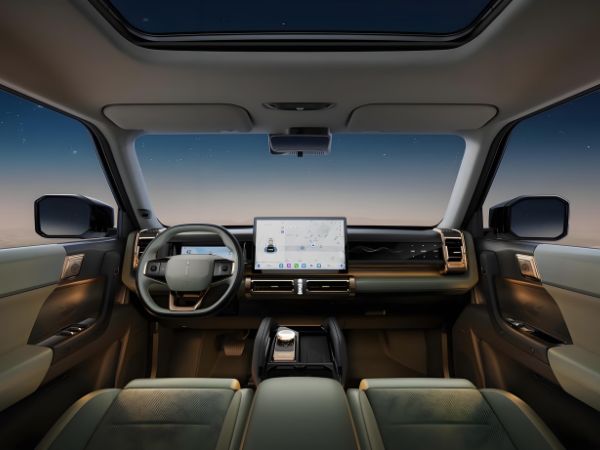
Faraday Future presented FX Super One with its EAI intelligent cockpit concept.
The system includes:
- EAI OS
- 5G Super AP
- AI smart cockpit
- Voice interaction
- Eye interaction
- Gesture control
- Touch interaction
Its Super EAI F.A.C.E. concept explores how vehicles can communicate with users through digital identity.
The Future of AI Smart Cockpits
CES 2026 shows that smart cockpit competition is moving beyond screens and individual features.
The future cockpit will combine:
- AI reasoning
- Multimodal perception
- High-performance computing
- Personalized interaction
- Emotional design
Vehicles will understand people better and provide experiences that feel more natural.
The next generation of automotive HMI will not only help people drive. It will help people enjoy time inside the vehicle. Explore how advanced smart cockpit technologies are creating new possibilities for connected and personalized mobility experiences.
It will help people enjoy time inside the vehicle.
Frequently Asked Questions
What is an AI smart cockpit?
An AI smart cockpit is a vehicle environment that uses artificial intelligence, sensors, and advanced computing to understand users and provide personalized interaction.
It combines technologies such as AI assistants, multimodal sensors, displays, and connected systems to create a more intelligent driving and passenger experience.
What are the main AI smart cockpit trends from CES 2026?
The main trends include AI-based perception, multimodal interaction, proactive assistance, generative interfaces, AI-native computing platforms, and emotional vehicle experiences.
These trends show that vehicles are moving from simple control systems toward intelligent companions.
How is AI changing automotive HMI design?
AI is changing HMI from a user-operated interface into a system that understands situations.
Future HMI can combine voice, vision, gestures, and vehicle data to provide more natural interaction.
What technologies support future smart cockpits?
Future smart cockpits depend on:
- Large Language Models (LLMs)
- Vision Language Models (VLMs)
- High-performance computing
- Edge AI
- Sensors
- Generative AI
- Connected vehicle platforms
Will AI replace traditional car controls?
AI will not completely replace physical controls. Instead, AI will add a more natural way to manage complex vehicle functions while traditional controls can remain available for important operations.
Why are companies investing in AI cockpit architecture?
Companies are building AI cockpit architectures because future vehicles need more computing power, better data processing, and flexible software systems to support new intelligent features.