


Author: Johnny Liu
Position: CEO at Dowway Vehicle
Published Date: August 11, 2026
Reading Time: 8 minutes
Johnny Liu is the CEO at Dowway Vehicle, focusing on automotive electronics, vehicle computing platforms, and smart cockpit technologies.
What Is Smart Cockpit System Architecture?
A smart cockpit system architecture is the combination of vehicle hardware and software that connects drivers, passengers, and vehicle functions. It includes sensors, displays, audio systems, communication networks, domain controllers, operating systems, and intelligent applications to create a connected and interactive vehicle experience.
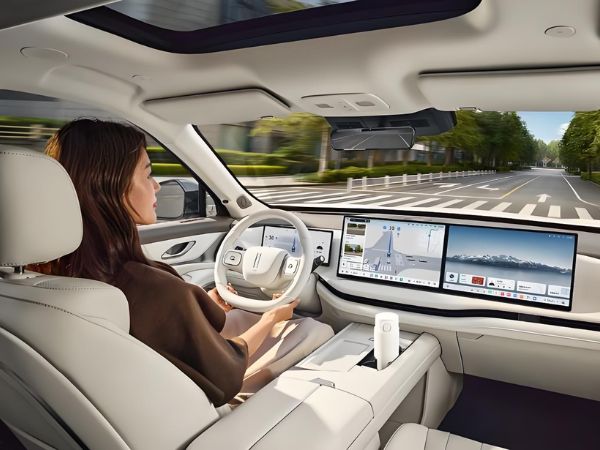
Modern vehicles are moving from traditional electronic systems toward software-defined vehicle architectures. The smart cockpit has become more than an information display area. It is now a central platform that connects people with vehicle services and digital experiences. Learn more about our smart cockpit solutions and how intelligent cockpit technologies improve vehicle interaction.
The development of smart cockpit systems follows the evolution of automotive Electronic and Electrical Architecture (E/E Architecture). Many vehicle manufacturers are moving toward a central computing and zonal control architecture.
In this architecture, the Central Domain Controller (CDC) becomes the computing center of the smart cockpit. It collects data, processes information, manages applications, and supports communication between different vehicle domains.
Smart Cockpit Hardware Architecture
The hardware architecture is a key part of a smart cockpit system. The CDC works as the main computing unit, while different devices connect to it through high-speed communication networks.
The hardware system contains four main subsystems:
- Visual perception subsystem
- Display subsystem
- Audio subsystem
- Data connection subsystem
Each subsystem provides different functions that together create an intelligent vehicle environment.
1. Visual Perception Subsystem
The visual perception subsystem allows the vehicle to understand the condition of drivers, passengers, and the surrounding environment.
Main devices include:
- Driver Monitoring System (DMS)
- Occupant Monitoring System (OMS)
- 360-degree surround-view cameras
- Driving recorder cameras
Because cameras generate large amounts of image data, they require:
- High bandwidth communication
- Low latency transmission
- High-speed serial connections with the CDC
The CDC receives camera data and processes information in real time.
Driver Monitoring System (DMS)
The Driver Monitoring System (DMS) uses cameras to monitor driver conditions.
It can analyze:
- Facial expressions
- Eye direction
- Head movement
- Attention level
DMS helps detect:
- Driver fatigue
- Driver distraction
- Abnormal driver conditions
By understanding driver status, the vehicle can provide safety alerts and support safer driving.
Occupant Monitoring System (OMS)
The Occupant Monitoring System (OMS) focuses on passenger conditions inside the vehicle.
Typical functions include:
- Checking passenger status
- Detecting seat belt conditions
- Identifying children or objects left inside the vehicle
OMS supports passenger safety and allows vehicles to provide more intelligent cabin services.
360-Degree Cameras and Driving Recorders
Smart vehicles use surround-view cameras to provide a complete view around the vehicle.
They support:
- Parking assistance
- Vehicle environment awareness
- Better driver visibility
Driving recorders capture road information and can support:
- Accident analysis
- Driving event recording
- Vehicle safety management
2. Display Subsystem
The display subsystem provides the main information interface between users and vehicles.
Modern smart cockpits usually include:
- Head-Up Display (HUD)
- Digital instrument cluster
- Center display
- Rear passenger display
Display systems require high bandwidth and low latency communication with the CDC to provide smooth visual performance.
Head-Up Display (HUD)
HUD projects important information into the driver’s view.
Typical information includes:
- Vehicle speed
- Navigation instructions
- Driving warnings
HUD allows drivers to check important information without looking down at another screen.
Digital Instrument Cluster
The digital instrument cluster replaces traditional mechanical dashboards.
It displays:
- Vehicle speed
- Vehicle status
- Energy or fuel information
- System alerts
Compared with traditional dashboards, digital clusters provide flexible layouts and more information options.
Center Display
The center display is the main interaction screen inside many smart vehicles.
Drivers and passengers can use it for:
- Navigation
- Multimedia control
- Vehicle settings
- Connected services
As screen size and display quality improve, the center display becomes a major part of the user experience.
Rear Passenger Display
Rear displays provide independent controls for passengers.
Users can manage:
- Air conditioning
- Seat functions
- Entertainment features
This improves comfort and gives rear passengers more control.
3. Audio Subsystem
The audio subsystem supports entertainment, communication, and voice interaction.
Main components include:
- Amplifiers
- Microphones
- Radio systems
- Active Noise Cancellation (ANC) controllers
The amplifier increases audio signals and drives vehicle speakers.
Microphones collect:
- Voice commands
- Phone conversations
- Passenger communication
Active Noise Cancellation reduces unwanted cabin noise by creating opposite sound waves.
Automotive Audio Communication Technologies
Smart cockpit audio systems commonly use three communication methods.
| Technology | Main Features |
|---|---|
| Analog Audio | Mature technology with limits in distance and signal quality |
| A2B (Automotive Audio Bus) | Simple wiring and lower system cost |
| AVB (Audio Video Bridging) | High bandwidth and real-time audio/video transmission |
AVB is suitable for advanced smart cockpit systems that require reliable audio and video communication.
4. Data Connection and Comfort Control Subsystem
The data connection subsystem connects personal devices and vehicle functions.
Main functions include:
- USB data ports
- USB charging
- Wi-Fi
- Bluetooth
Smart cockpit systems also connect with comfort features:
- Smart air conditioning
- Smart seats
- Ambient lighting
- Fragrance systems
These devices usually communicate through:
- CAN Bus
- LIN Bus
- Automotive Ethernet
SOA: Connecting Different Vehicle Domains
Some functions used by smart cockpit applications belong to other vehicle domains.
For example:
- Seat adjustment
- Climate control
- Vehicle lighting
These systems may belong to the vehicle control domain, but users need to access them through the cockpit interface.
This requires Service-Oriented Architecture (SOA).
SOA provides:
- Service registration
- Service discovery
- Service communication
- Cross-domain function access
For example:
A passenger changes the seat position from the center display.
The process is:
Smart cockpit application → SOA service framework → Vehicle domain controller → Seat controller
This allows different vehicle systems to communicate through standardized services.
Smart Cockpit Software Architecture: Five Layers
The software architecture of a smart cockpit can be divided into five layers:
- Hardware layer
- Operating system layer
- Service framework layer
- Atomic service library layer
- Intelligent business layer
1. Hardware Layer
The hardware layer includes:
- Cameras
- Microphones
- Displays
- Speakers
- Buttons
- Sensors
It also includes the CDC computing platform.
This layer collects user input, receives vehicle information, and provides computing resources for software systems.
2. Operating System Layer
The operating system layer provides the foundation for smart cockpit software.
It includes:
- OS kernel
- Hardware drivers
- Hardware abstraction
Common automotive operating systems include QNX, Linux, and Android.
QNX Automotive Operating System
QNX is widely used in automotive systems because it provides:
- High reliability
- Real-time performance
- Strong system stability
It is commonly used in vehicle systems that require dependable operation.
Linux Automotive Platform
Linux provides:
- Open-source flexibility
- High customization capability
- Developer-friendly tools
Vehicle manufacturers can modify Linux according to their product requirements.
Android Automotive
Android provides:
- Large application ecosystem
- Familiar user experience
- Mobile service integration
It helps create connected digital experiences inside vehicles.
Hypervisor Technology
Many smart cockpit systems use a Type-1 Hypervisor.
A Hypervisor allows multiple operating systems to run on one hardware platform.
Benefits include:
- Virtual machine isolation
- Better hardware resource usage
- Support for different operating systems
For example, one computing platform can run QNX for safety-related functions and Android for infotainment applications.
BSP and Hardware Abstraction Layer (HAL)
BSP (Board Support Package)
BSP provides software support for hardware boards.
It includes:
- Hardware initialization
- Device drivers
- Interrupt management
BSP helps operating systems communicate with vehicle hardware.
Hardware Abstraction Layer (HAL)
HAL creates a standard interface between software and hardware.
It provides:
- Hardware resource management
- Hardware compatibility
- Easier software development
3. Service Framework Layer
The service framework layer is based on SOA design.
Its main functions include:
- Service registration
- Service discovery
- Service calling
This layer allows different vehicle systems to share functions through standard interfaces.
4. Atomic Service Library Layer
The atomic service library contains reusable software functions.
Large vehicle functions can be divided into smaller services.
For example, navigation can include:
- Map data service
- Route planning service
- Voice navigation service
Developers can combine these services for different user scenarios.
This approach improves software flexibility and makes future updates easier.
5. Intelligent Business Layer
The intelligent business layer provides direct user services.
Main functions include:
Smart Navigation
Smart navigation can provide:
- Real-time traffic information
- Personalized routes
- Updated navigation guidance
Intelligent Voice Interaction
Voice systems allow users to control vehicle functions through voice commands.
Examples:
- Checking weather
- Playing music
- Making phone calls
Voice interaction improves convenience and reduces the need for manual operation.
Multimedia Entertainment
Smart cockpits provide entertainment services such as:
- Music
- Video
- Games
- Digital content
Vehicle Health Monitoring
Vehicle health systems monitor vehicle conditions.
They can:
- Track vehicle performance
- Detect possible problems
- Remind users about maintenance
The Future of Smart Cockpit Architecture
Smart cockpit systems will continue developing with vehicle software technology. Advanced automotive smart cockpit systems combine hardware integration, software platforms, and intelligent interaction technologies to support future vehicle experiences.
Future systems will focus on:
- More powerful central computing platforms
- Better AI interaction
- Improved cross-domain communication
- More flexible software services
- More personalized user experiences
The connection between hardware and software will continue to define how people interact with future vehicles.
Frequently Asked Questions
What is a Smart Cockpit System Architecture?
Short answer:
A smart cockpit system architecture is the hardware and software structure that connects vehicle users with intelligent vehicle functions. It combines sensors, displays, communication systems, operating systems, and applications.
A smart cockpit is built around a central computing platform that manages information from different devices and provides digital services.
What does a Central Domain Controller (CDC) do?
Short answer:
A CDC is the main computing unit of a smart cockpit. It processes data, manages applications, and connects different vehicle systems.
The CDC receives information from cameras, displays, audio systems, and other devices. It helps create a unified vehicle interaction platform.
What are DMS and OMS in smart vehicles?
Short answer:
DMS monitors the driver, while OMS monitors passengers inside the vehicle.
DMS checks driver attention and fatigue conditions. OMS checks passenger status and supports safety functions such as passenger detection.
Why is SOA used in smart cockpit systems?
Short answer:
SOA allows different vehicle domains to share functions through standard services.
It helps cockpit applications access vehicle functions such as seats, climate systems, and lighting without directly controlling hardware.
Which operating systems are used in smart cockpits?
Short answer:
Common smart cockpit operating systems include QNX, Linux, and Android.
QNX provides reliability and real-time performance. Linux provides flexibility. Android provides a large application ecosystem.
How do smart cockpit hardware and software work together?
Short answer:
Hardware collects information, while software processes data and provides intelligent services.
Sensors, displays, audio devices, and controllers work together through software layers to create a connected vehicle experience.
What communication technologies are used in smart cockpits?
Short answer:
Smart cockpits use different communication technologies depending on the function.
Common technologies include CAN, LIN, Automotive Ethernet, A2B, AVB, and high-speed serial communication.
Conclusion
Smart cockpit system architecture combines vehicle hardware and software into one intelligent platform.
The hardware side includes cameras, displays, audio systems, connectivity devices, and the CDC. The software side includes operating systems, virtualization, SOA services, reusable software components, and intelligent applications.
Together, these technologies create a vehicle environment that is connected, interactive, and ready for future software-defined vehicles.