




- Author: Johnny Liu, CEO at Dowway Vehicle & Veteran Automotive Chassis Architect
- Published on: June 25, 2026
- Category: Automotive Engineering, Car Buying Guide
What is the real difference between multi-link and double wishbone suspension? Simply put, double wishbone suspension uses two triangular arms to clamp the wheel, offering excellent side-support and steering control, making it perfect for front wheels. Multi-link suspension uses three to five separate rods to guide the wheel, offering immense setup flexibility and cabin space, making it ideal for rear wheels. However, a suspension’s name alone does not tell you how a car actually drives; real-world performance depends entirely on materials and manufacturer tuning.
Whenever car buyers talk about chassis tech, they fall into a trap. They hear a car has “multi-link suspension” and think it must ride like a cloud. They hear “double wishbone” and assume it is a track-ready race car.
This is a classic marketing trick. You cannot judge a car’s comfort, handling, or daily drive simply by reading a spec sheet. Structural layouts do not automatically make a car feel great on the road. Let’s break down exactly what these structures do, why engineers place them where they do, and how you can spot salesperson fluff on your next test drive.
Table of Contents
1. The Myth of the Multi-Link: It is Not a Magic Bullet
Salespeople treat “multi-link” like a cheat code for luxury. It isn’t. A multi-link suspension does not guarantee a high-end ride.
What is it?
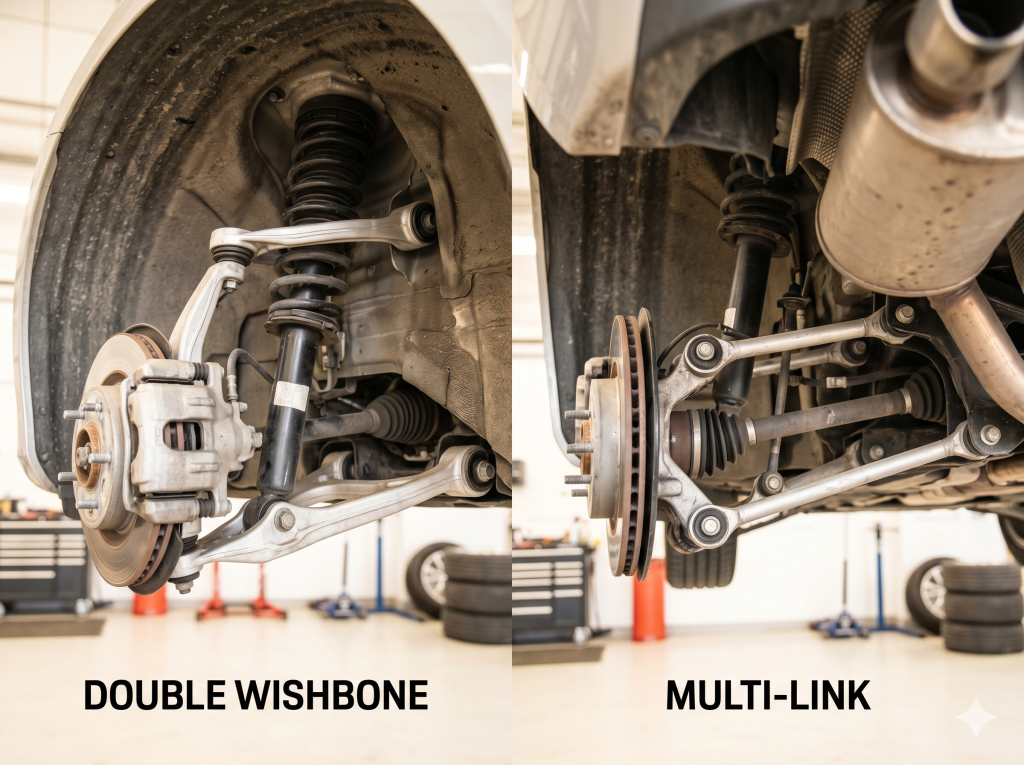
A multi-link system uses several independent control rods (usually three to five) to guide the wheel’s path. Because each rod is separate, engineers can tweak a massive number of settings. They can control exactly how the wheel tilts, turns, and reacts when hitting a bump.
The Home Renovation Analogy
Think of a multi-link suspension like a highly detailed blueprint for a custom house. A complex drawing doesn’t mean the house will be cozy. If the builder uses cheap wiring, thin walls, or cuts corners during construction, the house will be a nightmare to live in. In cars, if a manufacturer uses cheap rubber bushings, weak steel arms, and lazy software calibration, that complex multi-link setup will ride worse than a basic, well-tuned solid axle.
The Reality Check
Multi-link is all about flexibility. It is great because it can be tuned for comfort, speed, or a mix of both. But “can be tuned” is not the same as “is tuned well.” If a salesperson brags about having a multi-link suspension but cannot explain how it actually filters potholes, supports the body in corners, or keeps rear passengers comfortable, their pitch has zero substance.
2. Double Wishbone: Built for Front Wheel Grip
While multi-link is highly adaptable, the double wishbone is a specialized tool. Its design targets one main goal: keeping the tire flat on the road under heavy stress.
What is it?
This design uses an upper and a lower fork-like (or A-shaped) arm to hold the wheel hub. When the car hits a bump and the wheel moves up and down, these two parallel arms prevent the tire from tilting.
   [Car Chassis]
     /       \   <-- Upper Wishbone (A-arm)
    |  [Wheel] |
     \       /   <-- Lower Wishbone (A-arm)
   [Car Chassis]
The Athlete’s Ankle Support Analogy
Think of an athlete making a sharp cut on a field. When they turn hard, their ankle does not just push forward. It bears massive side-to-side forces. A double wishbone setup acts like a rigid, high-end ankle brace. It stops the front wheel from flexing under heavy side forces during a turn, ensuring maximum rubber stays in contact with the pavement.
The Stiffness Edge
Why do fast cars use double wishbones on the front wheels? Because of rigidity. Under hard cornering, a multi-link setup can flex slightly because of its many separate links. The triangular design of a double wishbone stays rock solid. This gives you direct steering, instant response, and confidence in corners.
But do not assume a double wishbone makes a car sporty. If a car brand uses soft dampers, heavy steel parts, and loose springs, the car will still feel like a boat.
3. Rear Suspension Logic: Kitchens vs. Living Rooms
You will often see cars with a double wishbone up front and a multi-link in the back. This is not a random choice. It is highly logical.
The Kitchen vs. Living Room Analogy
To understand why front and rear setups differ, look at household rooms:
- The Front Suspension (The Kitchen): The kitchen is a busy workspace. You chop, wash, cook, and store food here. The front wheels do the same heavy lifting. They steer the car, carry the heavy engine, take vertical hits from bumps, and handle turning forces. The rigid double wishbone is the tough kitchen counter built to handle this work.
- The Rear Suspension (The Living Room): The living room is for relaxing. Its job is to keep you comfortable, save space, and let you unwind. The rear wheels do not steer the car. Their jobs are simpler: absorb bumps, keep the car stable, and stay out of the way of passengers and cargo.
Why Multi-Link Wins the Backseat Battle
Because rear wheels do not steer, the space-saving nature of multi-link is a massive win:
- Routing Around Parts: The thin, individual rods of a multi-link setup can easily bend over, under, or around exhaust pipes, drive shafts, gas tanks, or EV batteries.
- More Cabin Space: Unlike bulky wishbones, multi-link setups pack tightly under the car, leaving more legroom for passengers and a deeper trunk for luggage.
Just remember: a rear multi-link does not guarantee a smooth ride. When you test a car, sit in the back. Does the rear bounce repeatedly after a speed bump? Do sharp bumps slam straight into your lower back? If yes, the brand failed to tune the chassis properly.
4. The Link-Count Trap: Why 5 is Not Always Better Than 3
Marketing terms love numbers: 3-link, 4-link, or 5-link suspension. Buyers naturally think: “The bigger the number, the better the car.” This is wrong.
The Drawer Organizer Analogy
Think of the number of links like plastic dividers in a desk drawer. Using five dividers lets you separate your pens, clips, and notes into neat, tiny piles. But what if those dividers are made of cheap, thin plastic that bends? What if they are shaped so poorly that your scissors do not fit? The drawer becomes a mess. A simple drawer with three thick, sturdy wooden dividers will work much better.
[ 5 Cheap Dividers ] -> Flimsy, frustrating, and blocks large items.
[ 3 Strong Dividers] -> Simple, robust, and works perfectly.
What Actually Matters?
Instead of counting metal rods under the car, focus on these elements:
- Materials: Is it heavy, stamped steel or light, forged aluminum? Aluminum cuts unsprung weight, helping the wheel react faster to bumps.
- Bushings: These are the rubber or fluid-filled cushions at the joints. Cheap rubber makes the ride harsh. Premium hydraulic bushings soak up high-frequency road vibrations.
- Geometry: The exact angles where the links connect to the frame determine how smoothly the wheel travels.
- Tuning: The spring and shock settings must match the car’s weight and purpose.
5. How to Shop and Test Drive Without Getting Fooled
Keep these simple rules in mind next time you look at a car’s spec sheet:
- Design is Just a Limit; Setup is the Reality: A double wishbone or 5-link setup gives engineers a high potential ceiling. But if they use cheap parts and poor tuning, they won’t even match a basic, well-designed simpler setup.
- Ask Hard Questions at the Dealership: If a sales representative pushes the suspension name, cut through the noise. Ask:
- “How does this front end hold its alignment when I turn hard?”
- “Does the rear end settle quickly after speed bumps, or does it float?”
- “Are the control arms steel or aluminum?”
- The Road Tells the Truth: Forget the brochure. Take the car on rough roads.
- Test the front suspension: Turn into a corner at a safe, brisk speed. Does the nose point instantly, or is there a delay? Does the body roll heavily?
- Test the rear suspension: Let someone else drive while you sit in the back. Go over a speed bump. Does the back end settle with a single, clean bump, or does it wobble and shake?
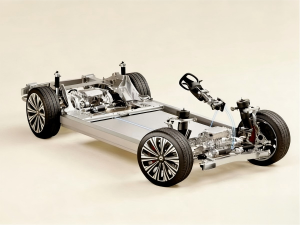
At Dowway Vehicle, we build chassis with a simple focus: the best suspension isn’t the one with the fanciest name. It is the one that gives you a confident, comfortable, and clear connection to the road.
What has been your experience? Have you driven two cars with the same suspension setup that felt completely different? Share your thoughts below!