
News

news

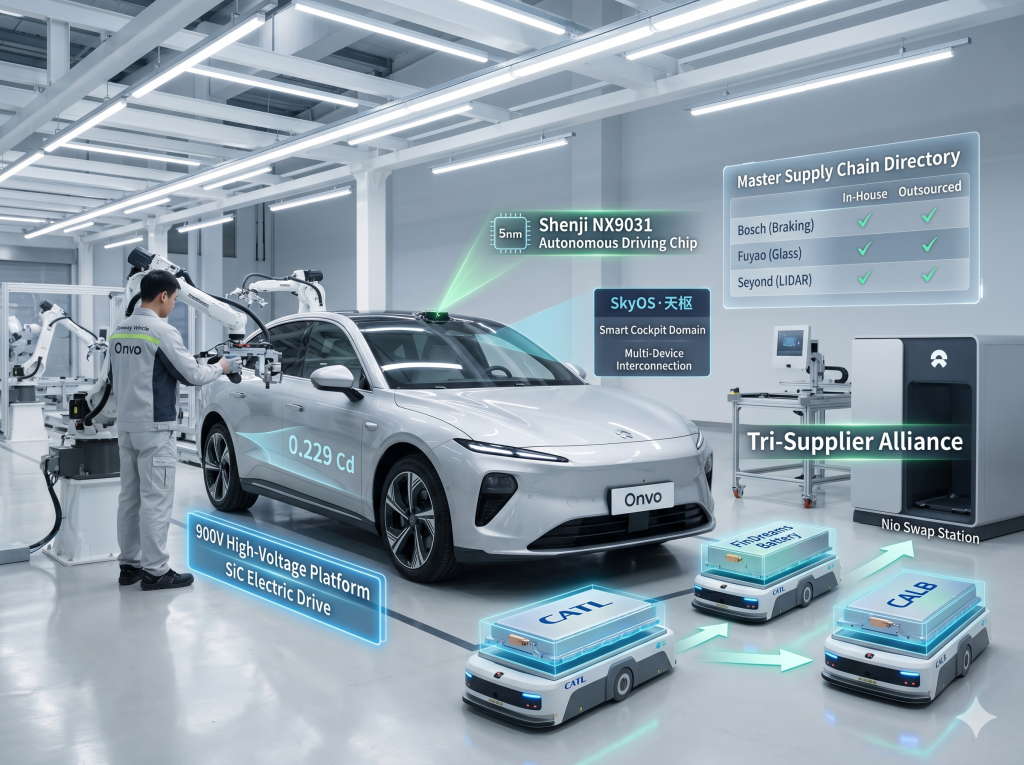
A detailed technical infographic showcasing the 2026 Onvo L60 EV on a modern, high-tech factory assembly line, overlayed with key supply chain data, component specifications, and partner directories.

Onvo L60 Sourcing Strategy: 900V Cascading, Core In-Housing, and the Tri-Supplier Alliance

Executive Summary As the global electric vehicle (EV) sector moves away from chaotic price wars and enters a phase of mature structural consolidation, automakers are forced to rethink their supply chain architectures. On June 11, 2026, Nio’s mass-market sub-brand officially launched its updated 2026 Onvo L60 (新乐道L60), priced from 192,800 RMB (and as low as

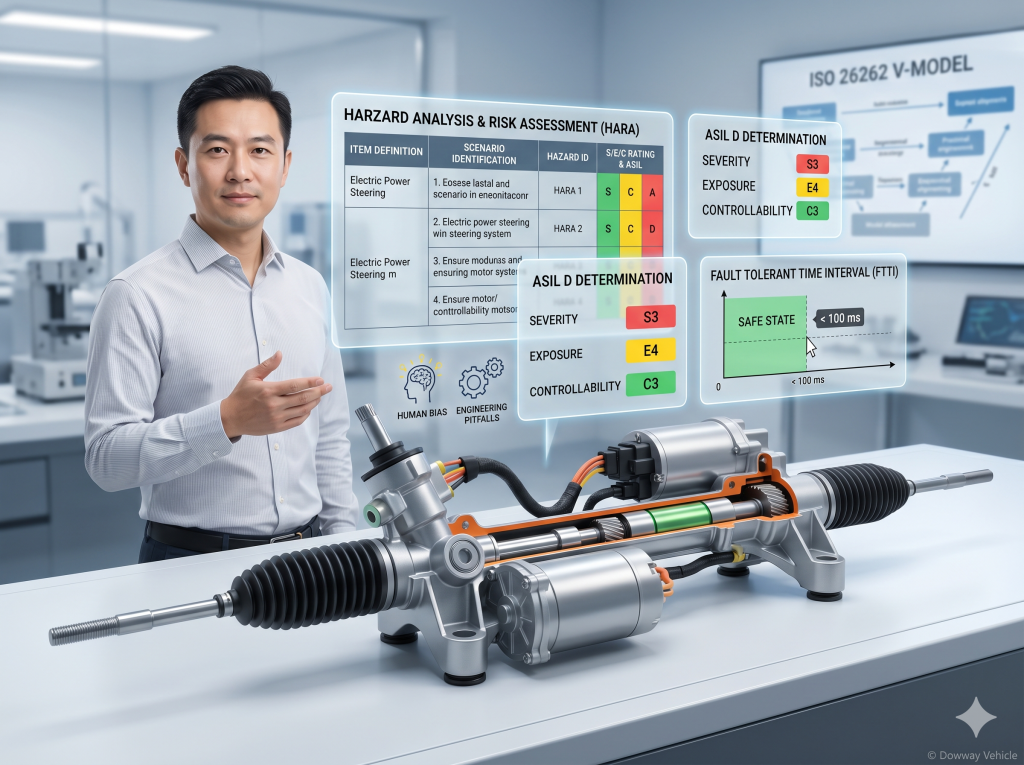
alt="Functional safety engineers in a brightly lit lab reviewing an ISO 26262 HARA worksheet for an Electric Power Steering (EPS) system on a digital interactive table"

ISO 26262 HARA Guide: EPS Case Study

By Johnny Liu, CEO at Dowway Vehicle Quick Takeaway Hazard Analysis and Risk Assessment (HARA) is the starting point of the ISO 26262-3 Concept Phase. It spots hazards caused by system failures and rates their risk using three metrics: Severity (S), Exposure (E), and Controllability (C). These scores combine to give you an Automotive Safety

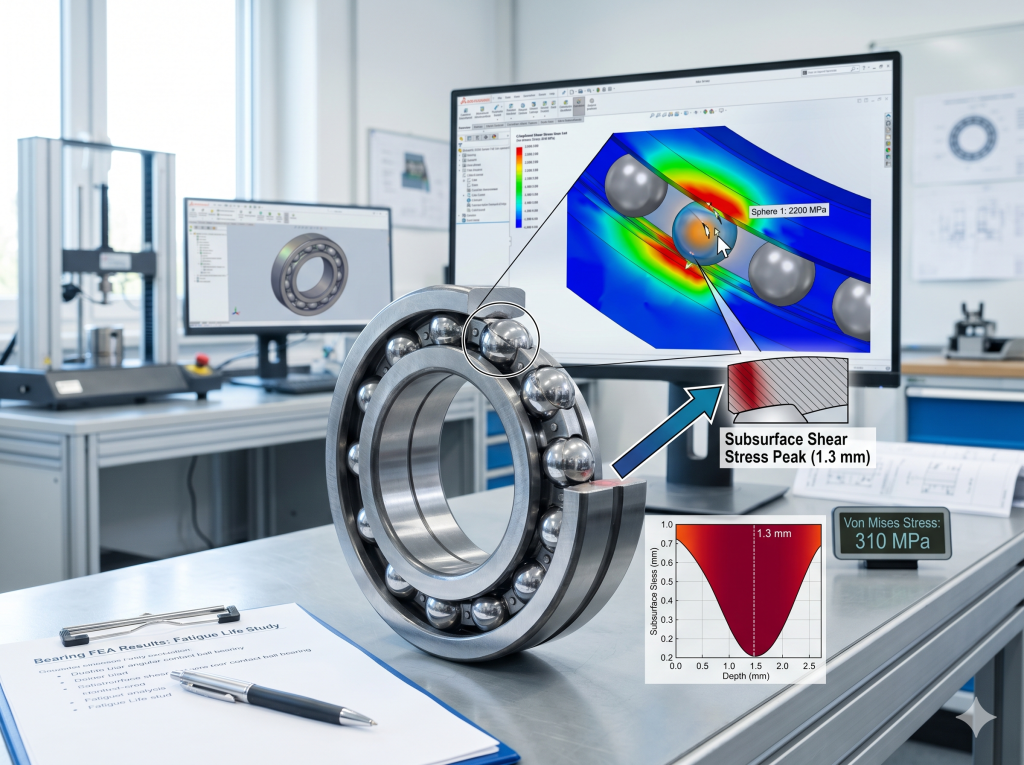
Bearing Stress Analysis: Using FEA to Predict Fatigue Life

By Johnny Liu, CEO at Dowway Vehicle Published on June 12, 2026 Quick Summary Here is a quick lookup of our key simulation settings and findings: Bearings: Simple Parts, Huge Risks Bearings are simple but highly critical parts of rotating machinery. Almost any machine with rotating parts needs bearings, including electric motors, high-speed machine spindles,

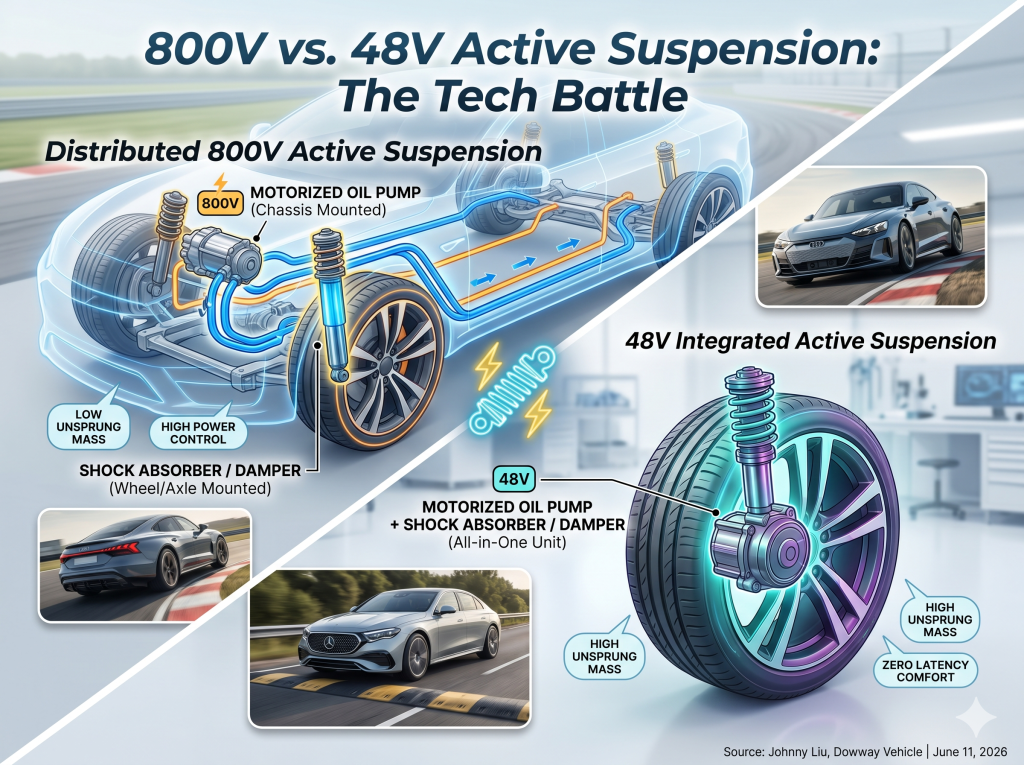
800V vs. 48V Active Suspension: The Tech Battle Behind the EV Marketing Hype

About the Author Johnny Liu is the Chief Executive Officer at Dowway Vehicle. With over a decade of hands-on experience in automotive engineering, powertrain systems, and chassis dynamics, Johnny offers straightforward, unbiased technical analysis of the rapidly shifting Electric Vehicle (EV) market. Recently, the car community has been flooded with a heated tech war between

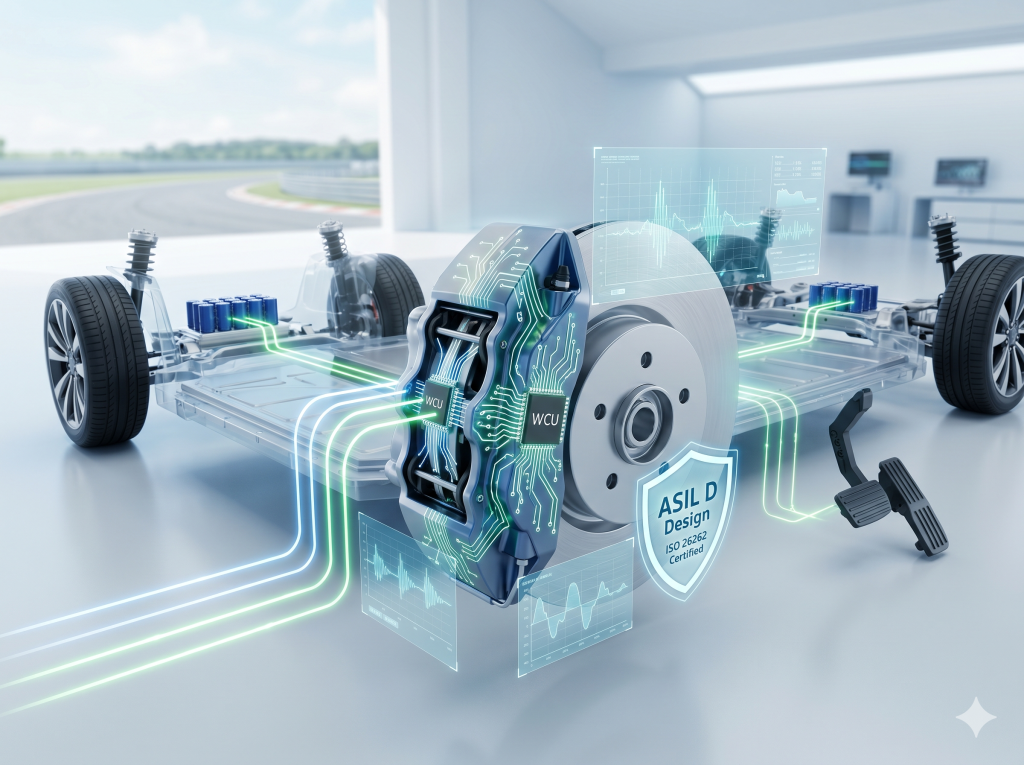
Securing the Ultimate Brake-by-Wire: EMB Functional Safety and ASIL D Design

Author: Johnny Liu, CEO at Dowwaye Published Date: June 4, 2026 Category: Automotive Engineering / Brake-by-Wire / Functional Safety (ISO 26262) Estimated Reading Time: 15 mins 0. Introduction: Removing the Hydraulic Safety Net In the current era of electric vehicles and automated driving, the Electro-Mechanical Brake (EMB) is widely seen as the ultimate execution unit

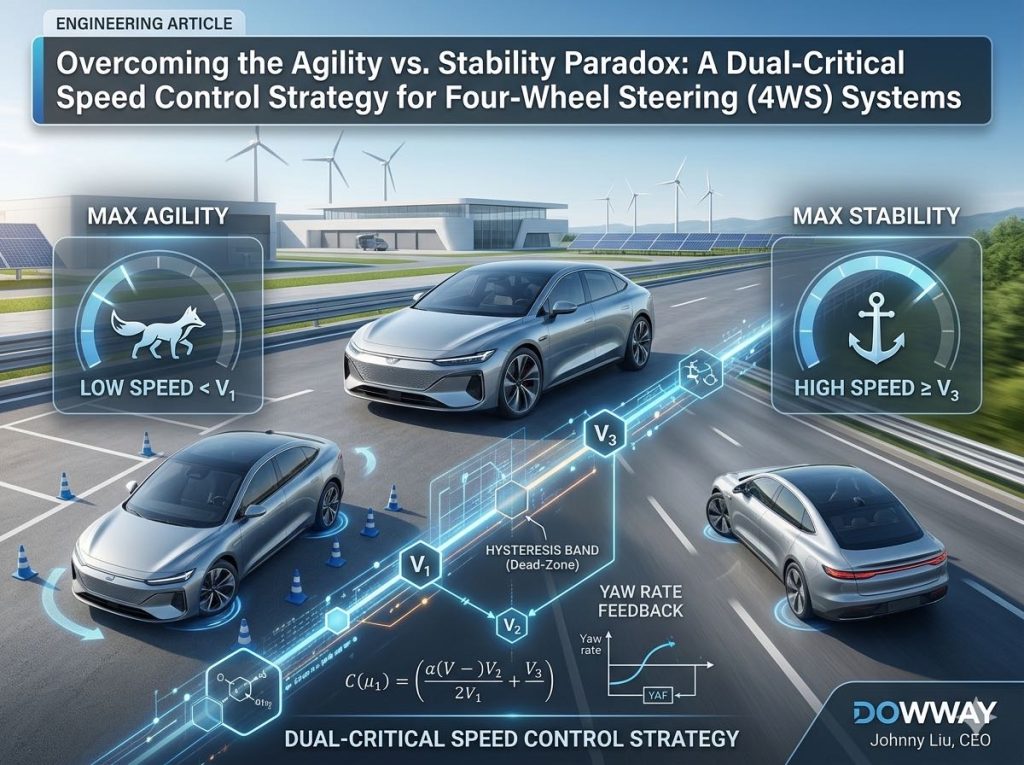
Overcoming the Agility vs. Stability Paradox: A Dual-Critical Speed Control Strategy for Four-Wheel Steering (4WS) Systems

1. Executive Summary / TL;DR Modern drive-by-wire chassis control demands a clean balance between low-speed agility (such as tight urban maneuvers) and high-speed stability (such as highway lane changes). While Four-Wheel Steering (4WS) systems offer the theoretical capability to satisfy both requirements by switching between counter-phase (opposite steering) and same-phase (identical steering) modes, traditional control

High-speed vehicle dynamics demonstration of a blue performance sedan cornering on a racetrack, illustrating lateral tire force and slip angle control.

Beyond ESP: How Four-Wheel Steering (4WS) Redefines High-Speed Vehicle Stability

Technical Summary What is the stability envelope ($S_c$) of a 4WS vehicle? The stability envelope$S_c$is a closed region in the Sideslip Angle ($\beta$) vs. Yaw Rate ($r$) plane. It is bounded by six limits: two yaw rate bounds ($L_1, L_2$) defined by peak road adhesion, and four sideslip angle bounds ($L_3, L_4, L_5, L_6$) calculated

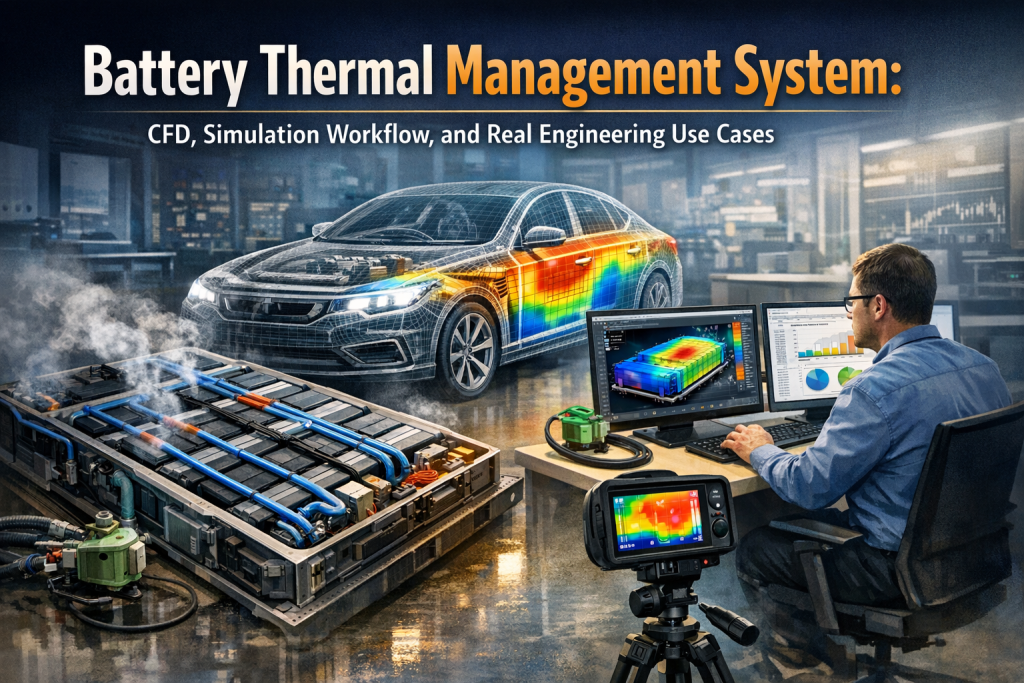
Battery thermal management system with CFD simulation showing heat distribution in EV battery pack and vehicle airflow analysis

Battery Thermal Management System: CFD, Simulation Workflow, and Real Engineering Use Cases

< Back to Performance Development Last Updated: March 27, 2026Author: Johnny Liu, CEO at Dowway VehicleReviewed by: Dowway Vehicle Thermal Engineering Team What is a battery thermal management system? A battery thermal management system (BTMS) controls battery temperature and keeps it stable across all cells. It uses air, liquid, or hybrid cooling methods, supported by

Need a Quote or Have Questions?

Please fill out the form below, our engineers will contact you within 24 hours.