
News & Video

A technical diagram comparing Skyhook and Groundhook suspension control logics for a vehicle during opposite movement. The Skyhook model shows the car body attached to an imaginary fixed ceiling via a virtual spring and damper to maximize passenger comfort. The Groundhook model shows the wheel attached to an imaginary fixed ground reference via a virtual spring and damper to optimize tire grip and road contact.

Skyhook, Groundhook, and $H_\infty$ Control Algorithms in Semi-Active Suspension

Quick Summary (TL;DR) Semi-active suspension dynamically changes damper resistance to make it soft or hard based on sensor inputs. 1. The Core of Semi-Active Suspension Let’s lay down a simple truth: the entire point of a semi-active suspension system is to make the damper change between soft and hard in a smart way. Passive suspensions […]

A split-screen diagram comparing VMC Control vehicle dynamics. Left side: low-speed agility showing counter-phase rear wheel steering. Right side: high-speed stability showing co-phase rear wheel steering. Both sides feature a silver luxury sedan with glowing blue lines connecting the wheels to a central 'VMC' logo.

VMC Rear Wheel Steering Control: Reconstructing the Core Logic of Vehicle Handling

By Johnny Liu, CEO at Dowway Vehicle Published on June 29, 2026 1. Introduction: The Shift in Vehicle Dynamics As smart cars grow rapidly, chassis control is moving past old mechanical limits. We have entered a new era of active, software-defined control. For decades, cars relied almost entirely on Front Wheel Steering (FWS). While functional,

An EV powertrain engineer at Dowway Vehicle is conducting high-voltage motor control testing using an advanced PMSM stall control dyno rig.

Mastering PMSM Stall Control: What the Motor Controller Actually Regulates at Zero Speed

📌 Executive Summary (TL;DR) What is PMSM Stall Control? Under a locked-rotor (stall) condition, a Permanent Magnet Synchronous Motor (PMSM) has zero rotor speed ($n \approx 0$), resulting in zero mechanical output power ($P_{mech} \approx 0$). However, the electrical system remains highly active. Instead of “increasing current to push through,” a robust motor controller must

A side-by-side comparison of a double wishbone suspension on a car and a multi-link suspension

Multi-Link vs. Double Wishbone Suspension: The Ultimate Guide Beyond the Spec Sheet

What is the real difference between multi-link and double wishbone suspension? Simply put, double wishbone suspension uses two triangular arms to clamp the wheel, offering excellent side-support and steering control, making it perfect for front wheels. Multi-link suspension uses three to five separate rods to guide the wheel, offering immense setup flexibility and cabin space,

Dual-monitor engineering workspace displaying Simulink control block diagrams and Bode plots next to an active suspension hardware testbench setup for LQR design

Mastering Simulink: My Practical Guide to Control System Simulation & LQR Design

About the Author I am Johnny Liu, the CEO of Dowway Vehicle. We build clean power drivetrains and smart vehicle dynamics. For over twenty years, I have worked on active car suspensions, drive-by-wire steering, and chassis safety. In our shop, we never build a physical part without testing it on a screen first. Simulink helps

A realistic, brightly lit overview of an electric vehicle smart chassis platform inside a modern automotive R&D facility, illustrating the 4 core breakthroughs: Steer-by-Wire (SBW), Brake-by-Wire (BBW), Active Suspension, and a Zero-Gravity Seat.

China’s Smart Chassis Tech: 4 Core Breakthroughs

Meet the Author Johnny Liu CEO at Dowway Vehicle With 15 years in car manufacturing and supply chain setup, Johnny leads Dowway Vehicle in building systems for next-generation electric vehicles. Published on: June 24, 2026 Reading Time: 8 minutes — For decades, global Tier-1 giants like Bosch, ZF, and Continental decided how cars were built.

A hand uses a digital vernier caliper to precisely measure the thickness of a steel helical gear placed on a workshop desk, with engineering blueprints, a calculator, a notebook of formulas, and a computer screen displaying an ISO 6336-6:2019 load spectrum and stress charts in the background.

ISO 6336-6:2019: Calculating Gear Service Life Under Variable Load Conditions

By Johnny Liu CEO at Dowway Vehicle Published on June 23, 2026 in Shanghai, China Gears in heavy machinery or vehicle transmissions do not work under constant, uniform torque. Instead, they face sudden torque spikes, start-stop cycles, and unpredictable shifts. If you design a gearbox using only static peak-load calculations, you get one of two

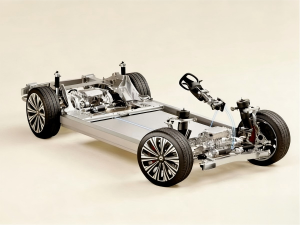
A clear and bright perspective view of a 2026 smart chassis, demonstrating the cross-domain fusion architecture of an 800V active suspension, EMB (Electro-Mechanical Braking), SBW (Steer-by-Wire), and VMC (Vehicle Motion Control) system.

The Dawn of Full Drive-by-Wire Chassis: Inside the 2026 Mass Production Shift

Published on: June 22, 2026 Author: Johnny Liu, CEO at Dowway Vehicle Published On: June 23, 2026 Reading Time: 12 minutes Author’s Note “As the CEO of Dowway Vehicle, I have spent years tracking how mechanical limits constrain automotive engineering. What we are seeing in 2026 is a permanent shift in how vehicles move. The

Need a Quote or Have Questions?

Please fill out the form below, our engineers will contact you within 24 hours.